Thomas Heise Movies, TV Shows, and Filmography
Thomas Heise
Directing
Biography
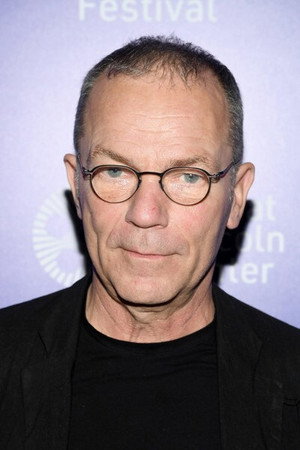
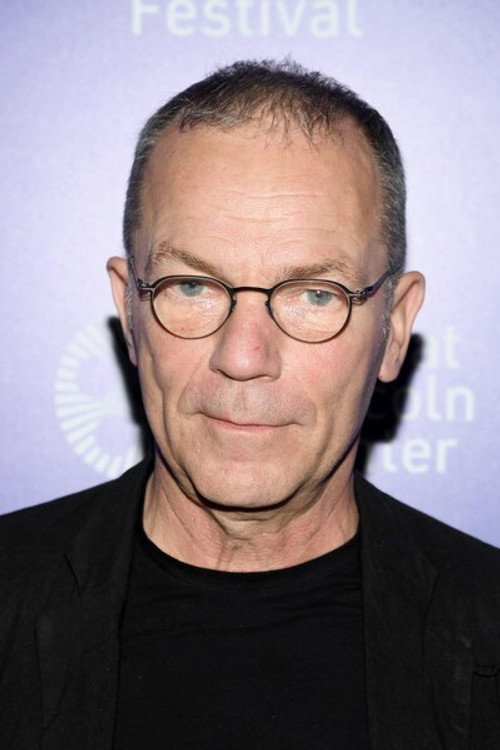
Thomas Heise was born in Berlin, capital of the German Democratic Republic, in 1955. After school he trained as a printer. After his military service in the East German armed forces he began to work as an assistant director at the DEFA - Studio for Feature Films in Potsdam Babelsberg in 1975. Between 1978 and 1983 Heise studied at the Academy of Film & Television in Potsdam-Babelsberg (HFF/B). His first film, the documentary Wozu denn über diese Leute einen Film/Why a Film About These People - produced entirely with materials bought on the black market - was banned from public screening. Since 1983 he has worked as a free-lance writer and director in the areas of theatre, audio drama and documentary. Until the end of the GDR all his documentary efforts were however either blocked by what was – in official jargon – called 'operative means' or destroyed or confiscated. Since the beginning of the 1990s Heise's documentaries have attracted national and international attention. Since 2007 he's been teaching as a Professor for Film and Media Art at Hochschule für Gestaltung Karlsruhe. Thomas Heise's earlier films dealt with social phenomena in the GDR and the country's bureaucratic apparatus. From the late 80s his focus has moved to the changes individuals, families and regional communities have had to undergo in the aftermath of the German reunification. The works of the filmmaker encompass a wide range of contemporary socially relevant topics such as privatisation, the re-organisation of the formerly industrial sphere, unemployment and rightwing radicalism to name but a few.
Filmography Movies
Acting
Documentary filmmaking: Christoph Hübner talks with Thomas Heise
With his background in Brechtian theater and the material-like, pure poetic style of his documentaries, Thomas Heise has created his very own kind of filmic expression.
Detection
DETECTION. Consideration of past, present and future of a small village in Germany. For over a century — wars and states went by — the military is the largest employer. The everyday life of the community is inextricably linked to the events on the nearby military training area. Diaries, daily instructions, petitions, letters and photos tell about daily life at different times.
Heimat Is a Space in Time
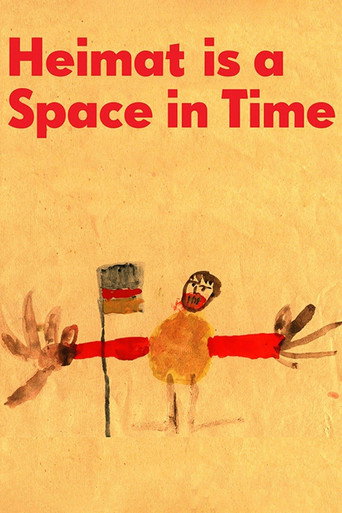
Director Thomas Heise picks up the biographical pieces left by his family, and composes an epic picture of four generations of his family, of a country, of a century.
Production
Vaterland
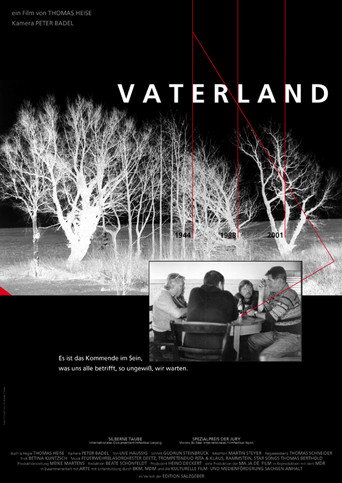
In Saxon-Anhalt, near the town of Zerbst, set away from busy roads, next to a deserted military landing strip, is the village of Straguth. An unimportant place. Lost in time. Or ahead of time. The film describes the people of this quiet place, in the past, the present and the future. A film like the digging of a hole. If one could dig in spiral form. And dig a black hole. An archaeological journey to landscape, people and things, traces of changing times and transition. Wide open landscapes and detailed drawings of people within. And on entering Otto Nathos’ modest bar, there is always talk of the war. The era of youth.
Vaterland
In Saxon-Anhalt, near the town of Zerbst, set away from busy roads, next to a deserted military landing strip, is the village of Straguth. An unimportant place. Lost in time. Or ahead of time. The film describes the people of this quiet place, in the past, the present and the future. A film like the digging of a hole. If one could dig in spiral form. And dig a black hole. An archaeological journey to landscape, people and things, traces of changing times and transition. Wide open landscapes and detailed drawings of people within. And on entering Otto Nathos’ modest bar, there is always talk of the war. The era of youth.
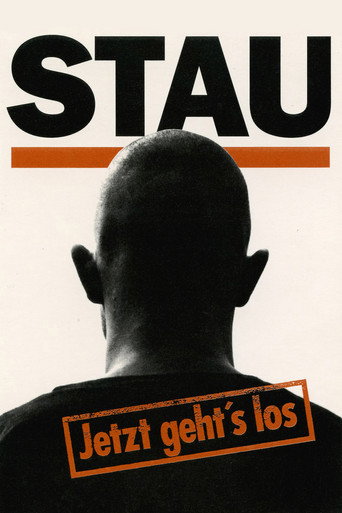
Stau – Jetzt geht’s los
A group of young people in Halle-Neustadt moving aimlessly between the concrete blocks once built as a socialist model housing estate. Familiar certainties dissolved along with the GDR. Even though there were hardly any foreigners in Saxony-Anhalt, a dull aversion to everything that hadn’t been part of daily life until then began to spread. The general dissolution, perceived as a threat, is countered by apparently clear world views. When Thomas Heise won the “Documentary Film Prize 1992” at the Duisburger Filmwoche, the laudation ended with the assumption that the film would probably provoke disagreement. It turned out to be true.
Im Glück (Neger)
Over seven years, director Thomas Heise revisits five young actors from his 2007 Berlin staging of Heiner Müller’s “Anatomy Titus.” At irregular intervals, he asks them to film their everyday lives and articulate their hopes. The footage is deliberately fragmentary and non-linear: there is no smooth narrative or causal thread. Among them, 22-year-old Sven, whose apprenticeship, naval stint, dishonorable discharge, and failed relationships leave him convinced “nothing comes next”, becomes the focal point of this long-term observation. Invoking Müller’s own outsider declaration - “I am a Negro” - the film offers a stark, uncompromising portrait of aimless youth while Heise probes his role as documentarian.
Neustadt (Stau – Der Stand der Dinge)
Eight years after the first cinematic encounter with right-wing extremist youths in Halle Neustadt, Thomas Heise revisits the protagonists and their families at the turn of the century.

Material
"Pictures from the late eighties in the GDR on up to the immediate present in the year 2008 in Germany. What has been left over besieges my mind. All these pictures keep reassembling themselves to make up something which they were originally not made for. They are still in motion. They are becoming history." (Thomas Heise)
Die Lage
Thomas Heise’s film reframes Pope Benedict XVI’s September 2011 visit to Erfurt not as a triumphal “Pope-mania” spectacle but as a meticulously orchestrated state ritual. In austere black-and-white, the omnipresent pontiff yields to police, snipers, security guards and a nervous premier, all in rigid protocol amidst Thuringia’s Catholic enclave. Under the cathedral’s slogan, “We are all together in our beliefs,” Heise quietly asks whether such choreographed faith still holds meaning.
Stau – Jetzt geht’s los
A group of young people in Halle-Neustadt moving aimlessly between the concrete blocks once built as a socialist model housing estate. Familiar certainties dissolved along with the GDR. Even though there were hardly any foreigners in Saxony-Anhalt, a dull aversion to everything that hadn’t been part of daily life until then began to spread. The general dissolution, perceived as a threat, is countered by apparently clear world views. When Thomas Heise won the “Documentary Film Prize 1992” at the Duisburger Filmwoche, the laudation ended with the assumption that the film would probably provoke disagreement. It turned out to be true.
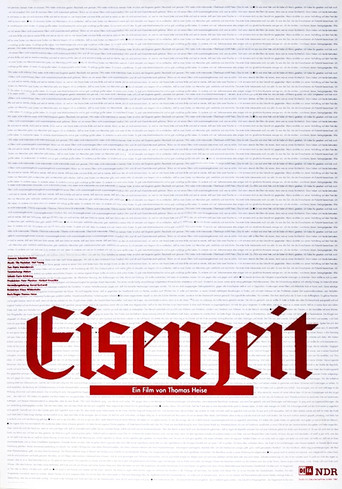
Iron Age
Ten years after breaking off the film "Anka and ..." nearly all the protagonists of that time have disappeared. Mario and Tilo hung themselves in the final phase of the GDR, Frank is surviving in West Berlin addicted to drugs, and Karsten is doing pretty well there. Anka, however, who once was in love with each of them, lives alone with her danghter in Eisenhüttenstadt. A film about normality in life.
Material
"Pictures from the late eighties in the GDR on up to the immediate present in the year 2008 in Germany. What has been left over besieges my mind. All these pictures keep reassembling themselves to make up something which they were originally not made for. They are still in motion. They are becoming history." (Thomas Heise)
Gallery