Youssef Chahine Movies, TV Shows, and Filmography
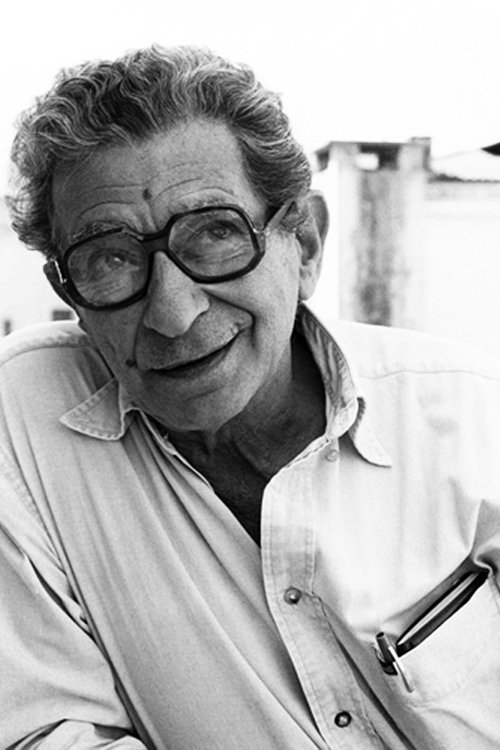
Youssef Chahine
Directing
Biography
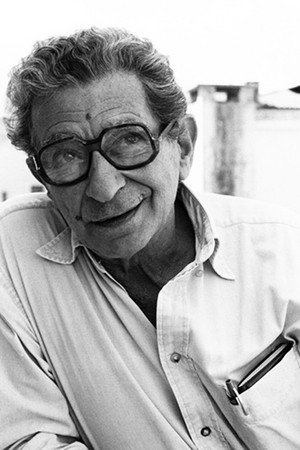
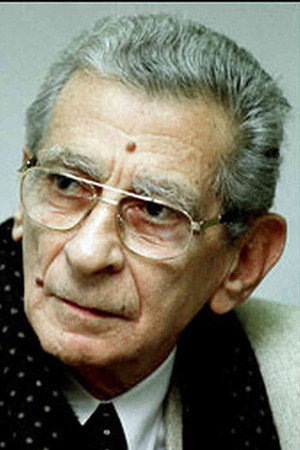
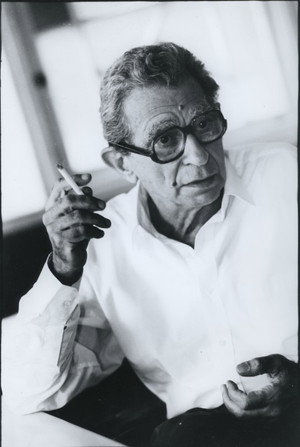
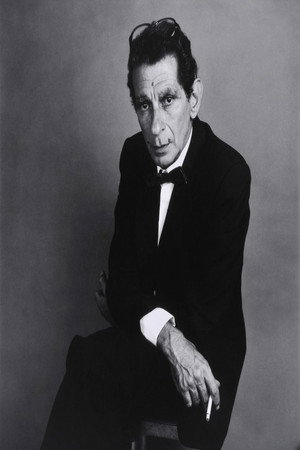
Youssef Chahine (born in Alexandria, Egypt, 1926) started studying in a friars' school and then turned to Victoria College until High School Certificate. After one year at the University of Alexandria, he moved to the U.S. and spent two years at the Pasadena Play House, taking courses on film and dramatic arts. After coming back to Egypt, cinematographer Alevise Orfanelli helped him into the film business. His film debut was Baba Amin (1950): one year later, with Son of the Nile (1951) he was first invited to the Cannes Film festival. In 1970, he was awarded a Golden Tanit at the Carthage Festival. With Le moineau (1973), he directed the first Egypt-Algeria co-production. He won a Silver Bear in Berlin for Alexandria... Why? (1979), the first installment in what proved to be an autobiographic trilogy, completed with Hadduta Masriya (1982)(An Egyptian Story (1982)) and Alexandria: Again and Forever (1989). In 1992, Jacques Lassalle proposed him to stage a piece of his choice for Comédie Française: Chahine chose to adapt Albert Camus' "Caligula," which proved hugely successful. The same year he started writing The Emigrant (1994), a story inspired by the Biblical character of Joseph, son of Jacob. This had long been a dream project, and he finally got to shoot it in 1994. In 1997, 46 years and 5 invitations later, he was again selected Hors Competition in Cannes with Destiny (1997).
Filmography Movies
Acting
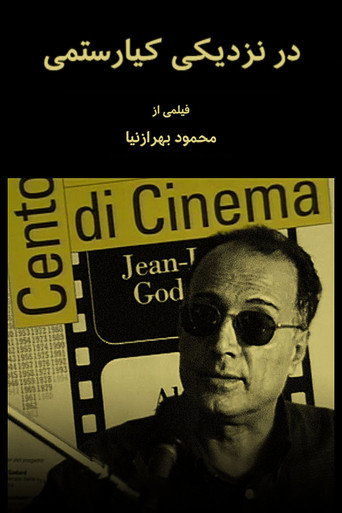
Kiarostami in Close up
A documentary that focuses on Abbas Kiarostami's cinematic philosophy talking to himself and other figures, and also seeks the opinion about his works both inside and outside his homeland.
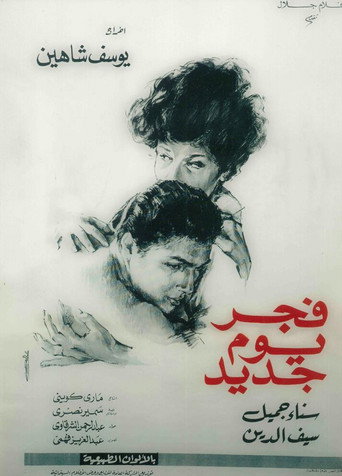
Dawn of a New Day
The story of a 40-year-old married woman who has fallen into idleness and does not know how to approach the revolutionary events in her country. She finds a new meaning in life when she falls in love with an aspiring young student. “I shot FAGR YOM GUEDID in 1964. I count it among my best films and still stand by it completely. It is about the class whose assets were nationalized after the 1952 revolution. I explored the question of whether this class still had a place in Egyptian society.”

Women Without Men
A brother disagrees with his sister which makes her move to live with her older sister in the countryside. She finds her sister living a harsh life and when the brother goes to visit them, he's surprised by the strict way imposed by the sister at home.
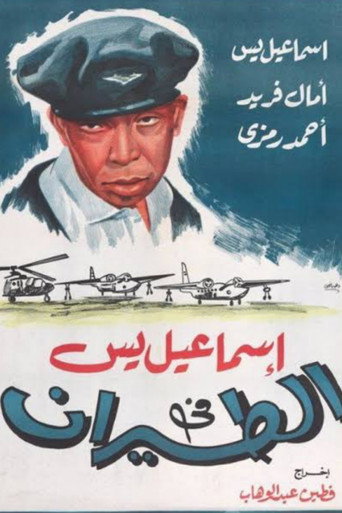
Ismail Yassine in the Air Force
Ismail El Ghandoor works as a stuntman and a small time actor in movies. He falls in love with a young belly dancer, Soheir who dreams of being the wife of a pilot. Ismail dresses up in his brother Hussein’s clothes as a pilot in the force while his brother is away on his honeymoon. When Hussein returns the truth is revealed, and each of them goes back to his real job. Will Soheir accept the real Ismail or will she continue to pursue her dream of marrying a pilot?
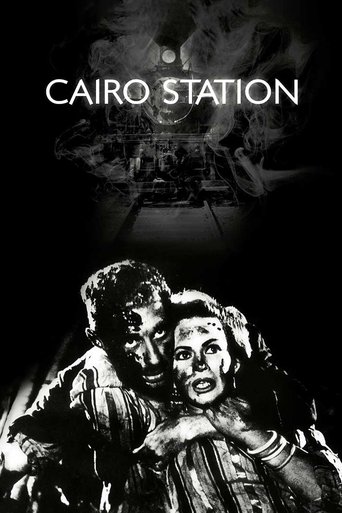
Cairo Station
Qinawi, a physically challenged peddler who makes his living selling newspapers in the central Cairo train station, is obsessed with Hanuma, an attractive young woman who sells drinks. While she jokes with him about a possible relationship, she is actually in love with Abu Siri, a strong and respected porter at the station who is struggling to unionize his fellow workers to combat their boss' exploitative and abusive treatment.
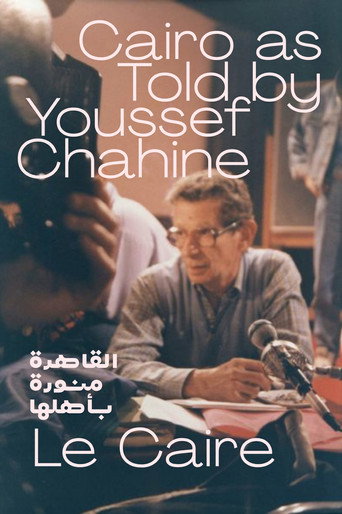
Cairo as Told by Youssef Chahine
This concise masterpiece began as a commission by French TV for the news series Envoyé spécial. By filming Cairo with his unique sense of artistic digression, Chahine transformed this portrait of a city into the self-portrait of a filmmaker.
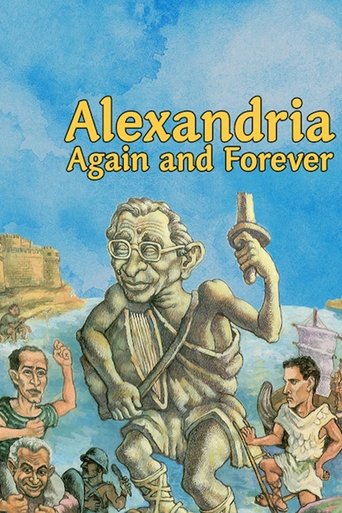
Alexandria Again and Forever
Set in 1987 against the backdrop of a hunger strike by the Egyptian film industry, Chahine himself steps in to play Yehia, the famed Egyptian director whose life is chronicled in "Alexandria, Why?" and "An Egyptian Story". Obsessed with Amr, the handsome actor he discovered and cast as his alter-ego in parts one and two of The Alexandria Trilogy, Yehia pressures Amr to star in various film projects that change even as Yehia's perception of the young actor begins to change. He first casts Amr as Hamlet, which the actor deems too demanding for his talents, then as the lead in a musical biopic of demigod Alexander the Great, who founded the city of Alexandria in 332 B.C.

Let's Talk
A mother and her daughter explore together the trajectory of four generations of women from their family, an Egyptian family from the Levant where life and cinema have been intimately linked and still are. A cross look between family archives where the real and the fiction and the autobiographical films of Youssef Chahine mingle. From Alexandria to Cairo, passing through Paris and Havana, an intimate and visceral narrative where mother and daughter cross space and time to trace destinies and question their emotions

Concerto in Darb Saada
Azoz, an employee at the Opera House accompanies a violinist who has just arrived from tours abroad in her errands in the city. He eventually gets influenced by her and starts listening to classical music, and simultaneously gets bored with his life and wife.
Production
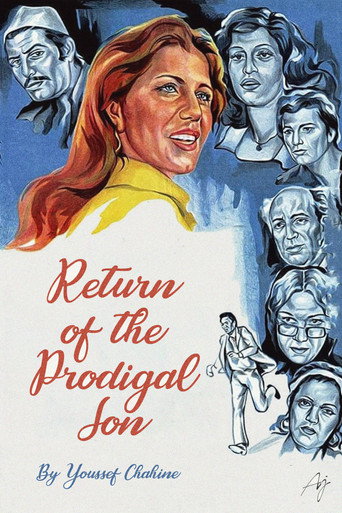
Return of the Prodigal Son
Freed after spending years in prison, an activist's homecoming turns into a dark affair as his disillusion clashes with his family's expectations. Demonstrating Chahine’s eclecticism, this is an elegant melodrama, exuberant musical, layered allegory, and profound portrait of personal and political disillusionment.
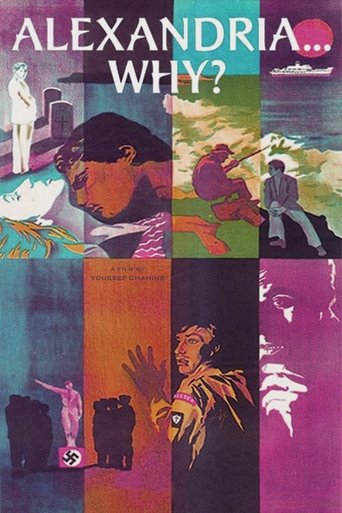
Alexandria… Why?
Amid the poverty, death, and suffering caused by World War II, 18-year-old Yehia retreats into a private world of fantasy and longing. Obsessed with Hollywood, he dreams of studying filmmaking in America but struggles to pursue his dream, given the constraints of his life in the middle class and the horrors of war.
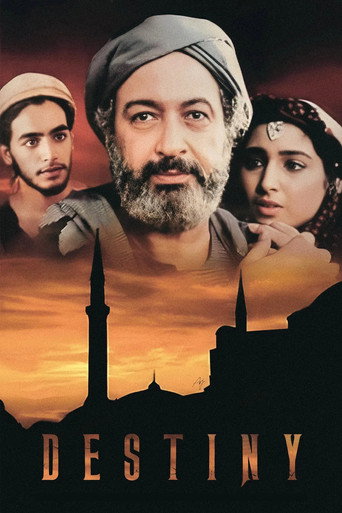
Destiny
In the 12th century's Andalusia lives Ibn Rushd a prominent Islamic philosopher with his wife Zeinab and daughter Salma. The principality is ruled by Khalifa ElMansour who has two sons, ElNasser, an intellectual that likes Ibn Rush and is in love with his daughter Salma. The younger son Abdallah is more into dancing and poetry, spending most of his times with the gypsy family and getting the daughter pregnant. The Khalifa is depending on the extremists to build his army granting them more power which they use to combat artists and philosophers. The extremists succeed in recruiting Abd Allah and train him to kill his father. Events go on where Marawan, the gypsy singer, is killed and Ibn Rushd's books are burnt. Adapted from the real life of Ibn Rushd AlMasir is Chahine's statement against extremism.
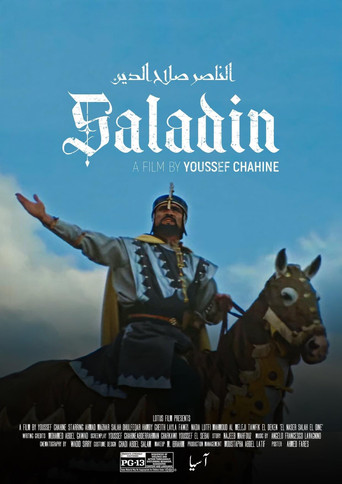
Saladin
The first Sultan of Egypt and Syria leads the Muslim military campaign against the invading Christians from Europe during the Third Crusade.
Saladin
The first Sultan of Egypt and Syria leads the Muslim military campaign against the invading Christians from Europe during the Third Crusade.
Cairo Station
Qinawi, a physically challenged peddler who makes his living selling newspapers in the central Cairo train station, is obsessed with Hanuma, an attractive young woman who sells drinks. While she jokes with him about a possible relationship, she is actually in love with Abu Siri, a strong and respected porter at the station who is struggling to unionize his fellow workers to combat their boss' exploitative and abusive treatment.
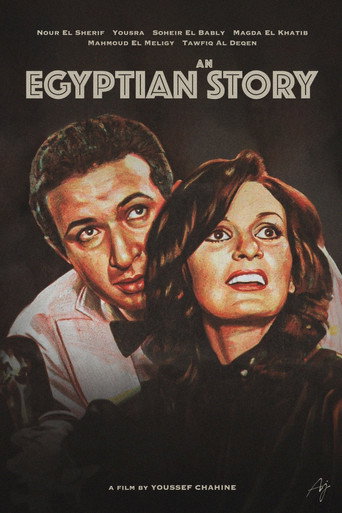
An Egyptian Story
After we last see him in "Alexandria, Why?" Egyptian filmmaker Yehia Mourad is in his thirties, and successful in his work, he has grown distant from his wife and children and suffers a symbolic blockage of the heart while shooting the final scenes of his latest film. After being flown to England for evaluation, it's determined that Yehia must undergo emergency surgery. Fact and fiction blend seamlessly—with healthy doses of cleverly absurdist fantasy—as the film explores the various personalities and forces that have made Yehia (and Youssef Chahine) the man he has become.
Alexandria Again and Forever
Set in 1987 against the backdrop of a hunger strike by the Egyptian film industry, Chahine himself steps in to play Yehia, the famed Egyptian director whose life is chronicled in "Alexandria, Why?" and "An Egyptian Story". Obsessed with Amr, the handsome actor he discovered and cast as his alter-ego in parts one and two of The Alexandria Trilogy, Yehia pressures Amr to star in various film projects that change even as Yehia's perception of the young actor begins to change. He first casts Amr as Hamlet, which the actor deems too demanding for his talents, then as the lead in a musical biopic of demigod Alexander the Great, who founded the city of Alexandria in 332 B.C.
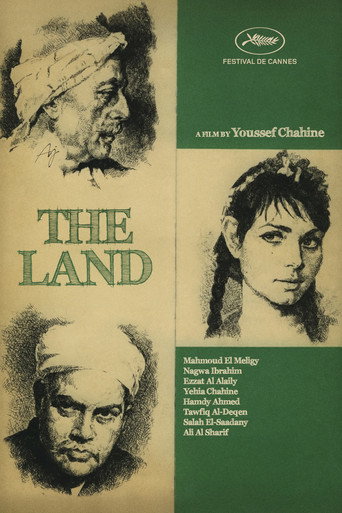
The Land
Set in 1933, the mayor informs the peasants that the share of irrigation of their land will be split equally between them and feudal lord Mahmoud Bey. The peasants send Mohamed Effendi to submit a petition to the government. Mahmoud Bey then proposes a project that would require taking part of the peasants' lands.
Alexandria Again and Forever
Set in 1987 against the backdrop of a hunger strike by the Egyptian film industry, Chahine himself steps in to play Yehia, the famed Egyptian director whose life is chronicled in "Alexandria, Why?" and "An Egyptian Story". Obsessed with Amr, the handsome actor he discovered and cast as his alter-ego in parts one and two of The Alexandria Trilogy, Yehia pressures Amr to star in various film projects that change even as Yehia's perception of the young actor begins to change. He first casts Amr as Hamlet, which the actor deems too demanding for his talents, then as the lead in a musical biopic of demigod Alexander the Great, who founded the city of Alexandria in 332 B.C.
Gallery