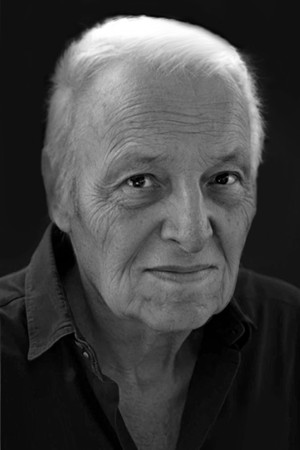
Yann Le Masson Movies, TV Shows, and Filmography
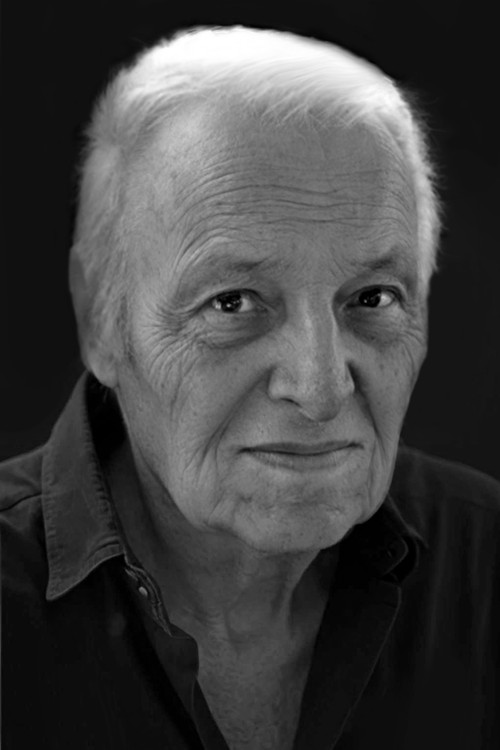
Yann Le Masson
Directing
Biography
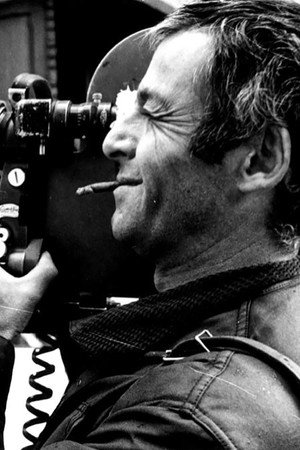
Yann Le Masson is a French documentary filmmaker and director of photography, born on June 27, 1930 in Brest (Finistère), died on January 20, 2012 in Avignon (Vaucluse). Yann Le Masson, born into a traditionalist Catholic family of six children, a Basque mother and a Breton father, grew up in Brest, Vannes, Toulon and then Dakar. After solid studies in mathematics and then electrical engineering, he entered the Ecole de cinéma de la rue de Vaugirard, before IDHEC where he belonged to the cell of filmmakers campaigning against the Indochina War, then for the independence of Morocco and Tunisia and against the war in Algeria. A graduate of IDHEC in 1955, he began working as an assistant operator but, as a convinced anti-colonialist, he worked to extend his deferment of military service until he was twenty-five and considered slipping away to Italy. He received his military summons to join the Pau paratrooper base in the Pyrenees. He then consulted the PC hierarchy up to the Political Bureau, which opposed insubordination considered to be "individualistic". Despite his police file, the young paratrooper was able to follow the training of the Reserve Officer Cadets of Saint-Maixent (EOR). Leaving as an aspirant, he became a section leader in a shock parachute regiment on the Moroccan border in southern Algeria. In his testimony, he wrote: "I will not dwell on this period which lasted twenty-seven months and during which, as everywhere else, prisoners that the gendarmerie came to pick up by helicopter were dropped into the void, wood work was organized, mechtas or nomads' tents were set on fire. Nor on the role of a section leader... who found himself trapped... Sometimes it was necessary to refuse to obey and I was demoted, to become 'second reserve pump'". A filmmaker friend, also a communist, Michèle Firk brought him to the FLN support network. "I put myself at the disposal of those I had fought against against my will and this complicity with the Algerians cured me of the after-effects of a war waged against them in contradiction with my ideas. I thus worked with them from 1959 to 1962". He gave military training courses to Algerian activists from the Nanterre shantytown… carrying a suitcase for the FLN, he filmed in Tunisia with Olga Poliakof, J'ai 8 ans which was banned for ten years on the national territory… French colonialism was again one of his targets, this time in Reunion: Sucre Amer (1962), also banned for ten years in France. After filming the burial of the dead of the Charonne metro in 1962, he recorded that of the young activist Gilles Tautin in 1968 with a camera lent by Marin Karmitz. In 1971, in Japan, Yann Le Masson directed Kashima Paradise with Bénie Deswarte (on a commentary by Chris Marker) what some consider to be his masterpiece. He then passed his certificates as a captain and professional mechanic for river transport. Between 1980 and 1993, on the boat Nistader, Yann Le Masson worked as a river transporter in Europe. Yann Le Masson died quietly in January 2012. A boatman, cameraman and author of a rare body of work, he left behind five films, all closely linked to his personal journey and his commitments.
Filmography Movies
Production
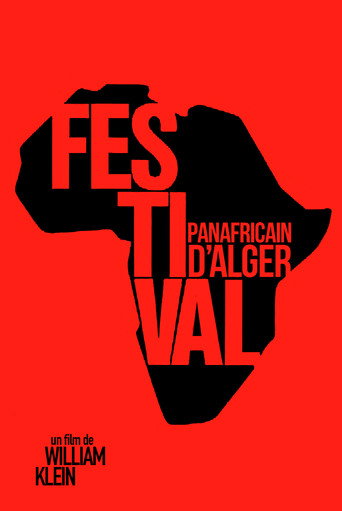
The Panafrican Festival in Algiers
Festival panafricain d'Alger is a documentary by William Klein of the music and dance festival held 40 years ago in the streets and in venues all across Algiers. Klein follows the preparations, the rehearsals, the concerts… He blends images of interviews made to writers and advocates of the freedom movements with stock images, thus allowing him to touch on such matters as colonialism, neocolonialism, colonial exploitation, the struggles and battles of the revolutionary movements for Independence.
Look, She Has Her Eyes Wide Open
In March 1977, six activists of the Movement for the Liberation of abortion and contraception (MLAC) were tried for the illegal practice of abortion. Around the trial, the film reveals the lives of this group of women proposing to appropriate medical knowledge associated with childbirth and abortion.
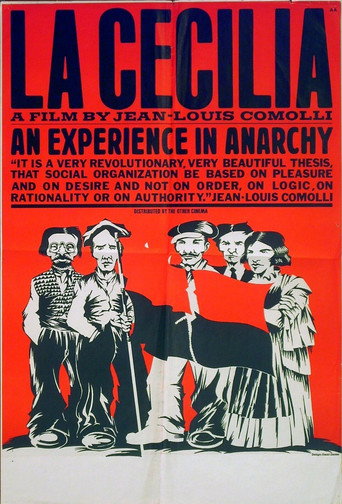
La Cecilia
At the end of the nineteenth century, Italian anarchists, ten men, one woman, libertarian, collectivist emigrate to Brazil to start a leaderless community, without hierarchy, without a boss without police, but not without conflict nor passion.
Rosalie
Based on a short story by Guy de Maupassant, Borowczyk relates the plight of a servant girl who killed and buried her child in the garden.
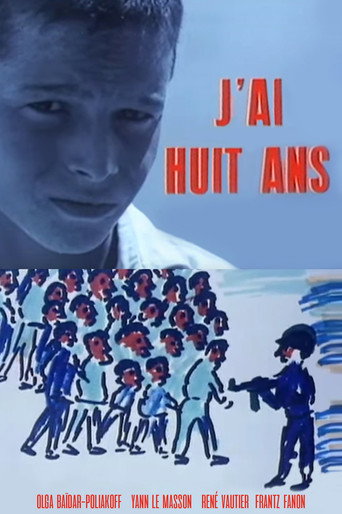
J'ai Huit Ans
Algerian children, survivors of the war and refugeeing in Tunisian camps, recount the tragic events they have experienced, from drawings they have made themselves.
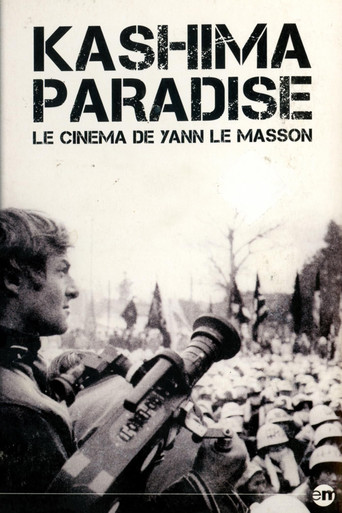
Kashima Paradise
This 1973 French documentary explores the conflict between modern values and material comforts in Japan and the more traditional obligations (giri) and culture which are still the real backbone of the society. Among the topics touched on are the Osaka Expo, battles against pollution, and Japanese leftist movements.
Sucre amer
In 1963, in Reunion, Michel Debré, Prime Minister of General De Gaulle, aims for the post of deputy. Yann Le Masson follows his eventful campaign. His film remained banned in France for 10 years.
Voyage en Capital
On a flight from Algiers to Paris, an Algerian worker returning to his job meets a young Algerian woman born in France, who is visiting that country for the first time. They lose sight of each other and then meet again. Each of them lives in a different world and has to face problems specific to their circumstances. The film is a portrait of intersecting struggles in the context of the late 1970s in France, celebrating solidarity, friendship, the strength of the collective, resistance, and dialogue.
Grand Prix
The most daring drivers in the world have gathered to compete for the 1966 Formula One championship. After a spectacular wreck in the first of a series of races, American wheelman Pete Aron is dropped by his sponsor. Refusing to quit, he joins a Japanese racing team. While juggling his career with a torrid love affair involving an ex-teammate's wife, Pete must also contend with Jean-Pierre Sarti, a French contestant who has previously won two world titles.
Un américain
An American sculptor, passioned by literature, comes to Paris to perfect his art, but ends up with barely no money, and to survive has to sell The New York Herald Tribune, at night, to his compatriots. A look at the bohemian Parisian life of the fifties.
Gallery