Yann Hubert Movies, TV Shows, and Filmography

Yann Hubert
Camera
Biography
No biography available.
Filmography Movies
Acting
700 Sharks
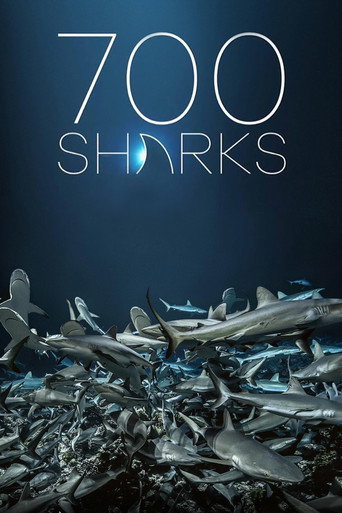
Gombessa Expedition 4 Laurent Ballesta went to observe a gathering of thousands of groupers during the full moon of June 2014 (Le mystère mérou) in the southern pass of the Polynesian atoll of Fakarava, where he discovered a pack of over seven hundred grey sharks. How can this unprecedented density be explained? Could it be that social behaviors govern this wild horde? During three years of preparation, he and the other divers on his international scientific team tamed their fear by abandoning the defensive reflexes that provoke shark aggression, with the aim of slipping into the heart of the raging pack to study and film it from the inside. Sharks fitted with microchips, receiving antennas, hydrophones, an ark of 32 synchronized cameras...: a whole technological arsenal is mobilized for the project. As the groupers approach for their annual spawning, what battle plan will the sharks deploy?
700 Sharks (Gombessa 4, Genesis)
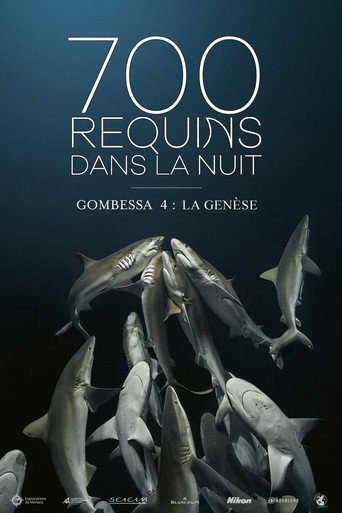
Originally, in 2014, Laurent Ballesta had just one precise objective: to unravel the mystery of groupers. To understand the issues involved in their collective reproduction. But although focused on the study of groupers, the real surprise came from the sharks. Never before had the team been confronted with such a density of grey reef sharks. The divers took up the challenge of counting them. Methodically, they repeated the operation many times to arrive at the impressive figure of 700 grey reef sharks. Each year, the team returned to the southern pass of Fakarava in French Polynesia. Until 2019, for the fourth expedition, "Gombessa 4" is the synthesis of precise and unique scientific protocols. The mission demonstrated that shark hunts are not anarchic, but rely in part on social organization within the horde, following in the footsteps of the 700 grey sharks in "700 sharks in the night (Gombessa 4, Genesis)".
Production
The Grouper Mystery
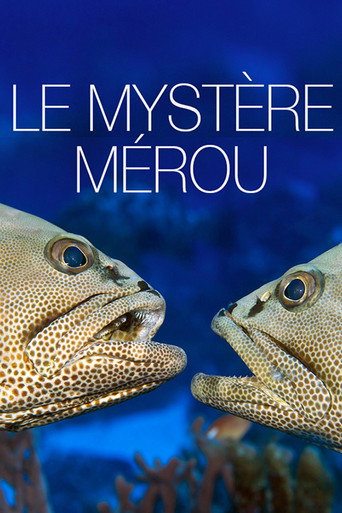
In French Polynesia, there is a place where every year, thousands of groupers gather in secret followed by hundreds of sharks… The photographer, diver and biologist Laurent Ballesta, with his team, wanted to better understand what motivates these fish to wait until the exact day of the full moon to spawn all at once! With the help of researchers from the CNRS of Moorea, they dived and conducted numerous experiments to study and witness this unique phenomenon. Taking advantage of this period of incredible richness, Laurent Ballesta did a record dive of 24 hours at over 20 meters.
700 Sharks
Gombessa Expedition 4 Laurent Ballesta went to observe a gathering of thousands of groupers during the full moon of June 2014 (Le mystère mérou) in the southern pass of the Polynesian atoll of Fakarava, where he discovered a pack of over seven hundred grey sharks. How can this unprecedented density be explained? Could it be that social behaviors govern this wild horde? During three years of preparation, he and the other divers on his international scientific team tamed their fear by abandoning the defensive reflexes that provoke shark aggression, with the aim of slipping into the heart of the raging pack to study and film it from the inside. Sharks fitted with microchips, receiving antennas, hydrophones, an ark of 32 synchronized cameras...: a whole technological arsenal is mobilized for the project. As the groupers approach for their annual spawning, what battle plan will the sharks deploy?

Wild Tuamotus
The infinity of the Pacific Ocean: It makes up almost a third of the earth's surface. The inhabitants are constantly looking for food and shelter. There are only a few places of refuge in this water desert and yet here - in the infinite blue - there is an oasis. Halfway between America and Australia lies the Tuamotu Archipelago, in the middle of the Pacific Ocean. "Tuamotu" could be translated as "The Distant Islands". The archipelago, consisting of 76 atolls, is difficult to reach and far away from any trade routes.
Gallery