Wu Tsang Movies, TV Shows, and Filmography
Wu Tsang
Directing
Biography
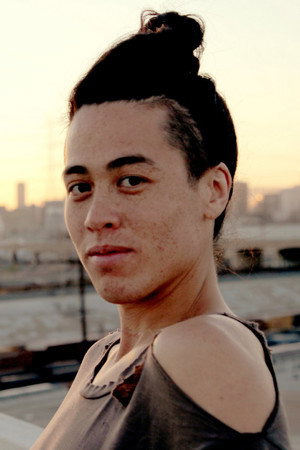
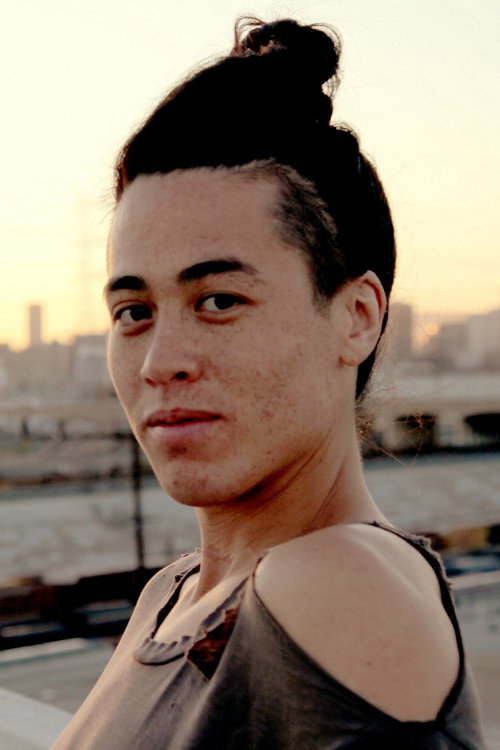
Filmmaker, installation artist, activist and performer Wu Tsang produces artwork that addresses issues in the trans and LGBT community. Her work interrogates themes of gender identity, social spaces and the tension between film and art. In 2012, she produced the film Wildness, which focused on the weekly performance-art dance parties of the same name and featured vignettes of marginalised gay and trans communities. Says the artist, “For me performance is like research; lived experience is fundamental. I have to do these things to understand or have any critical analysis.” Tsang was featured in the 2012 Whitney Biennial and New Museum Triennial, and the 2014 edition of the Hammer Museum’s biennial exhibit “Made in L.A.”
Filmography Movies
Acting
Tender Point Ruin
An exquisite corpse, the film extends the artist’s interests in the writings of Etel Adnan, the coming present and the personal as political.
Miss Communication and Mr:Re
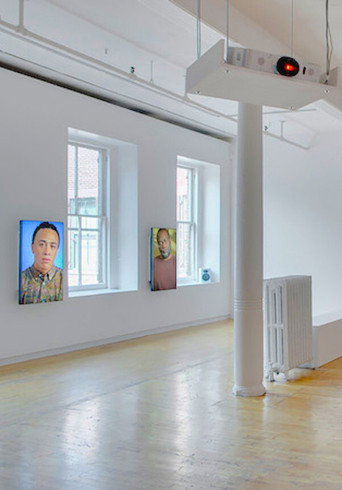
This two-channel film, initiated as a long-distance communication experiment, was the result of an exchange with Fred Moten, the poet and theorist whose work explores representation and identity in black avant-garde culture. Moten and Tsang left each other voicemail messages every day over a two-week period, never actually making contact, but often riffing off of the other’s previous message. The recordings of these messages serve as voiceover for footage of the faces of Moten and Tsang looking directly at the camera with deadpan expressions.
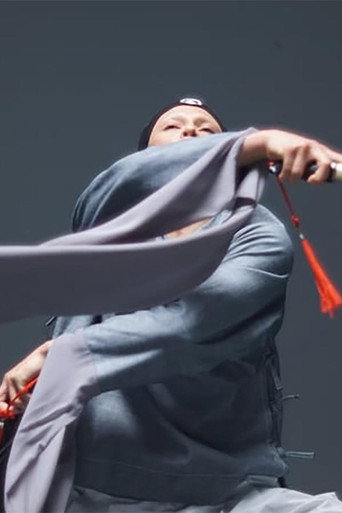
Duilian
Inspired by the untold personal story of the 19th-century Chinese poet and revolutionary Qiu Jin, Wu Tsang brings to life, subverts, and re-enacts the lesser-known romance and friendship with calligrapher Wu Zhiying. Set in contemporary Hong Kong, the film shifts between time and space, past and present, fact and fiction through Tsang's continued exploration of language and misinterpretation.
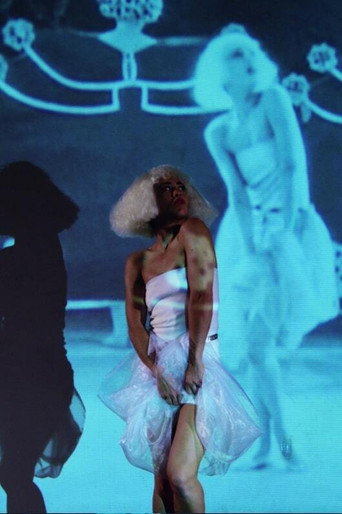
Salomania
Salomania reconstructs a dance: the ‘dance of the seven veils’ from Alla Nazimova’s 1923 silent film Salomé. Also shown and rehearsed are sections from ‘Valda’s Solo,’ which the choreographer and filmmaker Yvonne Rainer created after having seen Nazimova’s film.
Production
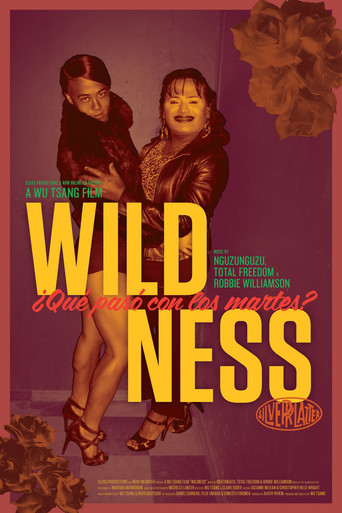
Wildness
Rooted in the tropical underground of Los Angeles nightlife, Wildness is a portrait of the Silver Platter, a historic bar that has been home to Latin/LGBT immigrant communities since 1963. With a magical-realist flourish the bar itself becomes a character, narrating what happens when a weekly party (organized by Director Wu Tsang, DJs NGUZUNGUZU, and Total Freedom) called Wildness explodes into creativity and conflict. What does "safe space" mean? Who needs it? And how does it differ among us? At the Silver Platter, the search for answers creates coalitions across generations.
MOBY DICK; or, The Whale
An adaptation of Moby Dick as a silent film and theatre piece with a postcolonial and queer reading that highlights its marginal characters.
Wildness
Rooted in the tropical underground of Los Angeles nightlife, Wildness is a portrait of the Silver Platter, a historic bar that has been home to Latin/LGBT immigrant communities since 1963. With a magical-realist flourish the bar itself becomes a character, narrating what happens when a weekly party (organized by Director Wu Tsang, DJs NGUZUNGUZU, and Total Freedom) called Wildness explodes into creativity and conflict. What does "safe space" mean? Who needs it? And how does it differ among us? At the Silver Platter, the search for answers creates coalitions across generations.
The Shape of a Right Statement
In this video, Tsang explores language as an instrument of power. She re-speaks a text from In My Language, a video posted to YouTube in 2007 by autism activist and blogger Amanda Baggs, in which, using a speech-generation device, Baggs describes her experience as an individual who communicates nonverbally in a predominantly verbal world. Tsang recites Baggs’s address verbatim, using a technique she calls “Full Body Quotation,” in which she conceives of her own body as a mimetic “playback device” that replicates the tone, inflection, and rhythm of the original monologue as it plays through an unseen earpiece.
Girl Talk
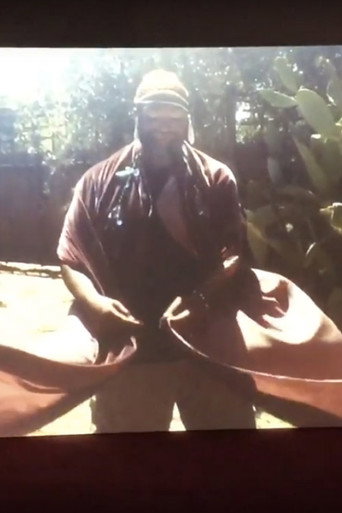
Conceived as a performance for the camera, Girl Talk captures poet and theorist Fred Moten in a verdant garden donning an ornate velvet cape and crystal jewelry: what is generally coded as decidedly feminine attire. His body spins slowly, filling the frame with mesmerizing continuous motion. Ambient light at times diffuses his image to a rotating blur. He lip-syncs to a jazz rendition of the title song, Girl Talk, sung originally by Tony Bennett, a darling of 60s middle class white culture.
Mishima in Mexico
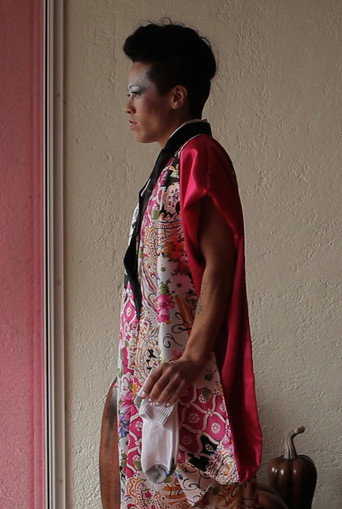
Mishima in Mexico draws inspiration from Yukio Mishima’s novel Thirst for Love and from Mishima’s legacy as it is encountered today within a global queer context. The original novel is a twisted romance set in 1950s post-war Japan. Etsuko, a widowed society woman falls in love with her servant Saburo, a rural farm boy, but her desire drives them both to tragedy. In collaboration with Alex Segade, Tsang’s stripped down adaptation is set in a single room of an iconic hotel in Mexico City. A writer and director struggle to relate through the creative process, while on-screen as Etsuko and Saburo, they shift in and out of mutable characters. In this experimental narrative, the liminal space between reality and fantasy for the performer becomes fluid and the separation between observer and observed starts to collapse.
We Hold Where Study
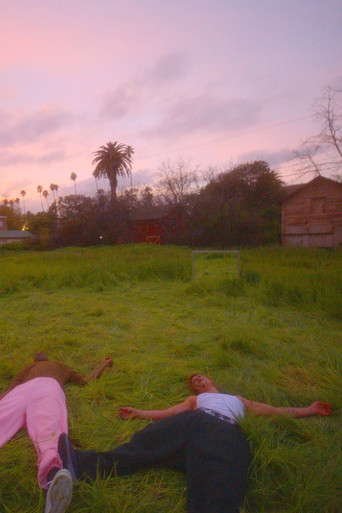
We hold where study takes a choreographic approach to image-making and mourning. The film enacts a series of duets, both within and between images, featuring choreography by boychild with Josh Johnson and by Ligia Lewis with Jonathan Gonzalez, both to original music by Bendik Giske. The work is rooted in Tsang’s ongoing dialogue with collaborators Fred Moten and Stefano Harney, authors of The Undercommons, and in particular on their recent essay Leave Our Mics Alone, which posits an (im)possible set of images of resistance, through poetic notions of blackness (and/or transness and/or queerness) as an improvisational mode of being, in common with others, working through and of the environment.
Mishima in Mexico
Mishima in Mexico draws inspiration from Yukio Mishima’s novel Thirst for Love and from Mishima’s legacy as it is encountered today within a global queer context. The original novel is a twisted romance set in 1950s post-war Japan. Etsuko, a widowed society woman falls in love with her servant Saburo, a rural farm boy, but her desire drives them both to tragedy. In collaboration with Alex Segade, Tsang’s stripped down adaptation is set in a single room of an iconic hotel in Mexico City. A writer and director struggle to relate through the creative process, while on-screen as Etsuko and Saburo, they shift in and out of mutable characters. In this experimental narrative, the liminal space between reality and fantasy for the performer becomes fluid and the separation between observer and observed starts to collapse.
Miss Communication and Mr:Re
This two-channel film, initiated as a long-distance communication experiment, was the result of an exchange with Fred Moten, the poet and theorist whose work explores representation and identity in black avant-garde culture. Moten and Tsang left each other voicemail messages every day over a two-week period, never actually making contact, but often riffing off of the other’s previous message. The recordings of these messages serve as voiceover for footage of the faces of Moten and Tsang looking directly at the camera with deadpan expressions.
one emerging from a point of view
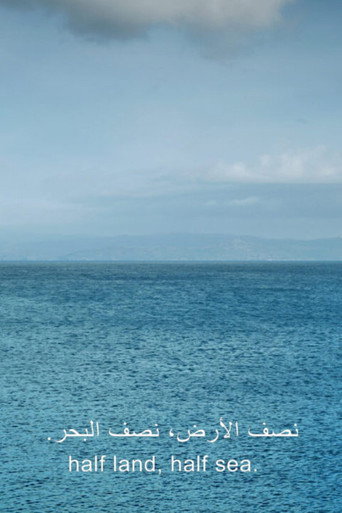
Set on the northeastern shore of Lesbos, Greece, the work revolves around a scenario in which two women cross paths three years ago – although they never met.
Gallery