Acting
No biography available.
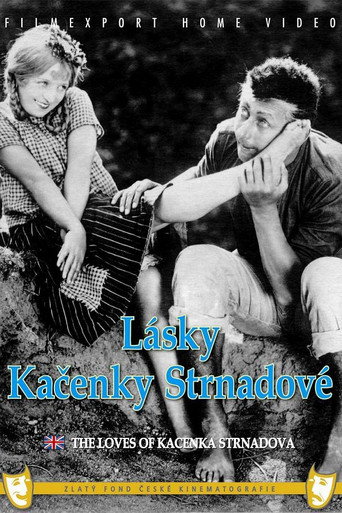
The film depicts the adventures of Kacenka (Zdena Kavková) and Vincek (Vlasta Burian), two innocent country bumpkins who live in a Czech small town, and the various jobs that Kacenka has once she moves to Prague, that beautiful capital city. Our heroine will have to bear difficult working conditions and to make things worse, she falls in love with a fake aristocrat. Fortunately her companion, Vincek who is also in Prague, has an unrequited love for her. Though he is the cause of many Kacenka's problems, Vincek finally will help and resolve her loves troubles. And of course there is a happy ending that brings the Czech couple together.
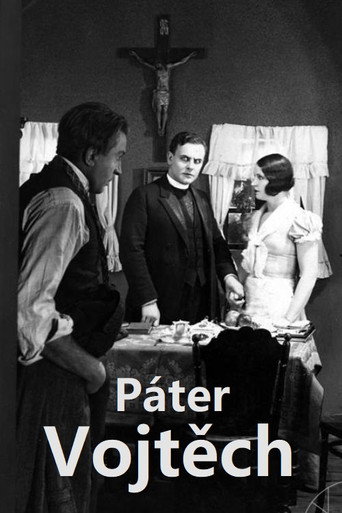
Father Vojtech (Czech: Páter Vojtěch) is a 1929 silent Czech romance film directed by Martin Frič.
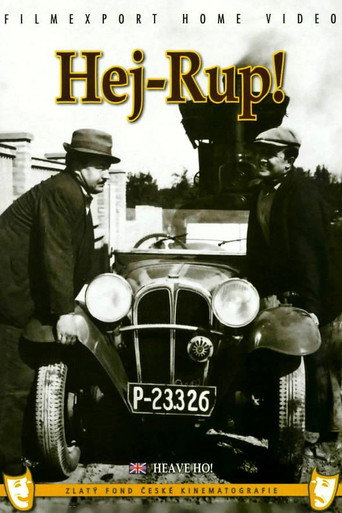
A Milk-Cannery baron, Jakub Simonides, is broken by the Canned Milk-Trust and, in his wanderings with a worker, Filip Kornet, he discovers he still owns a half-finished apartment-house. They rally the workers and complete the building for use as a collectivist dairy. The cooperative flourishes and after a chase/pursuit with the police, pratfalls, slapstick and various crashes, the workers buy out the Milk-Trust.
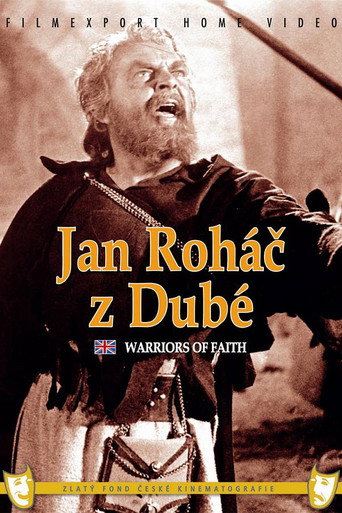
After the Battle of Lipany, the remnants of the Hussite troops concentrated under the leadership of Jan Roháč of Dubé at Sion Castle. However, he had no prospects of victory against the soldiers of the Lordship. Sion was conquered, Roháč of Dubé was captured and executed as a pest in Prague on September 9, 1437.
Eva has just gotten married to an older gentleman, but discovers that he is obsessed with order in his life and doesn't have much room for passion. She becomes despondent and leaves him, returning to her father's house. One day while bathing in the lake, she meets a young man and they fall in love. The husband has become grief stricken at the loss of his young bride, and fate brings him together with the young lover that has taken Eva from him.
“The Carpathians are medieval!” one character bellows, and this tale of the tree-chopper Petro, his faithless wife Marijka, and various scheming businessmen and foremen does little to disprove the assertion. Interestingly filmed with a nonprofessional cast recruited from the region, Faithless Marijka may have a neorealist conceit, but its direction is utterly futuristic, filled with the lightning-fast montage techniques and low-angle camera of the Soviet avant-garde (along with its invigorating agitprop).
Alois Kohout is a high school professor, a despotic family tyrant and a terror before whom everyone trembles in panic. And yet there is a man who can knock down the professor's pride, restore his family's freedom and, on top of that, take the professor's daughter to a peaceful marriage haven...
In Slovakia’s Tatra mountains, ironsmith Pavel lives with his son Janko and orphan Anuška, who are close. Janko spends summer pasturing sheep, while Anuška deals with Jura’s advances. Janko meets Soňa Varenová, a city woman seeking peace, and becomes her guide, causing village gossip. At a festival, Janko ignores Anuška for Soňa, angering Pavel. Pavel asks Soňa to leave Janko for Anuška, and she agrees despite her feelings. Janko seeks Anuška’s forgiveness, but she’s in the mountains. He follows her, and they reconcile by lighting a large fire.
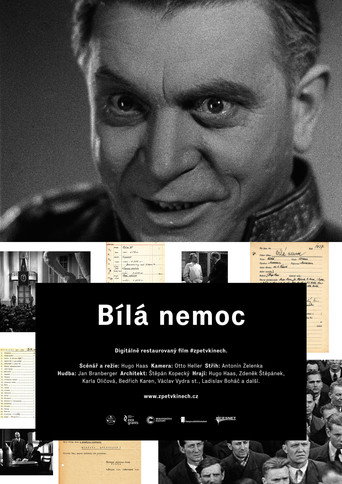
In a country whose people have just been successfully persuaded of their superiority and the justification for military expansion by the fiery speeches of a dictator, the bacillus of a highly destructive form of leprosy has spread. It is called morbus Tshengi, or popularly „white disease“. The only one who has developed an effective cure for it is a physician of the poor named Galén. But he refuses to reveal the secret of his cure as long as the powerful destroy human lives through wars.