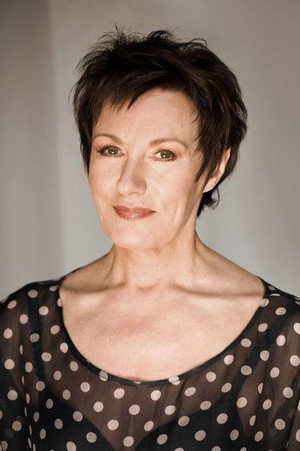
Waltraud Meier Movies, TV Shows, and Filmography
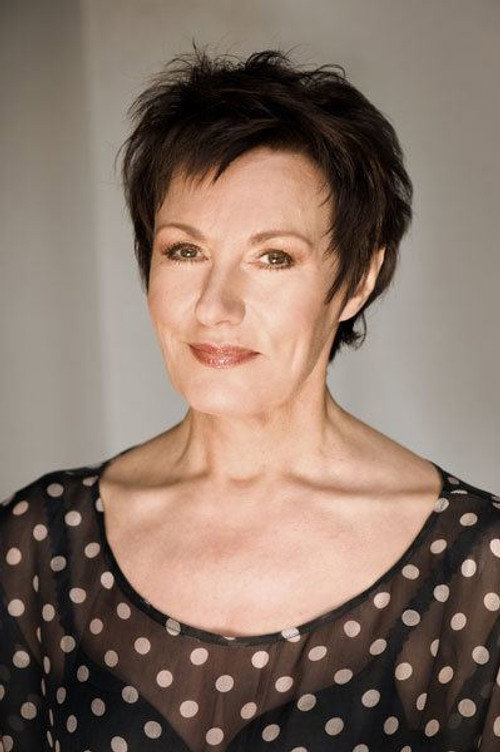
Waltraud Meier
Acting
Biography
Grammy Award winner Waltraud Meier is a German dramatic soprano and mezzo-soprano singer. She is particularly known for her Wagnerian roles as Kundry, Isolde, Ortrud, Venus, Fricka, and Sieglinde, but has also had success in the French and Italian repertoire appearing as Eboli, Amneris, Carmen, and Santuzza. She resides in Munich. Meier has performed in the world's famed opera houses (including La Scala, Covent Garden, Metropolitan Opera, the Vienna State Opera, the Bavarian State Opera, Lyric Opera of Chicago, and Colón Theater). She performed Wagner at the Mecca of Wagner performance, the Bayreuth Festspielhaus. She has performed under the batons of conductors including Riccardo Muti, Daniel Barenboim, Claudio Abbado, James Levine, Lorin Maazel, Zubin Mehta, and Giuseppe Sinopoli. Waltraud Meier was born in Würzburg, Germany. She sang in various choral groups during her younger years. Upon finishing her secondary education, she began graduate studies in English and Romance Languages while also taking voice lessons. She studied singing with Professor Dietger Jacob. In 1976, she decided to concentrate on a singing career and soon thereafter debuted at the Würzburg Opera as Lola in Cavalleria rusticana. Over the next several years she performed regularly at the opera house in Mannheim (1976–78). She resides in Germany.
Filmography Movies
Acting
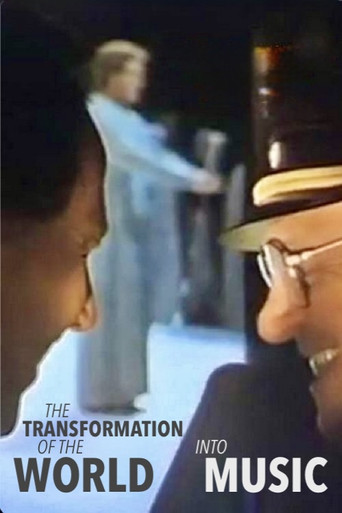
The Transformation of the World Into Music
This film was prepared as a introduction to a series of opera broadcasts on German television. It depicts the behind-the-scenes manoeuvrings in preparation for the annual opera festival in Bayreuth.
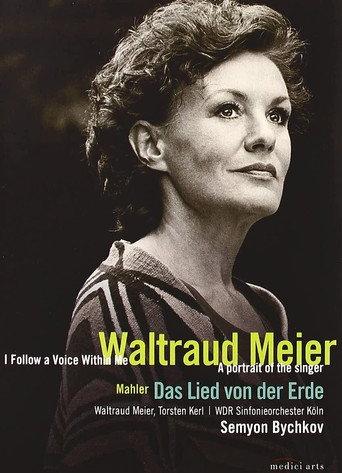
Waltraud Meier: I follow a voice within me
Waltraud Meier is “La Wagnerissima”, the queen of Wagner’s repertoire. In her very personal account “I follow a voice within me”, we enter her world and learn about her motivations, aspirations, and her joyful way of pursuing them. In addition to personal insights, this truly ingenious portrait presents Waltraud Meier on stage and in rehearsal in her most celebrated Wagner roles and as an interpreter of Mahler’s Lieder. It becomes clear how she coined today’s musical world when other great musicians such as Daniel Barenboim or Plácido Domingo speak about her and her work. This beautiful portrait of one of the greatest interpreters of our time is rounded off with a powerful recording of Mahler’s “Lied von der Erde”.
Faszinierende Frauen - Faszinierende Stimmen
Documentary about female opera stars.
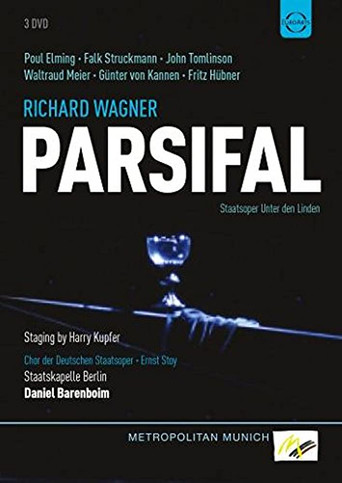
Parsifal
This dramatic production by the brilliant German stage director Harry Kupfer marked Daniel Barenboim's appointment as the artistic director of the Berlin State Opera in 1992. The cast is made up of the finest Wagnerian singers of the period, all of whom enjoyed substantial international careers. Barenboim's superb conducting reveals Wagner's multi-layered score in all it's glory.
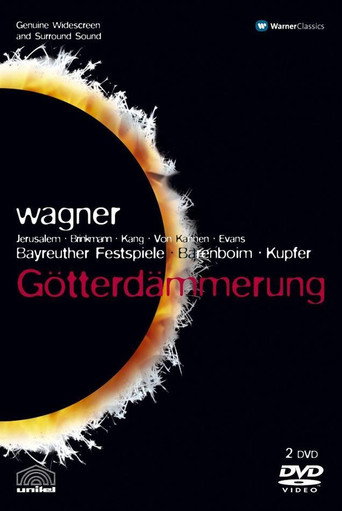
The Ring Cycle: Gotterdammerung
THIRD DAY OF THE RING CYCLE. Günter, the lord of the Rhine people, gives Siegfried a love potion that causes Siegfried to forget Brünnhilde and fall in love with Günter's sister Gutrane. Siegfried has given Brünnhilde the Ring as a token of their love, but her Valkyrie sister urges her to destroy it, because their father Wotan has lost his spear and power and is hiding out in Valhalla. Instead, Brünnhilde keeps it, and under the influence of the potion, Siegfried steals it from her. Enraged, Brünnhilde helps Alberich's son murder Siegfried, but Siegfried's memory returns, and he dies thinking of Brünnhilde. Brünnhilde repents and orders a funeral pyre to be built. She rides into the fire herself, and the Rhinemaidens get the ring back. The story closes with flames flickering about Valhalla in the background. Filmed at the Bayreuth Festspielhaus in June & July 1991.
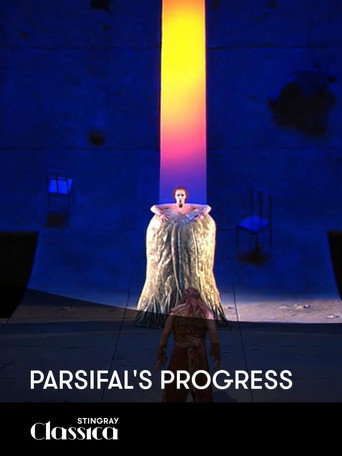
Parsifal's Progress
A documentary about Nikolaus Lehnhoff's 2004 production of Wagner's last opera, Parsifal, at the Festspielhaus Baden-Baden. Interviews, behind-the-scenes footage and clips of the live performances provide a documentary analysis of the opera on the quest for the holy grail.
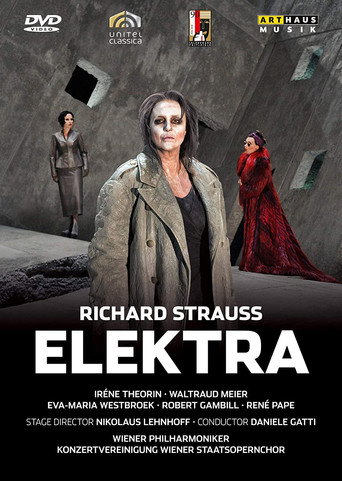
Strauss R: Elektra
The Nikolaus Lehnhoff production of Richard Strauss's "Elektra", recorded live at the Salzburger Festspiele in 2010. Iréne Theorin stars as Elektra, with Eva-Maria Westbroek as Chrysothemis, Waltraud Meier as Klytämnestra, Robert Gambill as Aegisth, and René Pape as Orest. Daniele Gatti conducts the Wiener Philharmoniker.
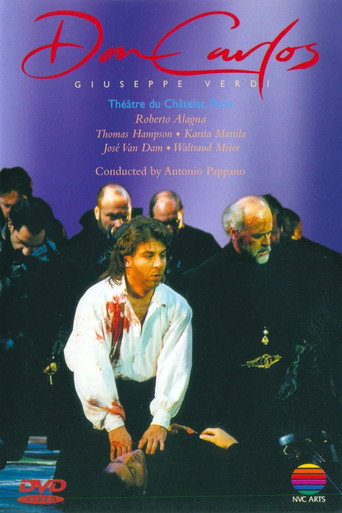
Verdi: Don Carlos
Luc Bondy's 1996 production of Don Carlos was staged, recorded and filmed at the Chatelet in Paris. These seven performances were blessed with an all-star cast, loaded with important singers either starting their careers (Roberto Alagna) or at the height of their dramatic powers (Karita Mattila, Jose Van Dam.)
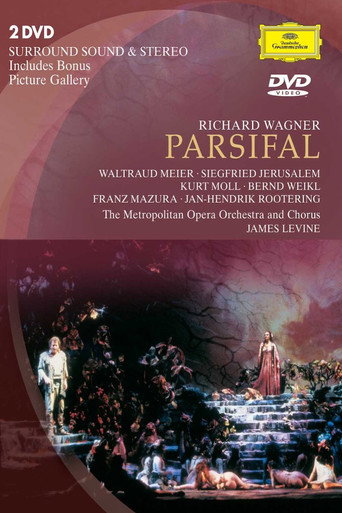
Richard Wagner: Parsifal
The Met production easily has the most beautiful staging, designed by Otto Schenck, who also produced the fabulous set for the Met's previous Ring cycle. Kurt Moll is a wonderful Gurnemanz, but compared to his studio recording under Karajan a decade earlier it has lost some of its original velvety body and luster. As Parsifal, Jerusalem is starting to show some wear and tear on his voice at the Met in 1992 as opposed to his prime form at Bayreuth in 1981, but is still quite good; only Placido Domingo could compete with him in the role at that time.
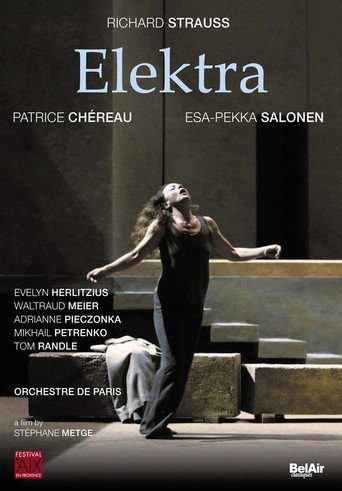
Elektra
Last production staged by Patrice Chéreau, this Elektra will remain as the main and most striking lyrical event of these last years in Aix-en-Provence. This production is leaded by three amazing singers: the German soprano Evelyn Herlitzius gave a tremendous, never-to-be-forgotten account of the title role, Waltraud Meier portrays a human and chilling Clytemnestra and Adrianne Pieczonka is a fantastic Chrysothemis. Everyone's loneliness and intimate struggles are Patrice Chéreau's favorites theatrical themes. With Esa-Pekka Salonen conducting the Orchestre de Paris, this production of Elektra becomes an unforgettable experience.
Gallery