Vladimir Nadein Movies, TV Shows, and Filmography

Vladimir Nadein
Acting
Biography
Vladimir Nadein (b. 1993) is a film producer, curator, educator and distributor. His first feature as a producer, "Detours" (dir. Ekaterina Selenkina), was co-produced with Netherlands and supported by the Hubert Bals Fund and won the Eurimages Lab Project Award in Les Arcs. The film has been screened at Venice Critics’ Week, Viennale, Thessaloniki, Berlin Critics’ Week, FICUNAM, Jeonju, IndieLisboa, Beldocs, Filmadrid, Camden, and more. With his film projects he participated in industry programs like FID Lab, LIM Meet, Cinemart IFFR, BoostNL, DocsBarcelona, Cinelink Sarajevo, East West Talent Lab - goEast. For over a decade, Vladimir has curated exhibitions and screenings for festivals and art venues across Europe and Asia including the Venice Architecture Biennale, International Short Film Festival Oberhausen, Bucharest International Experimental Film Festival, Image Forum Tokyo, Hamburg SFF, MIEFF, C-LAB Taipei, GoShort, Fotografiska Berlin, Kunstnernes Hus Kino, Minimalen Trondheim, BRNO 16 and many more. Vladimir has also been involved in the selection process for various editions of the First Cut Lab and the Pop-Up Film Residency Munich. Now he serves on the preselection committees for Vienna Shorts and European Short Pitch, and occasionally offers script and editing consultancy following his training at the Solace23 workshop led by Franz Rodenkirchen and Françoise von Roy. As an educator, he has lectured on experimental and archival film, found footage at the Taipei Media School and the National Taiwan University of the Arts, and has taught script and project development at the Moscow School of New Cinema. In 2024, he co-founded the Paris-based production company Denapa, which maintains a strong focus on hybrid, experimental cinema, and docufiction. The company is currently developing I Can Feel You Breathing Into My Palm (dir. Alexandra Karelina) and Silence is the Enemy of the Sea (dir. Evgeny Rodin & Dina Karaman). In early 2026, he joined the Rome-based sales and distribution company Gargantua to lead the expansion of their catalog into feature-length films.
Filmography Movies
Acting
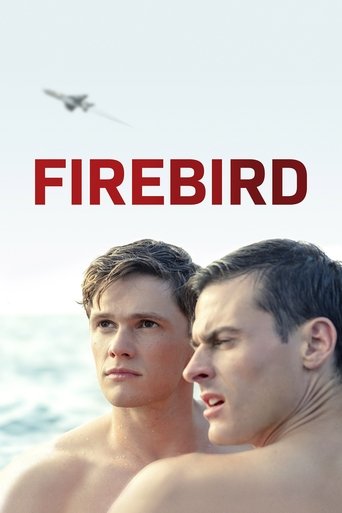
Firebird
At the height of the Cold War, a troubled soldier forms a forbidden love triangle with a daring fighter pilot and his female comrade amid the dangerous surroundings of a Soviet Air Force Base.
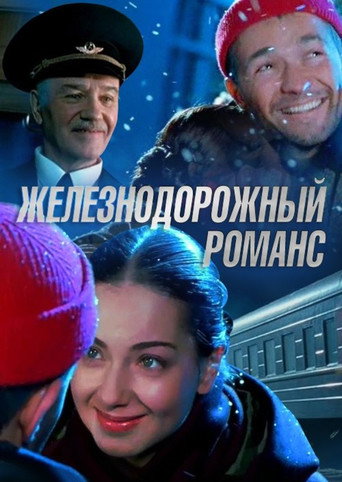
Railway Romance
During the New Year eve Alexey is trying to get back his first love.
Yuha
The 'Yuha' a story of obsession and despair, two fillings interlinked with true love.
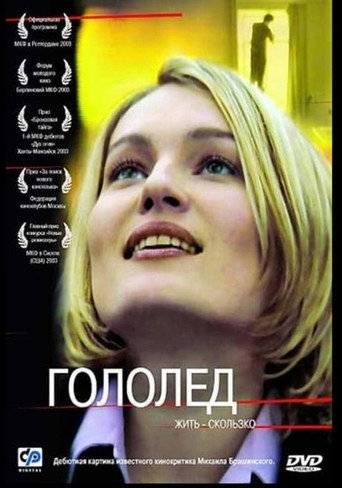
Black Ice
The plot is not developed; in the film we see a man (he) and a woman (she) who, in fact, are neither connected nor familiar with each other; they casually met in hospital. "She" (Viktoria Tolstoganova) does not see that she is in danger in connection with her plan to use a tape with illegally made recordings as compromising evidence in court. "He" (Il'ia Shakunov, an actor of the Petersburg TYuZ) is a gay translator who, after the random meeting with her, is pursued by her image which frequently pops up in front of him. As a consequence, his relationship with a young boy no longer satisfies him. Both he and she lose sight of the meaning of life, because of their own inability to see others and to see love, as perception relies on proximity instead of distance.
Production
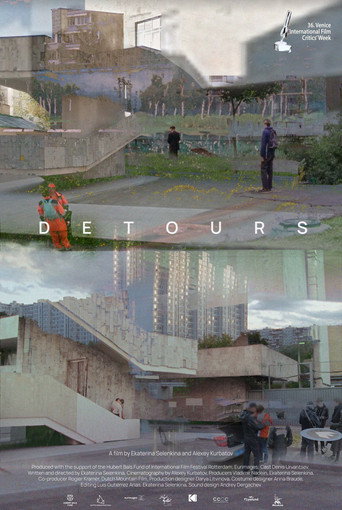
Detours
A sprawling meditation on the choreography of bodies in Moscow's urban landscape, Detours depicts a new way of dealing illicit drugs via the Darknet, the layering of the physical and the virtual realities, as well as a poetics, and politics, of space. Taking place in sleepy neighbourhoods, among the concrete walls of high-rises, behind garages and amidst abandoned railroads, the film alternately follows and loses track of Denis, the treasureman who hides stashes of drugs all over the city.
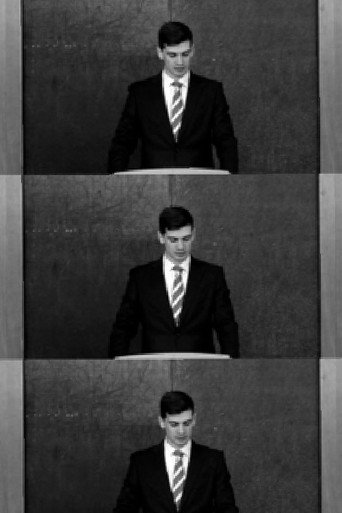
Danton’s Death
An avant-garde adaptation of the play by Georg Buchner about the last days of the Dantonists, representatives of the right wing of the Jacobins during the French Revolution. The director freely experiment with form and content, draws parallels with the present day and raises the question point-blank: why does the revolution, like the ancient Greek titan Kronos, always devour its children?
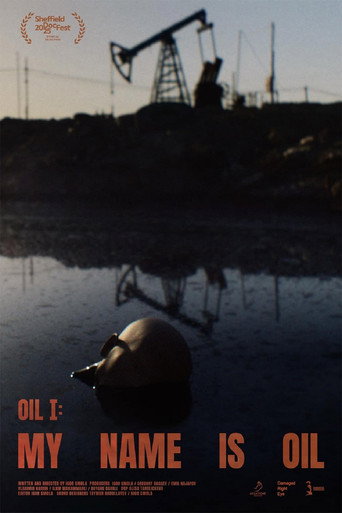
My Name Is Oil
On a platform in the middle of the sea, the industrial machinery of an oil rig attempts to send out a warning of an impending catastrophe.
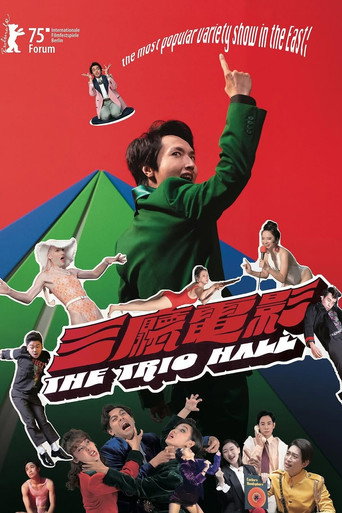
The Trio Hall
This spectacularly eccentric satire by Su Hui-Yu draws on 1970s Taiwanese TV culture and has a roller-skating Hitler dance with Stalin and Mao do the same with Chiang Kai-shek. A revue show of dictators in cahoots with the entertainment industry.
Daily News — A Chronicle of Our Days
Newsreels were one of the most powerful tools of Soviet propaganda. They also make up a significant part of the state film archives. In the newsreels, the recent past presents itself as a monolith of silent images, firmly stitched together by the narrator's voice and soundtrack subtly playing the viewer's feelings. It is exactly this original sound that the artist suggests to detach from. Just two or three minutes long episodes retain the original montage, which was meant to follow the upbeat narration. Flickering images of the past, which perhaps can only become enchanting to us today by revealing their muteness.
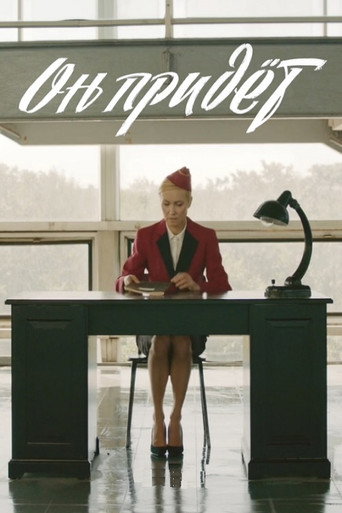
Arrival
Ten girls are waiting for arrival of the train. We find out from the conductor that it is delayed indefinitely. We spy on the girls from the outside and they figure it out. While they are telling their stories, sharing their problems and concerns, we are all waiting for the train. Will the train arrive? Where are they going and what are they really waiting for?
Gallery