Vito Acconci Movies, TV Shows, and Filmography
Vito Acconci
Directing
Biography
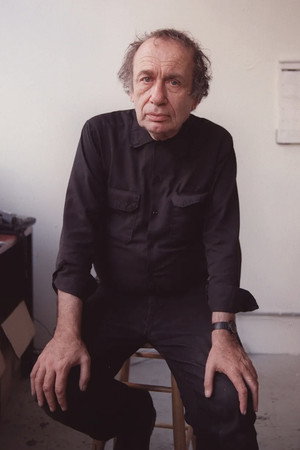
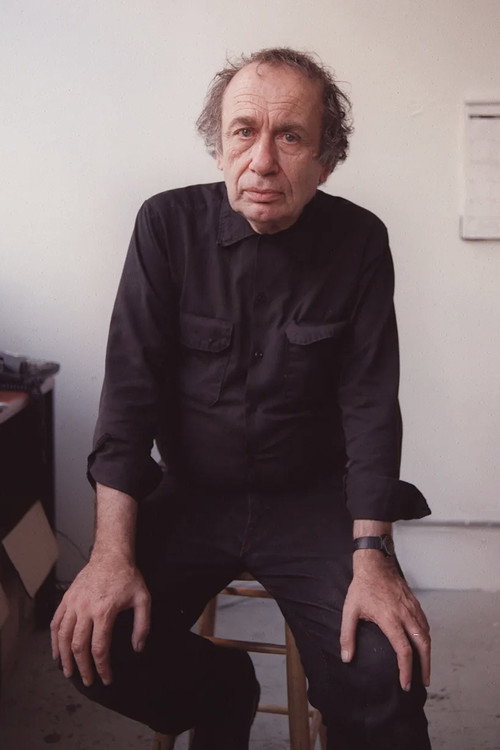
Vito Acconci (January 24, 1940 – April 27, 2017) was an American performance, video and installation artist, whose diverse practice eventually included sculpture, architectural design, and landscape design. His performance and video art was characterized by "existential unease," exhibitionism, discomfort, transgression and provocation, as well as wit and audacity, and often involved crossing boundaries such as public–private, consensual–nonconsensual, and real world–art world. His work is considered to have influenced artists including Laurie Anderson, Karen Finley, Bruce Nauman, and Tracey Emin, among others. Acconci was initially interested in radical poetry, creating 0 to 9 Magazine, but by the late 1960s he began creating Situationist-influenced performances in the street or for small audiences that explored the body and public space. Two of his most famous pieces were Following Piece (1969), in which he selected random passersby on New York City streets and followed them for as long as he was able, and Seedbed (1972), in which he claimed that he masturbated while under a temporary floor at the Sonnabend Gallery, as visitors walked above and heard him speaking. In the late-1970s, he turned to sculpture, architecture and design, greatly increasing the scale of his work, if not his art world profile. Over the next two decades he developed public artworks and parks, airport rest areas, artificial islands and other architectural projects that frequently embraced participation, change and playfulness. Notable works of this period include: Personal Island, designed for Zwolle, the Netherlands (1994); Walkways Through the Wall at the Wisconsin Center, in Milwaukee, WI (1998); and Murinsel, for Graz, Austria (2003). Retrospectives of Acconci's work have been organized by the Stedelijk Museum in Amsterdam (1978) and the Museum of Contemporary Art, Chicago (1980), and his work is in numerous public collections, including those of the Museum of Modern Art and Whitney Museum of American Art. He has been recognized with fellowships from the National Endowment for the Arts (1976, 1980, 1983, 1993), John Simon Guggenheim Memorial Foundation (1979), and American Academy in Rome (1986).[6] In addition to his art and design work, Acconci taught at many higher learning institutions. Acconci died on April 27, 2017, in Manhattan at age 77.
Filmography Movies
Acting
You're Going to Die!
"You’re Going to Die!" is a children’s story exploring one simple idea ad nauseum bonum. This video treatment by Dennis Palazzolo adapts prose by Timothy Furstnau using original footage and clips lifted from famous movies, and features the close-mic’d muttering voiceover of artist Vito Acconci.
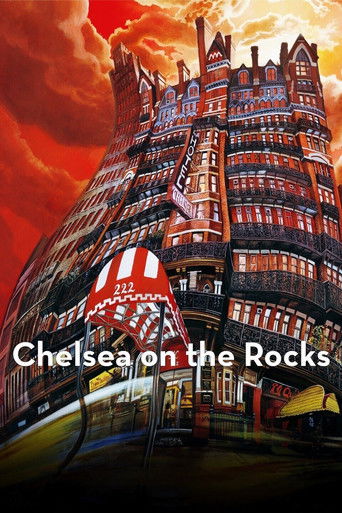
Chelsea on the Rocks
Chelsea on the Rocks celebrates the personalities and artistic voices that have emerged from New York’s legendary Chelsea Hotel. Once considered an untouchable, impenetrable tower for writers, artists, musicians and mavericks, it has been recently claimed as a boutique hotel venture for a management company that shows disregard for its formidable history. –Cannes Film Festival
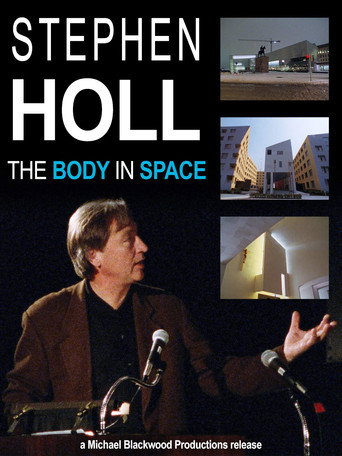
Steven Holl: The Body in Space
"Steven Holl: The Body in Space" explores the career of the innovative, highly renowned American architect. In this portrait Holl presents some of his most acclaimed works, including the Makuhari Housing Complex in Chiba, Japan and the Chapel of St. Ignatius in Seattle. Centered around the completion of Holl's Museum of Contemporary Art in Helsinki, the film observes his process and reasoning throughout the duration of the project
Burden
A probing portrait of Chris Burden, an artist who took creative expression to the limits and risked his life in the name of art.
How to Fly
With HOW TO FLY, Bowes abandoned plot entirely, finding other forms of structure. He wanted to show that stories do not have to obsessively organize and explain data, and that television’s hundreds of simultaneous, fragmented narratives – news, fiction, commercials, sports, etc. – had prepared audiences for this new type of structure. — Charles Ruas
Journeys from Berlin/1971
An epic meditation on psychoanalysis, the Baader-Meinhof, feminism, and pre-revolutionary Russia.
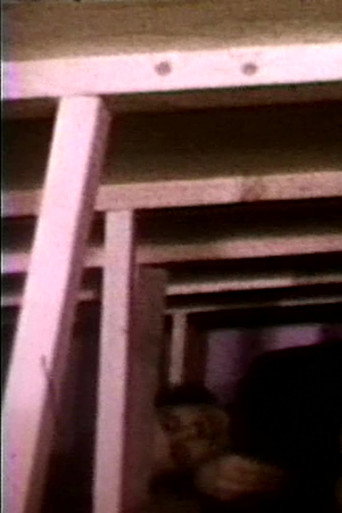
Seedbed
“In this legendary sculpture/performance Acconci lay beneath a ramp built in the Sonnabend Gallery. Over the course of three weeks, he masturbated eight hours a day while murmuring things like, "You're pushing your cunt down on my mouth" or "You're ramming your cock down into my ass." Not only does the architectural intervention presage much of his subsequent work, but all of Acconci's fixations converge in this, the spiritual sphincter of his art. In Seedbed Acconci is the producer and the receiver of the work's pleasure. He is simultaneously public and private, making marks yet leaving little behind, and demonstrating ultra-awareness of his viewer while being in a semi-trance state.” – Jerry Saltz (via: http://www.ubu.com/film/acconci_seedbed.html)
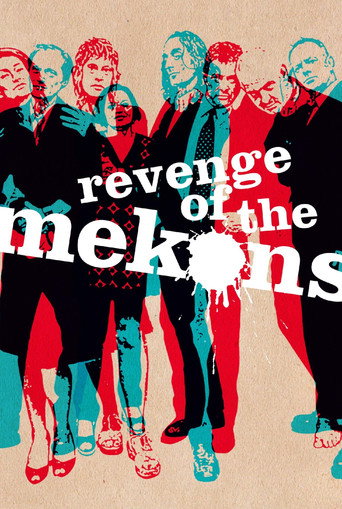
Revenge of the Mekons
Documentary about the Mekons.
Undertone
"In this now infamous tape, exemplary of his early transgressive performance style, Acconci sits and relates a masturbatory fantasy about a girl rubbing his legs under the table. Carrying on a rambling dialogue that shifts back and forth between the camera/spectator and himself, Acconci sexualizes the implicit contract between performer and viewer - the viewer serving as a voyeur who makes the performance possible by watching and completing the scene, believing the fantasy."
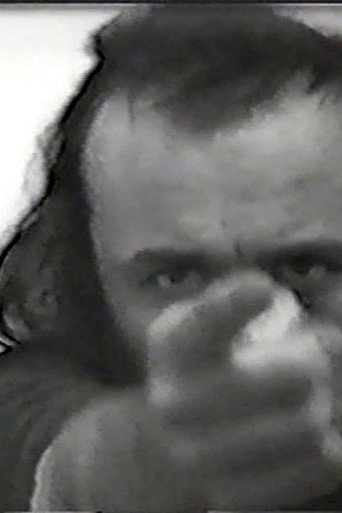
Centers
Poet and artist Vito Acconci points his finger towards the camera and his own reflection in an offscreen video monitor.
Production
See Through
"Acconci spars with his close-up image in a mirror. He then breaks the mirror, destroying his image." - Electronic Arts Intermix
Seedbed
“In this legendary sculpture/performance Acconci lay beneath a ramp built in the Sonnabend Gallery. Over the course of three weeks, he masturbated eight hours a day while murmuring things like, "You're pushing your cunt down on my mouth" or "You're ramming your cock down into my ass." Not only does the architectural intervention presage much of his subsequent work, but all of Acconci's fixations converge in this, the spiritual sphincter of his art. In Seedbed Acconci is the producer and the receiver of the work's pleasure. He is simultaneously public and private, making marks yet leaving little behind, and demonstrating ultra-awareness of his viewer while being in a semi-trance state.” – Jerry Saltz (via: http://www.ubu.com/film/acconci_seedbed.html)
Undertone
"In this now infamous tape, exemplary of his early transgressive performance style, Acconci sits and relates a masturbatory fantasy about a girl rubbing his legs under the table. Carrying on a rambling dialogue that shifts back and forth between the camera/spectator and himself, Acconci sexualizes the implicit contract between performer and viewer - the viewer serving as a voyeur who makes the performance possible by watching and completing the scene, believing the fantasy."
Theme Song
In Theme Song, Acconci uses video as close-up to establish a perversely intimate relation with the viewer, creating a personal space in which to talk directly to (and manipulate) the spectator. He is face to face with the viewer, his head close against the video screen, lying cozily on the floor. Acconci writes, "The scene is a living room — quiet, private night — the scene for a come-on — I can bring my legs around, wrapping myself around the viewer — I'm playing songs on a tape recorder — I follow the songs up, I'm building a relationship, I'm carrying it through." Smoking cigarettes, he begins a seductive monologue as he plays "theme songs" by the Doors, Bob Dylan, Van Morrison, Kris Kristofferson and others on a tape recorder. The songs are a starting point for his come-ons; the tenor of his monologues shifts with the lyrics. "Of course I can't see your face. I have no idea what your face looks like. You could be anybody out there, but there's gotta be somebody watching me.
Centers
Poet and artist Vito Acconci points his finger towards the camera and his own reflection in an offscreen video monitor.
Centers
Poet and artist Vito Acconci points his finger towards the camera and his own reflection in an offscreen video monitor.
Centers
Poet and artist Vito Acconci points his finger towards the camera and his own reflection in an offscreen video monitor.
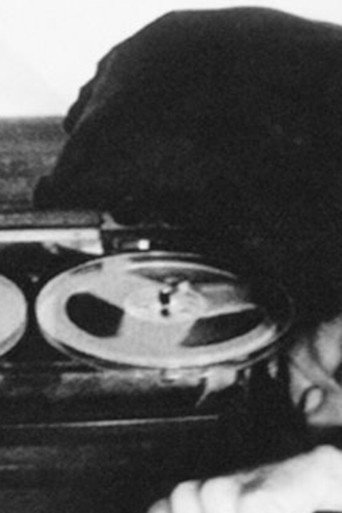
Face-Off
Face-Off is an ironic collusion of private and public, of exposure and masking, a tense ritual wherein Acconci divulges and then censors his self-revelations. Acconci turns on a reel-to-reel audiotape recorder and bends down to the speaker to listen to it, his face barely visible in the frame. The audio is a recording of his own voice addressing himself and the viewer, recounting intimate details about his life. However, whenever the material becomes too personal, he tries to drown out his voice and prevent the viewer from hearing, yelling: "No, no, no, don't tell this, don't reveal this...." Reacting to his recorded voice, he becomes increasingly agitated as the tape proceeds.
Seedbed
“In this legendary sculpture/performance Acconci lay beneath a ramp built in the Sonnabend Gallery. Over the course of three weeks, he masturbated eight hours a day while murmuring things like, "You're pushing your cunt down on my mouth" or "You're ramming your cock down into my ass." Not only does the architectural intervention presage much of his subsequent work, but all of Acconci's fixations converge in this, the spiritual sphincter of his art. In Seedbed Acconci is the producer and the receiver of the work's pleasure. He is simultaneously public and private, making marks yet leaving little behind, and demonstrating ultra-awareness of his viewer while being in a semi-trance state.” – Jerry Saltz (via: http://www.ubu.com/film/acconci_seedbed.html)
Applications
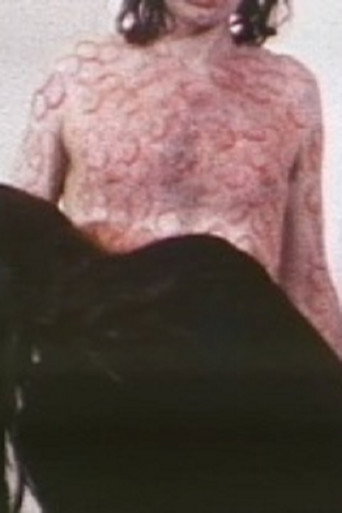
A woman kisses Acconci's body, covering him in red lipstick traces. Acconci then rubs his body against another man (Dennis Oppenheim), transferring the stains onto him.
Gallery