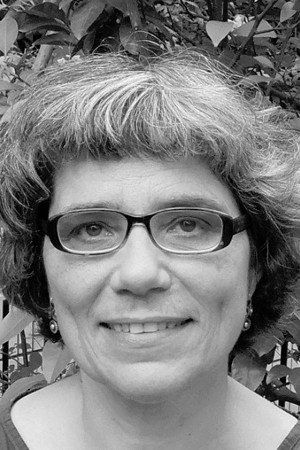
Ute Aurand Movies, TV Shows, and Filmography
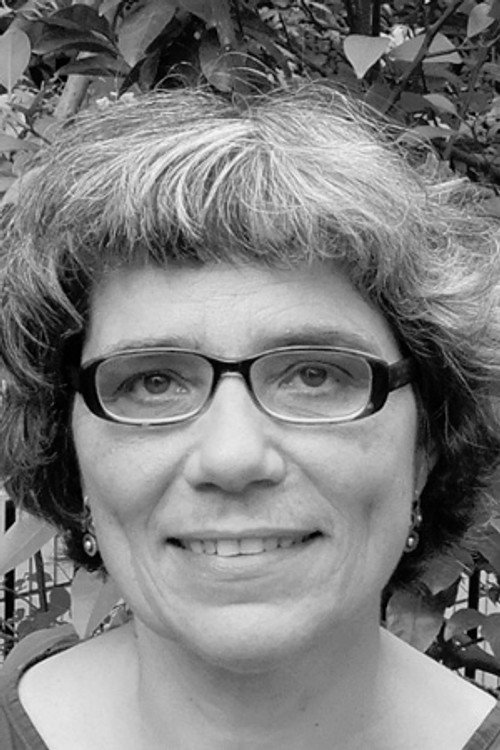
Ute Aurand
Directing
Biography
Ute Aurand was born in 1957 in Frankfurt/Main, and grew up in Berlin. She is a teacher and curator, and a devoted 16mm filmmaker since 1980. She studied filmmaking at the Deutsche Film und Fernsehakademie Berlin (dffb) during the years 1979-1985. Since 1985 she began to produce her own films. In 1987 she founded "Ute Aurand Filmproduktion". During 1990-95, she presented the series "Filmarbeiterinnen-Abend" at the Arsenal cinema, Berlin, featuring films made by women, mostly experimental. In 1995-96, organised "Sie zum Beispiel" (Her, for Example) at the Arsenal and Babylon cinemas, in which 12 women filmmakers /artists selected and presented a personal selection of films by other women filmmakers. In 1997, she co-founded the group FilmSamstag (Film Saturday) together with Renate Sami and Theo Thiesmeier, later joined by Bärbel Freund, Karl Heil, Milena Gierke and Johannes Beringer, to present a monthly film programme in Kino Filmkunsthaus Babylon Mitte until 2007. Since 1981 curated film programs e.g. "Lichtgedichte/Light Poems", "Hyacinths" and "Poetinnen mit der Kamera/Women Poets with the Camera" and monographic programs of films by Marie Menken, Margaret Tait and Utako Koguchi. In 1991 she worked on the research project and book „Frauen machen Geschichte – 25 Jahre Studentinnen an der dffb“ (Women make History-25 Years of Women Students at the dffb), together with Maria Lang.
Filmography Movies
Acting
The Sparrow Dream
Beavers revisits locations in Berlin first filmed in Diminished Frame (1970), alongside sites in Massachusetts, to reflect on how lived places shape vision and memory. Moving between past and present, the film becomes a meditation on perception, time, and the persistence of personal landscapes.
Unding Undine
A cinematic interpretation of an ancient myth and the visual metaphor of the feminine sea.
Production
Filmmuseum Aufbau 2000
Filmed every day during the final four weeks of the Berlin Film Museum’s construction.
Here, it is Very Nice at the Moment
"Here it is very nice at the Moment" is a triptych. In the first part, "Maria und die Welt", Ute Aurand films Maria Lang in 1995, who moves to the countryside to take care of her mother. The second part, "Familiengruft - ein Liebesgedicht an meine Mutter" was produced by Maria Lang in 1981. It tells about what we most often keep quiet - prohibitions, barriers but also love. Twenty-two years later, Ute Aurand films Maria's daily care of her mother, now ninety-six years old: edited in 2006 by the two filmmakers, "Der Schmetterling im Winter", composes the last element of the triptych.
To Brasil
A filmic encounter with Brazil, which Aurand visited for the first time in September 2022 for screenings of her films and Margaret Tait’s in São Paulo and Rio de Janeiro. Aurand’s 16mm films are portraits of people and place, often prompted by the discovery and experience of travel. As George Clark has written, the journey is a cornerstone of Aurand’s filmmaking: "“Her work builds out from fragments, detours, refrains and returns; her camera picks up discarded gestures and suspends them in time. Films are always moving, always fleeting, Aurand’s work reminds us. These qualities are as fundamental to lived experience as they are to the cinema. Throughout Ute Aurand’s work we encounter a world animated by her mobile and dynamic camera, following, chasing, leading and dissecting space."
Neubrandenburg
One day in Neubrandenburg, filmed in a small city 130km north of Berlin in September 1995.
Young Pines
Young Pines grew out of three trips to Japan between May 2009 and November 2010. Invited to Japan for a series of film screenings, I began filming in Yokohama, Tokyo, and Kanazawa. Even in the big cities, I experienced how strongly the Japanese feel connected to nature and how they tend to see no contradiction between culture and nature. I found this stimulating and in harmony with some of my own impulses. I wanted to return and film more in other seasons. In Spring 2010 I visited Kamakura, Kyoto, and Nara, in November I went Northeast and filmed in Matsushima, Tono, Miyako in Atsumi, Yamadera, and Nikko. All of my film images have been filmed before the disaster of the Tsunami and Fukushima, but the final editing was done in the following months.
Dreaming In The Dark
For Dreaming the Dark: hands that see, eyes that touch, Ana Vaz invited artists and filmmakers whose work trust cinema’s capacity to transform relationships between the body and the camera to propose works that will engage with both perception and embodiment. Could cinema be an art of embodiment? By what rituals and actions could vision become tactile?
Maria
Maria Lang is my very close filmmaker friend who lives in the southern german countryside. We see her gardening and visiting an exhibition of female impressionist painters.
Renate
A short portrait of the filmmaker Renate Sami.
Zuoz
Filmed in Switzerland and released as part of a triptych with A Walk, Zuoz features the filmmaker Robert Beavers skating on ice. Beavers represents another “new beginning” in Aurand’s practice. She recalls seeing his work in the late ‘90s and “enter[ing] a space beyond the images where one is entirely within oneself and simultaneously in the world … where one is simply present and receives the full gift of the film.”
A Walk
Throughout her work, Aurand frequently makes her camera and her images felt as an active, moving body—spinning, rushing, departing, returning, expanding, contracting, hanging upside down. In A Walk, her film goes walking. The camera occupies a snowy Swiss setting, as Aurand creates a material, tonal landscape that is both nebulous, serene, and wonderfully energetic.
Gallery