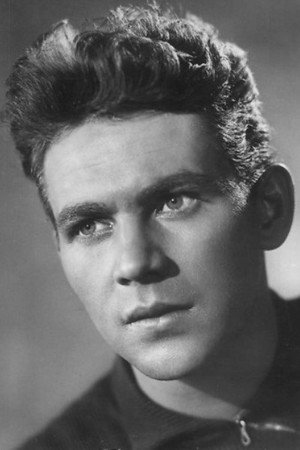
Ulrich Thein Movies, TV Shows, and Filmography
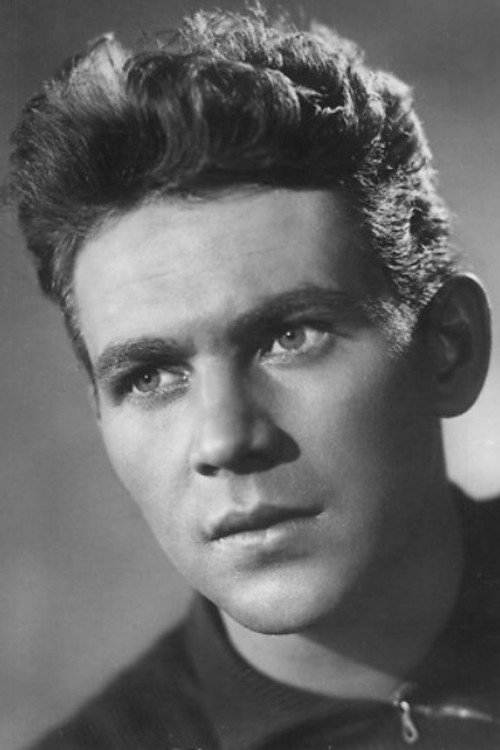
Ulrich Thein
Acting
Biography
Ulrich Thein (4 July 1930 – 21 June 1995) was a German actor film director and screenwriter. He appeared in 44 films and television shows between 1953 and 1995. He won the award for Best Actor at the 11th Moscow International Film Festival in 1979 for his role in Anton the Magician. He directed the 1982 film Romance with Amelie, which was entered into the 32nd Berlin International Film Festival. -- Wikipedia
Filmography Movies
Acting
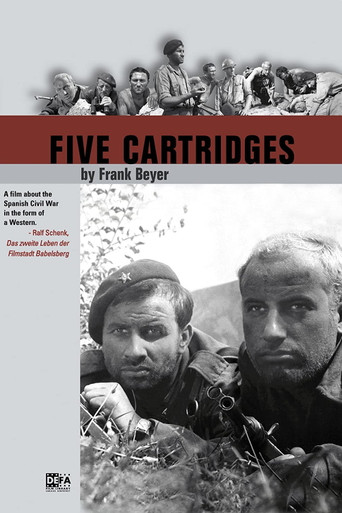
Five Cartridges
It is the year 1936 and the Spanish Civil War is raging. When the German commander of an international brigade is badly wounded he gives his five comrades a message which he divides up and secretes into in five cartridges. All five shells must reach the battalion in order for the message to be relayed. But Frenchman Pierre can’t bear the heat of the Sierra. When he leaves their hide-out to drink from a well he is hit by an enemy bullet.

...And Your Love Too
On August 13th, 1961 - the night that the Berlin Wall goes up - three people must make a decision that will change their lives forever.
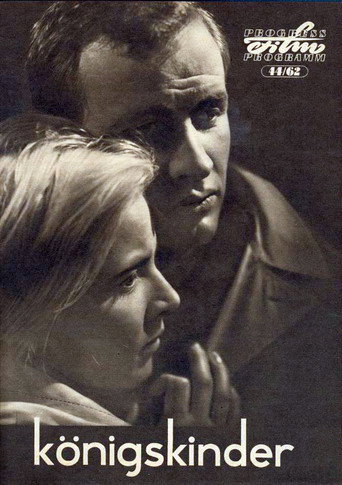
Star-Crossed Lovers
Magdalena and Michael have loved each other since they were children. But when the Nazis come to power, Michael rebels against the regime and is sentenced to fifteen years in a concentration camp. Magdalena, meanwhile, goes underground with the help of a friend and later immigrates to the Soviet Union. Michael, who has joined the Red Army, discovers on the way to Moscow that Magdalena is staying there. But when his plane lands, she is already on her way back to Germany. Michael hopes that one day, he and Magdalena will be reunited.
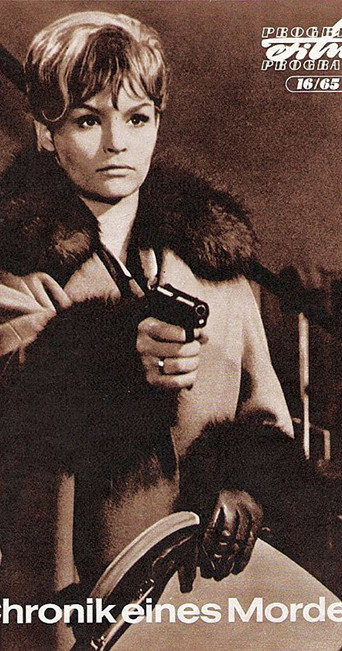
Chronicle of a Murder
In the mid-1950s, mayor Zwischenzahl is killed on the day of his inauguration in a West German town. The killer is Ruth Bodenheim, a Jewish woman, who wanted to avenge the death of her parents. Zwischenzahl, a former SA member, was apparently involved in the deportation of her parents to a concentration camp during the war. Ruth cannot bear the horrible events and the death of her parents and wants to open the eyes of the town′s residents.

Anton the Magician
A flamboyant comedy about love, work and money—revealing that the "planned" economy produced some unconventional entrepreneurial methods.
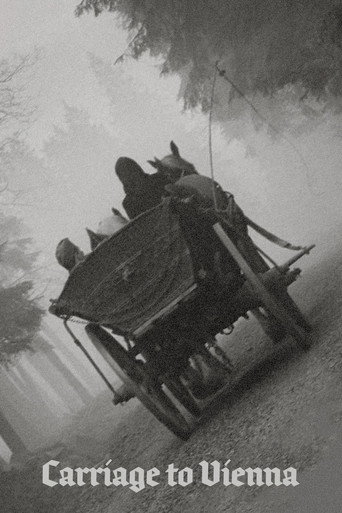
Carriage to Vienna
A WW2 story of a young Austrian soldier running from the Russian army and a woman whom he forces to come along in order to save his wounded mate.

The Sailor's Song
A film about the historical uprising of the seamen in Kiel: During the Russian October Revolution of 1917, German and Russian soldiers start to solidarize with each other. By disarming the officers, machinist Henne Lonke and stoker Jens Kasten prevent the attack on a Russian freighter. When German admiralty gives out orders for operation "Nibelungen", which would lead the German fleet into a suicidal attack against England and quell the revolutionary spirit, seamen and soldiers from different political backgrounds unite in protest.
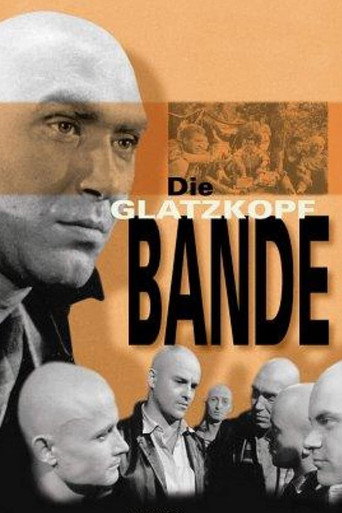
The Baldheaded Gang
August 1961. The former Foreign Legionnaire, King, has collected a gang of hooligans, with whom he creates mischief in the GDR. After some careless work on a construction site, an event during which two people lose their lives, they move to a campsite on the Baltic Sea. With sputtering mopeds, loud radios, and occasional outbursts, the gang makes the vacationers' lives living hell. Unfortunately for them, Lieutenant Czernik discovers the connection between them and the accident at the construction site. To stop them from fleeing to West Berlin, Lieutenant Czernik and the police need to arrest them, one at a time, with King as the last.
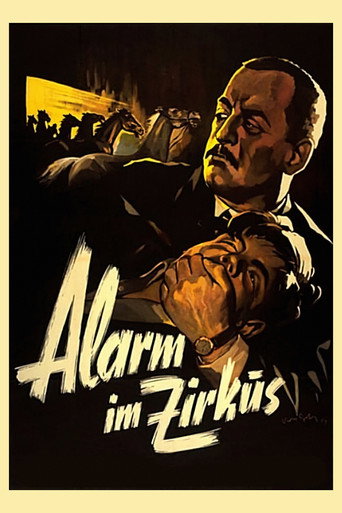
Alarm at the Circus
Two boys from West Berlin, Klaus and Max, live in poverty. They dream of a career in boxing and save every penny in order to buy boxing gloves for training. Nevertheless, they cannot seem to save enough and so they let themselves be hired by the bartender Klott for a twisted scheme. However, Klaus overhears one of Klott's conversations and learns that Klott intends for the boys to steal horses from the East Berlin Barlay Circus, where Klaus recently made some good friends. Indignant, he sets out to stop the robbery—and an adventurous action story results.

September Love
Leading chemist Hans Schramm is betrothed to Hanna, but falls in love with her younger sister Franka. The two attempt to repress their feelings, but eventually begin an affair. When Hans is extorted by a group of West German agents, who demand to know about his secret work, he is gripped by panic and decides the only way out is to flee to the West …
Production
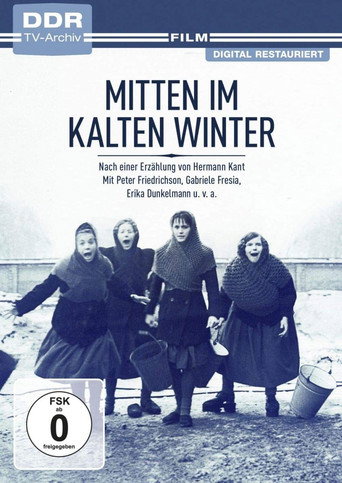
Mitten im kalten Winter
Winter of 1943. Cheerful, shy beginning of a tender love between the electric fitter Paul, who works on the estate on the power poles and the girl Anna. Both encounter each other during the war on a Mecklenburg estate. The three buxom and arrogant maids Elsa I, II and III, who also work in the manor, provide wit and pleasure.
Mitten im kalten Winter
Winter of 1943. Cheerful, shy beginning of a tender love between the electric fitter Paul, who works on the estate on the power poles and the girl Anna. Both encounter each other during the war on a Mecklenburg estate. The three buxom and arrogant maids Elsa I, II and III, who also work in the manor, provide wit and pleasure.

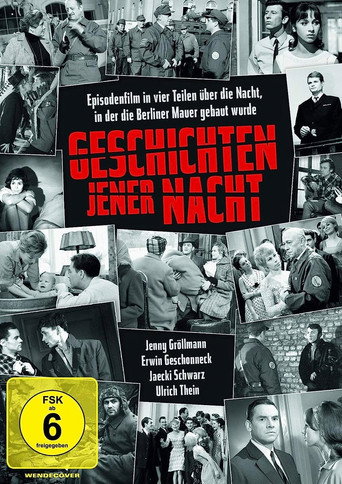
Stories of That Night
Four directors - four styles - four episodes, all relating the events of a single night which has entered the history books: August 12-13, 1961. There are thousands of complex narratives connected with the frontier drawn through the middle of Berlin, and each episode relates the story of a difficult decision made on that night...
Romance with Amelie
The time is World War II, and Juergen Siebusch and his mother are retreating along with the German army, just ahead of the invading Russian forces. Both mother and son hole up in the town of Hohengoerse, where Juergen finds some work watching over sheep - and learns a bit about the facts of sheep life that he extrapolates to some advantage when he meets the appealing Amelie, daughter of the landowner. He first helps Amelie out and later applies his new-found knowledge in a barn, appropriately enough. As the Red Army draws near, Juergen deserts a hastily put-together "people's force," as he prefers the barn to the gun. Russian soldiers are shown sleeping and snoring next to their tanks, and the local fascist executed - the war is over. When the new Communist government sets up a land reform package, Amelie's mother's land gets divided up into small plots for small farmers.

Mensch, mein Papa...!
Pensioner Erich Zarling loves two things: his daughter Ulrike and his dog sports club, of which he is chairman. But this position is in danger, so he wants to make himself indispensable with a daring move: He wants to build a sports clubhouse. He has come up with a curious idea to raise the funds: the sale of thirty state-owned trees from Berlin's Puschkinallee. His daughter Ulrike, who loves to sing and dance, is a chambermaid at the "Stadt Berlin" hotel. And against her father's wishes, she dreams of the boards that mean the world. A guest, the pop singer Balter, hires her as a replacement for his absent partner at the "Night of the Celebrities". He promises her more, but disappoints her. Father Zarling comforts her and they sing the "Rose Song" together in his tricked-out sportsman's home.

Dach überm Kopf
Karoline Gluth is approaching forty, has an 18-year-old son who is studying and is therefore independent. She decides to start a new life and says goodbye to the family inn on the island of Rügen, where she earned a good living as a cook. She buys a little house on the outskirts of Berlin - based on a photo. The reality, however, looks less favourable than the picture. The house is close to collapse and has an illegal occupant, Christian. She evicts him, but he helps her through the jungle of organising tradesmen and materials. In the process, she meets construction brigadier Herbert Kotbuß, clashes with him - and impresses him. Karoline struggles through, the money runs out, she even has to sell her car, and in the end the house is still pretty much a patchwork. But she has realised her ambition for herself - a new independent life begins.
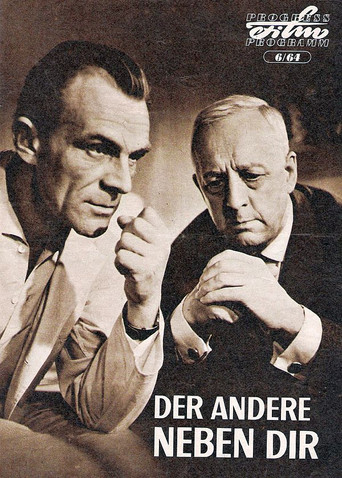
Der Andere neben dir
Two doctors, a German and a Czech brain surgeon, meet in a Berlin hospital, unaware of how fatefully they are linked by events from a dark past. A trip to a congress in Prague and an encounter with the wife of his Czech colleague force the German chief surgeon to rethink his previous life. The film deals with the explosive topic of the extent and causes of complicity in the crimes of National Socialism.
Mensch, mein Papa...!
Pensioner Erich Zarling loves two things: his daughter Ulrike and his dog sports club, of which he is chairman. But this position is in danger, so he wants to make himself indispensable with a daring move: He wants to build a sports clubhouse. He has come up with a curious idea to raise the funds: the sale of thirty state-owned trees from Berlin's Puschkinallee. His daughter Ulrike, who loves to sing and dance, is a chambermaid at the "Stadt Berlin" hotel. And against her father's wishes, she dreams of the boards that mean the world. A guest, the pop singer Balter, hires her as a replacement for his absent partner at the "Night of the Celebrities". He promises her more, but disappoints her. Father Zarling comforts her and they sing the "Rose Song" together in his tricked-out sportsman's home.
Dach überm Kopf
Karoline Gluth is approaching forty, has an 18-year-old son who is studying and is therefore independent. She decides to start a new life and says goodbye to the family inn on the island of Rügen, where she earned a good living as a cook. She buys a little house on the outskirts of Berlin - based on a photo. The reality, however, looks less favourable than the picture. The house is close to collapse and has an illegal occupant, Christian. She evicts him, but he helps her through the jungle of organising tradesmen and materials. In the process, she meets construction brigadier Herbert Kotbuß, clashes with him - and impresses him. Karoline struggles through, the money runs out, she even has to sell her car, and in the end the house is still pretty much a patchwork. But she has realised her ambition for herself - a new independent life begins.
Gallery