Ulrich Teschner Movies, TV Shows, and Filmography
Ulrich Teschner
Acting
Biography
No biography available.
Filmography Movies
Acting
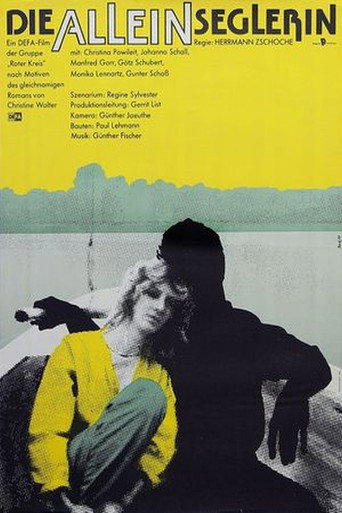
The Solo Sailor
Christine inherits a sailboat from her father, whom she barely knew. Christine is a divorced single mother and her job at a research insitute leaves her with too much work and too little time to sail. She can't find anyone to buy the boat at full value, so she tries to repair it over the winter in the hopes of being able to get a better price in the spring. Working on the boat become something of an obsession to the detriment of Christine's relationships with her son, boyfriend and collegues. When the boat is finally ready to sell, she isn't sure that she is willing to part with it after all.

Filmemacher
They are just 17 years old when Gaby and Eva receive the offer to play in a feature film that ambitious Hamburg filmmakers want to make. Despite their youth, the girls are suspicious because they have already experienced a lot. On the other hand, that would be the opportunity to escape the difficulties they have been in for a long time. The filmmakers persuade them to cross the border illegally. The girls do not suspect that they should be used by the Springer company to provoke a scandal. But the Ministry of State Security has the action already in sight.
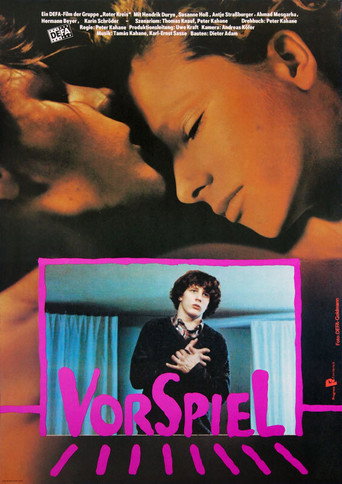
Vorspiel
Tom, a 17-year-old window design apprentice, dreams about true love. One day, a new girl from East Berlin moves to town. Tom has a crush on her and will do anything to impress her. When he finds out that she plans to become an actress, he even discovers the aspiration to perform himself. For a while, Tom is on cloud 9.
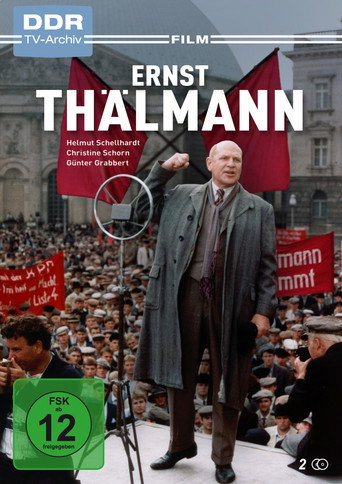
Ernst Thälmann
This elaborate two-part television film features a section from the life of communist worker leader Ernst Thälmann. It begins with the bloody riots on May 1, 1929 in Berlin, in which police officers shot at demonstrating workers, and ends with February 7, 1933, when Thälmann appeared as a speaker at the illegal meeting of the Central Committee of the Communist Party of Germany in goat neck. This period was marked by the struggle of the Communists against the ever stronger National Socialists and the rise of Adolf Hitler.

Neues aus der Florentiner 73
Brigitte is caught between two men: on the one hand there is the ambitious Klaus, the father of her young daughter, and on the other the sensitive Wolfgang, her flatmate, to whom she feels attracted. With the active help of the housemates, especially her mother Klucke, she finds out who her heart really beats for.
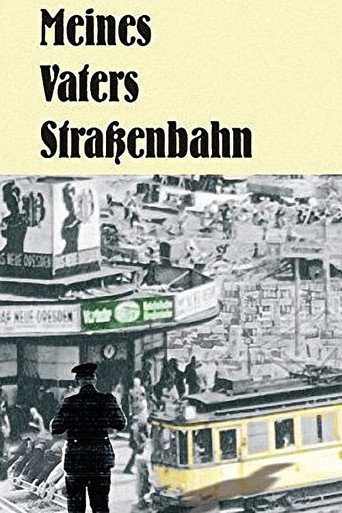
Meines Vaters Straßenbahn
Ralph grows up in pre-war Dresden as the eldest son of a principled and orderly streetcar conductor. With the rise to power of the Nazis, the war, the collapse and the hesitant new beginning, his firmly established middle-class world is also thrown off course. His father is one of the first to be called up to the front. His mother is left alone with the responsibility for Ralph and his younger brother Achim. In the air-raid shelter, during the nights of bombing and later in the daily struggle against misery and hunger, the mother quickly abandons all moral baggage and develops a pragmatic will to survive, for which she admires Ralph. At the same time, the boy is frightened by his mother's desperate claim to happiness because he perceives her affairs as a betrayal of his father, who has gradually faded into a symbol of a happy, carefree childhood.
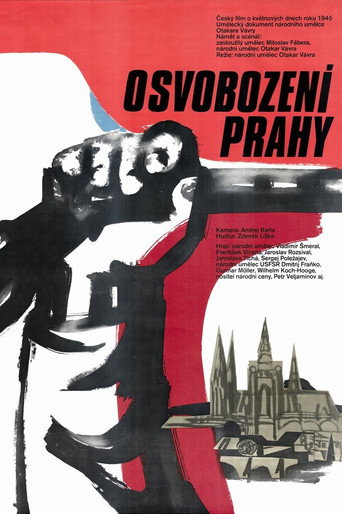
The Liberation of Prague
On 20th of April 1945 the Soviet army launches its attack on Berlin. The end has come for Nazi Germany and Hitler decides to commit suicide. In Prague K.H. Frank (Nazi Secretary of State and Chief of police in the Protectorate of Bohemia a Moravia) discusses with his commanders how to transform the city into an impregnable fortress, but the Praguers do not intend to wait any longer. From the early hours of 4th of May people start assembling in the streets and tearing down German signs. On the next day, the 5th of May, the uprising begins.
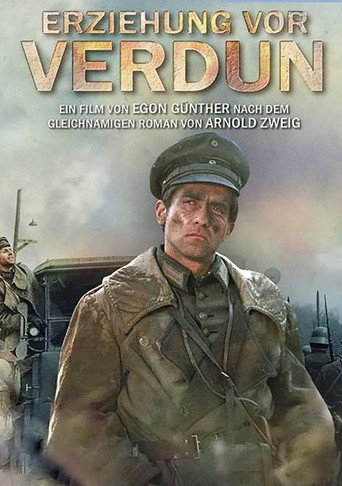
Erziehung vor Verdun
The armouring soldier and writer Werner Bertin is ordered to the Western Front to France during the First World War. The use before Verdun - with all the horrors of war in the period 1916/1917 - brings a fundamental change of consciousness for the academic from Berlin. The intellectual devoted to bravery by fate develops into a disappointed but rebellious being. He sees more and more the injustices of warlike conflicts and their social causes.

The Russians Are Coming
It’s the spring of 1945 in a small resort town on the Baltic. Günter is 16 and firmly believes that the Germans will win the war. During the hunt for a forced labourer who is on the run, Günter catches him and watches as he is shot to death. He proudly accepts the award of an Iron Cross before being shipped to the nearby front as part of the last contingent of troops. He is quickly captured by Soviet soldiers, but manages to escape and return home. When the town is occupied by the Red Army, Günter is arrested for the murder of the forced labourer. The film was banned in 1968 before it was completed, and a large portion of the negative was later destroyed.
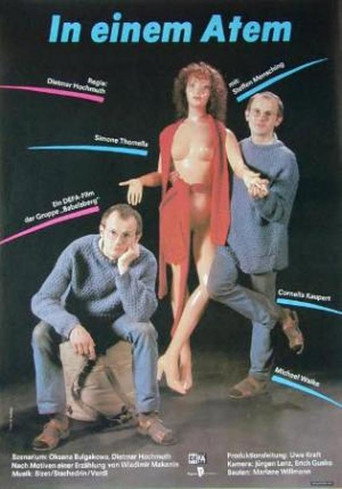
In einem Atem
The 24-year-old Andreas works as a mechanic at a tunnel building site in the Bulgarian Rhodopes. One day, he gets the startling news that his girlfriend Sabine, who is supposedly waiting for him in their far-off hometown Berlin, wants to marry another man. Seething with anger, Andreas leaves the building site and hurries to the capital in order to prevent his beloved’s wedding. On the first encounter with his rival, an athletic water polo player, Andreas comes off second best. However, neither his zest for action nor his firm intention can be shaken by this defeat. With passionate energy and some outlandish ideas he takes up the fight for Sabine’s heart.