Acting
No biography available.
Recorded at Bayerische Staatsoper on March 3-9, 2016.
Adaptation of 'The Flying Dutchman', recorded at the Bavarian State Opera.
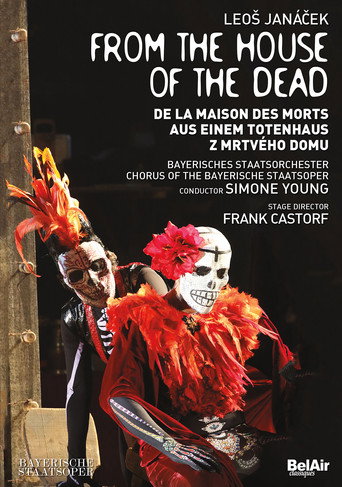
Stage director Frank Castorf “might have been born to direct From the House of the Dead” (Opera Today). His gritty, visually striking adaptation brings bold modern and postmodern touches to Janáček’s masterwork without ever overshadowing the intense forward momentum of the music, conducted to dramatic perfection by Simone Young and sung by an all-star cast in Munich. Janáček adapted Dostoevsky for this powerfully compelling opera set in a Siberian prison camp, full of starkly contrasting moods and motifs, unusual in its episodic structure. The last opera Janáček ever composed, its third act was on his desk when he died in 1928; attempts by his students to “complete” his orchestration have largely fallen away over the decades in favor of the original version. Despite the grimness of the setting and the brutality of several characters, the composer’s compassion shines through in tender moments, movingly illustrating his motto for the work: “in every creature, a spark of God.”
Penderecki's Opera of an entire convent, in the small French village of Loudun, apparently possessed by the devil.
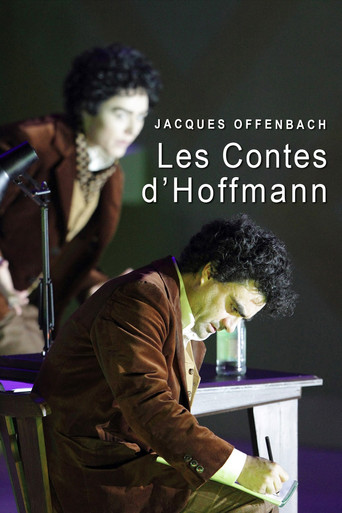
Live performance, Bayerische Staatsoper, 2011. The Tales of Hoffmann (French: LES CONTES D'HOFFMANN) is an opéra fantastique by Jacques Offenbach that combines three short stories by E.T.A. Hoffmann into a haunting whole: a melancholy poet reflects on three women he loved and lost in the past: a mechanical performing doll, a Venetian courtesan, and the consumptive daughter of a celebrated composer. One of the questions this opera poses for any director is how to link the 'tales' of Hoffmann's three lost loves together and knit them satisfactorily into the Prologue and Epilogue. In this production, Richard Jones solves the puzzle by turning it into an autobiographical journey which ends with a grand meet-up of all the characters Hoffmann has encountered: for once, Hoffmann is not presented as a rollicking kind of drunken story-spinner, but rather a sad-eyed, sobered-up depressive, who reaches for the bottle only because his disastrous love life has gone wrong yet again.
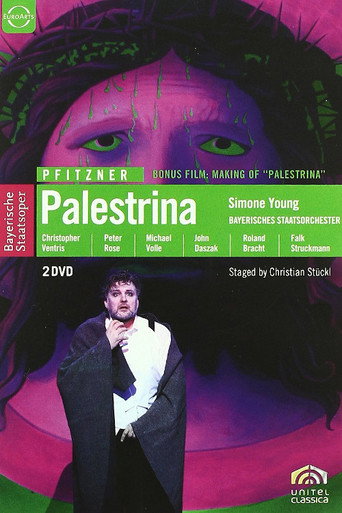
Requiring 38 soloists, chorus, and large orchestra, Hans Pfitzner's "Palestrina" is a challenging opera to stage. In Munich, the city in which it was premiered in 1917, director Christian Stückle, conductor Simone Young, and the Bavarian State Opera met those challenges with stunning success.
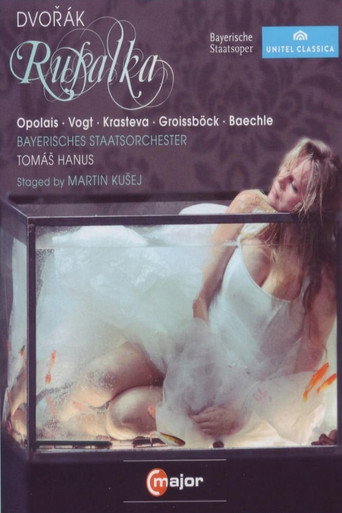
A legend of mermaids, mere mortals, and sylvan glades. Be transported to a mystical world of water sprites, witches, and wood nymphs. In exchange for love, Rusalka will relinquish not only her mermaid magic, but also her voice.
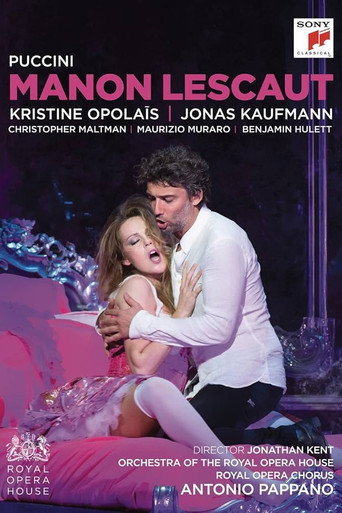
The French tale of a beautiful young woman destroyed by her conflicting needs for love and luxury.
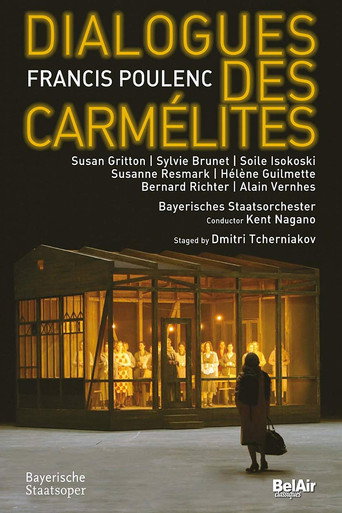
The first ever performances in Munich, this production was entrusted to Dmitri Tcherniakov, whose worldwide reputation is underpinned by productions like Eugene Onegin and Macbeth at the Paris Opera and Don Giovanni at Aix-en- Provence. The superb international cast includes a fine Blanche de la Force in Susan Gritton and an excellent Madame de Croissy by Sylvie Brunet, who was favourably compared to Rita Gorr in the press.