Directing
Ula Stöckl is a German filmmaker, director, author and actress. She studied at the Hochschule für Gestaltung in Ulm and has since made feature films, TV films and documentaries. Her work predominantly deals with the lives of women.
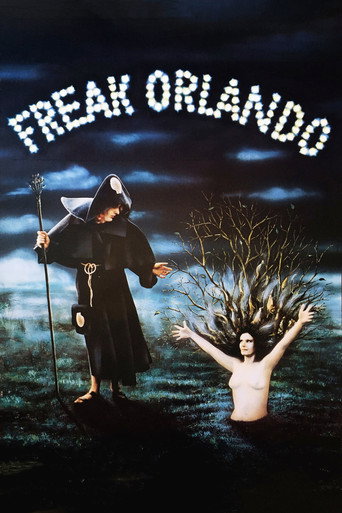
Five more-or-less distinct sections, all featuring "Freak" Orlando, a woman played by the late Magdalena Montezuma, who appears in various guises and deformities throughout.
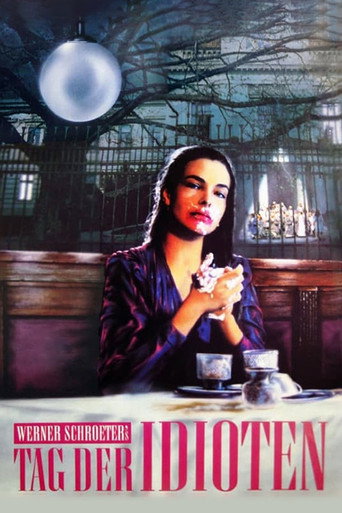
A woman experiences psychic disintegration and ends up in a psychiatric hospital.
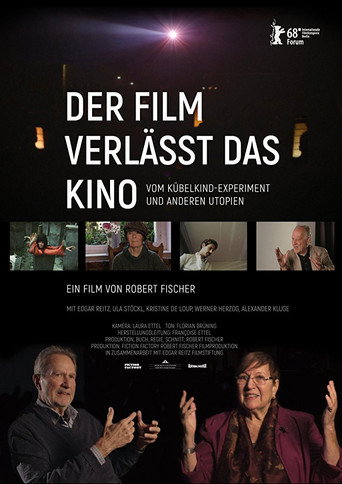
For over half a century, the filmmaker Edgar Reitz, one of the signatories of the Oberhausen Manifesto and a pioneer of epic film narration, has explored, as a practitioner and theoretician, the rules and limits of cinema, which he always seeks to break and extend in new ways. One example of his tireless search and research are the Geschichten vom Kübelkind, which he co-directed with Ula Stöckl in 1969/70, 22 absurdly funny, subversive and anarchistic short films of different lengths, which consciously oppose all conventions, with incredible success. The films remain unrivalled in their Dadaistic inventiveness.
An impoverished young man from Sicily travels to Wolfsburg, West Germany to find work. He takes a job in the Volkswagen factory after he travels through Northern Italy by train.
The weaker sex must become stronger - but how can this be achieved? The central keyword of the six filmmakers Claudia von Alemann, Susanne Beyeler, Erika Runge, Helke Sander, Ula Stöckl and Hanna Laura Klar is: emancipation. Together, they will discuss the importance of films for feminist consciousness-raising and the role of female filmmakers in this process. A statement will be followed by an exemplary feature film scene. Claudia von Alemann talks about the unequal division of housework and advocates the remuneration of this work. How can the relationship between work and family be improved for working women? What about bringing up children? What steps are necessary to overcome the unequal gender order? One thing is clear: Film work is political practice.
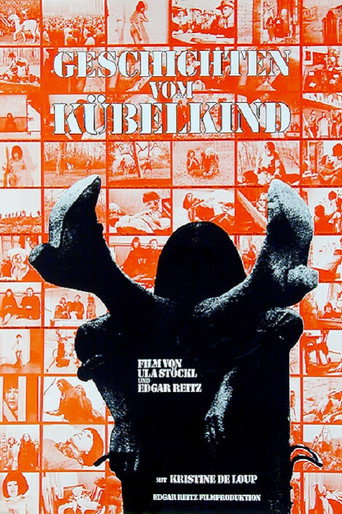
The Dumpster Kid is an artistic creation: in every story society forces her to learn something. But she, fully grown from the moment of her birth, unquestionably learns more than is called for. This extra knowledge, which is not wanted by society, regularly brings her into danger. Dumpster Kid dies in each story, and across each genre. Her stories are set in a whole range of different time periods. What is a Dumpster Kid?
The film comprises a total of six episodes: in each, the authors seek to highlight the personal problems and feelings of three French and three German female filmmakers.
In the summer of 1967, journalist Katharina is visited in Munich by her French friend Anne. They take day trips and visit cafés, acquaintances, and parties. In a series of conversations between them and other women, they talk about the chances for female emancipation in a male-dominated society.
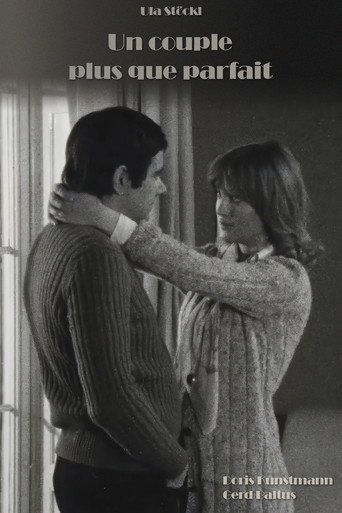
Angela and Robert have been married for ten years and make a perfect couple. They are madly in love with each other, give each other plenty of space and support each other in everyday life. This idyll is put to the test when Robert's girlfriend Claudia moves in with the couple and Angela falls in love with another man. According to a mutual agreement between Angela and Robert, anything goes if one of them breaks their promise never to leave the other.
The classical Epic is reduced to the bare bones of the action. Despite the seven minutes of turbulent action, it is actually a slow film: in the war against Kreon, one of Antigone's brothers fights for the king, one against him. Both die. One of them is buried; the other is left lying on the street. Antigone goes against the king's wishes and wants to bury her brother. As a punishment Antigone is buried alive behind a wall. Her fiancé, Haimon dies, overcome with grief. Haiman's mother, Eurydike, is so upset by his death that she hangs herself. And just as the old soothsayer predicted, the king himself finds no happiness from all this death: he is killed. That makes 6 deaths, even though the war is over.
The observations of teachers and students at the Stuttgart evening school poses the question of whether everyone has the same education opportunities. Out of the 200 night-school students who start out, only 17 reach their aim: Graduation from school, which is the entry ticket to university and possibly the key to happiness later.
What do high school girls do on a Saturday at 5 pm? This film outlines how 18 year-olds imagine future happiness.
Manfred takes his nephew, Martin, on a business trip to Rome. They stay with Manfred's brother Georg, who lives in Rome. On the way there Manfred and Martin meet Lilo, a girl who is also on her way to Rome.