Acting
No biography available.
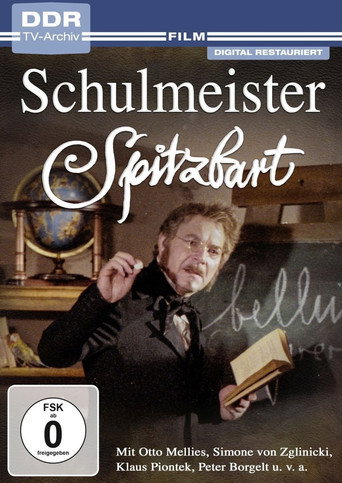
1831. A village schoolteacher Matthias Spitzbart dreams of the ideal school and writes a textbook on the perfect educational institution. When he becomes principal of a grammar school by chance, he puts his ideas into practice. His almost missionary-like zeal blossoms in wondrous ways, but his family idyll is deceptive. Entangled in his activities, Spitzbart fails to see his wife's affair with pro-rector Mehlmann, daughter Friederike flirts with the trainee teacher, and son Michael's misdeeds are enough to make a mockery of his efforts at exemplary behavior. Teachers, parents and the mayor are of the opinion that he has upset everything that worked before: he is dismissed...
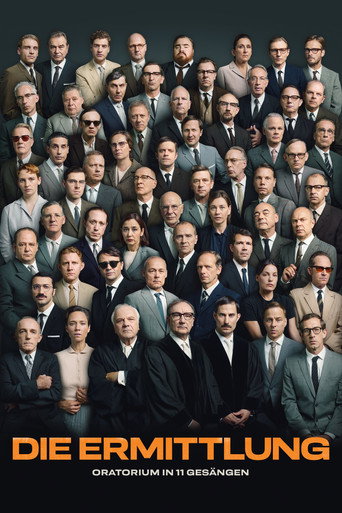
Peter Weiss’ monumental 1965 stage play, among the greatest artworks on the Holocaust, condenses the testimonies of witnesses and the accused during the Frankfurt Auschwitz Trials of 1963-1965. This ultra-faithful film adaptation builds, across four hours, in its intensity and graphically described detail.
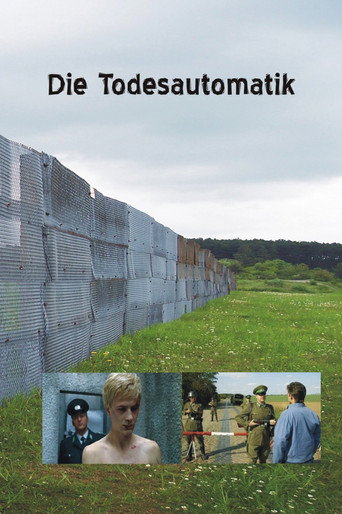
GDR, August 1989: Hanna and Andreas became a target of the secret police and had to give up their plans for their future studies and desired professions. Instead, they face arbitrariness, mistrust and reprisals. Their only chance for a self-determined life lies in fleeing across the Baltic Sea. Fifty kilometres of water separate them from freedom - and only a thin connecting rope around their wrists saves them from absolute loneliness.
Taking place at the Concentration camp Buchenwald at the end of March 1945, prisoner Hans Pippig discovers in a carrying case of an incoming prisoner a Jewish child. If reported the three-year-old is sure to die. On the other hand, a violation of the rules of the camp would threaten the long prepared uprising of the concentration camp prisoners against the SS.
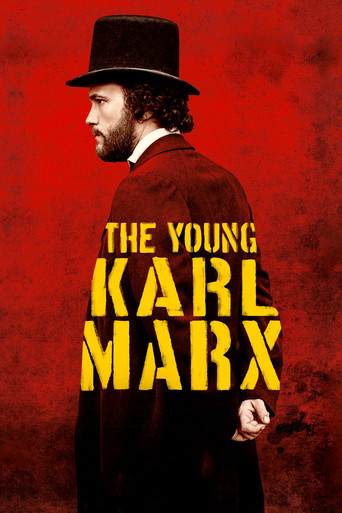
26 year-old Karl Marx embarks with his wife, Jenny, on the road to exile. In 1844 in Paris, he meets Friedrich Engels, an industrialist’s son, who has been investigating the sordid birth of the British working class. Engels, the dandy, provides the last piece of the puzzle to the young Karl Marx’s new vision of the world. Together, between censorship and the police’s repression, riots and political upheavals, they will lead the labor movement during its development into a modern era.
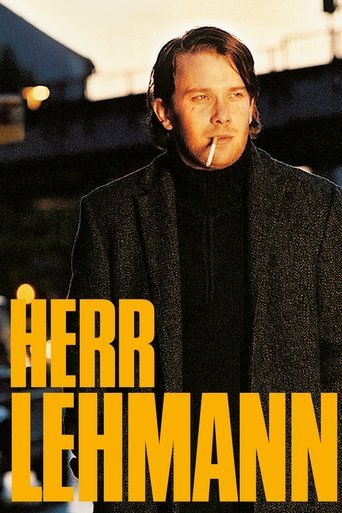
In October 1989, the part of the West Berlin borough of Kreuzberg called SO 36, had been largely shut off by the Wall from the rest of the city for 28 years. A lethargic sub-culture of students, artists, bohemians and barflys had flourished among crumbling buildings. Part of that microcosm is barkeeper Frank, semi-formally called 'Herr Lehmann' by friends and patrons. He hangs out drinking, sports utter disregard for anything beyond SO 36 and lazily pursues an affair with cook Katrin. His lifestyle is gradually disturbed, when his parents show up for a visit, things go awry with Katrin and his best friend Karl starts to act strange. Meanwhile, political turmoil mounts on the other side of the Wall.
At the beginning of 2000, the young commissioner Yvonne Weber moved from Frankfurt am Main to Eisenach. Together with the local colleague Frank Wolf, she is to review an unresolved murder case from the GDR era. The investigation team encounters inconsistencies in the file and it becomes clear that there is no interest in truth-clarifying the Eisenach department and the prosecutor's office in Gotha.