Acting
No biography available.
TV drama that follows the story of unusual destiny of Sava Šumanović, people and events which affected creation of artistic expression and sensibility of the famous Serbian painter.
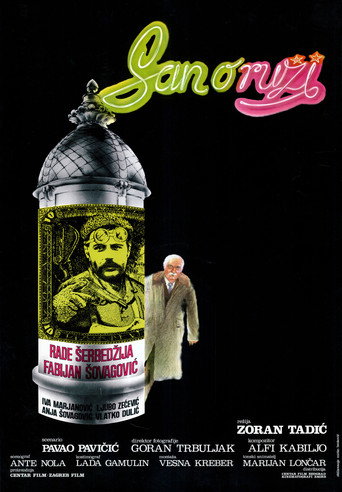
A young couple have settled in a new flat. Soon somebody begins watching them and they receive great amounts of money from an unknown sender.
Old houses in Zagreb are destroyed in order to build new, bigger blocks. A teacher who lives in one of these houses allows a stranger to share his home with him. The stranger has a fascination with statistics, and claims he can predict crimes based on statistical analyses. When a predicted murder did not occur, the stranger is adamant that the whole town will suffer unless a balance is achieved - and he leaves.
Belgrade in 2041 is a deserted city that looks like a dump yard. A few old men try to bring up a group of young girls in the old, traditional way of their Yugoslav ancestors.
Through the conversation with Yugoslav film authors and excerpts from their films, this documentary film tells a story of a film phenomenon and censorship, and its focus is, in fact, a painful epoch of Yugoslav film called “a Black Wave”, which was the most important and artistically strongest period of Yugoslav film industry, created in the sixties and buried in the early seventies by means of ideological and political decisions. The film tells a great “thriller” story of the ideological madness which characterised the totalitarian psychology having left multiple consequences felt up to our very days. It stresses similarities between totalitarian regimes defending their taboos on the example of the persecution of the most important Yugoslav film authors. Those film authors have, however, made world careers and inspired many later authors. The film is the beginning of a debt pay-off to the most significant Yugoslav film authors.
Valent is a night shift worker who can barely feed his family. To add the insult to injury, every night he must pass near the butcher's shop with meat products he can't afford. But one night the shop is a scene of a gangland shooting. Valent picks up the bag full of money and a gun, and his life changes.
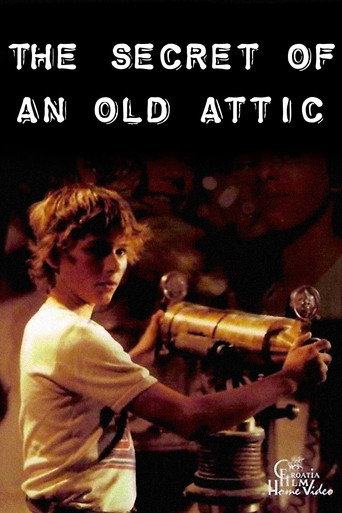
During a summer holiday, two boys discover an anti-gravity cannon in an old attic.
Eva is a widow bored with life, with her job as an architect, with her younger lover, and with her two teenage offspring. She is eventually assigned the job of redesigning the cells of a new prison, but even when her enthusiasm returns a little with the assignment, she is discouraged by the pseudo-intellectual stance of the prison warden and a non-communicative visit to her father. In an act of desperation, she steals some money and a gun - and fully intends to use them both.
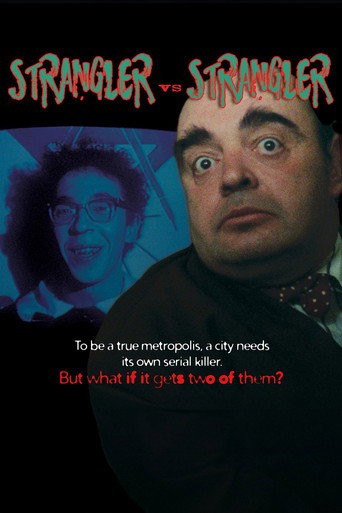
When it comes to crime, Belgrade is same as any other modern metropolis, except for having its own serial killers. That blank is filled when a flower salesman begins strangling women. A popular, but very disturbed rock star soon becomes telepathically connected with the killer.
On a hot summer afternoon in a city courtyard, a young man amuses himself by aiming air guns at random targets. The film examines the roots and manifestations of Evil, which will become the director’s permanent concern.
An experimental staged documentary.
An abstract, minimalistic showpiece of late structuralist film made up of 360-degree pans across a children’s playground – and to one of the gods of his cinephilic pantheon, Anthony Mann. In concrete terms, he alludes here to a scene in Mann’s Glenn Miller Story in which black-and-white documentary material from the Second World War is in experimental film fashion nightmarishly intercut into a scene, breaking with Hollywood conventions.
A monumental homage to Glenn Miller, a one shot film - Glenn Miller 2000. This 26- minute long piece, shot on a circular road in Novi Zagreb in many ways corresponded to the previously discussed attributes that linked Tom's homages and "uses" of Glenn Miller with Miller's music and personality.
The film consists of three sequences shot by a fixed camera: the first shows the balcony of a hospital with patients (soundtrack from the film "Vivre sa vie" by Jean-Luc Godard), the second is a scraped wall and the third is a crossroad with pedestrians and cars (sound taken from the film "The Time-Machine " by George Pal).
The first part in Gotovac’s trilogy of structuralist films is dedicated to jazz musician Duke Ellington and director George Stevens. A camera placed at the front of a moving streetcar records the passing urban landscape: the train tracks and the passing streets and pedestrians transport the viewer (now a passenger on the streetcar) fifty years back in time.
Film by Antonio G. Lauer a.k.a. Tomislav Gotovac