Directing
No biography available.
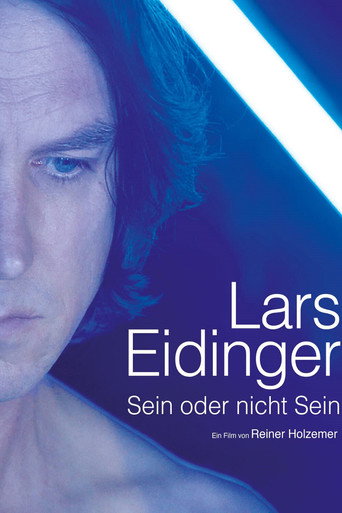
Lars Eidinger is one of Germany’s most talented and versatile actors with his love of improvisation and physical acting style. This documentary seeks to dispel some of the mystique surrounding this exceptional actor’s unique art and also provide an exciting insight into the world of theatre and filmmaking.
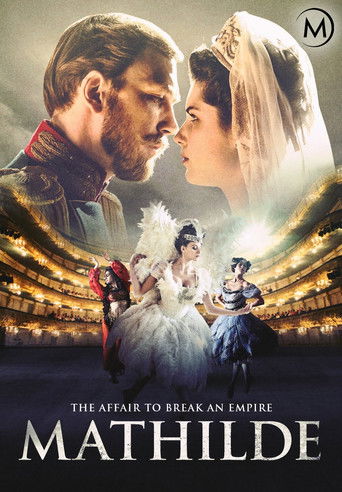
It portrays the memories of Matilda Kshesinskaya and her love affair with the last Tsar of Russia, Nicholas II. Matilda, a Polish-born ballerina from the Mariinsky Theatre in St. Petersburg, had a brief and intense romance with Nicholas between 1892 and 1894, before Nicholas married Alexandra Feodorovna and was crowned Tsar after his father's death. It also explores their relationship, facing societal pressures and interference from Nicholas's mother, Empress Maria Feodorovna, as well as Matilda's involvement with other members of the imperial family, the Romanovs, such as Grand Duke Sergei Mikhailovich and Grand Duke Andrei Vladimirovich.
When Thomas Ostermeier, artistic director of the Schaubühne in Berlin, decided to go to Ramallah in September 2012 to stage Hamlet at the invitation of the Al-Kasaba Theatre, he knew that the Shakespearean verses would find a particular resonance there. The idea of the trip came from intense contact with theatre professionals in Palestine, and most especially with the Freedom Theatre in the refugee camp in Jenin. Under the watchful eye of the film director Nicolas Klotz, the tragedy of the Danish prince intersects with that of young Palestinians. The film is, moreover, a view on another tragedy: the murder of Juliano Mer Khamis, the former director of Freedom Theatre, killed by an unknown assassin in April 2011.
Berlin playwright Lisa follows her husband Martin to Switzerland, where he manages a private school. However, when her twin brother Sven’s leukaemia begins to wreak havoc on his health, she decides she must return to her roots, which has significant consequences for her relationship.
His eyes electrify contemporary theater. Co-director of the prestigious Schaubühne in Berlin, this German director captivates French audiences with his explosive and electrifying adaptations of Brecht, Ibsen, and Shakespeare. From his anarchist youth, Thomas Ostermeier has retained a taste for excess and radicalism. After his Richard III, acclaimed last year at the Avignon Festival, he revisits Anton Chekhov's The Seagull at the Théâtre de l'Odéon until June 25, against a backdrop of rock music, references to Article 49.3, and the war in Syria.
In the heyday of rock 'n' roll, Vernon Subutex was one of the most knowledgeable and renowned record store owners in Paris. But since the digital revolution finally forced him to close his doors, this soon-to-be fifty-something, penniless, single and unattached man has been scraping by on the charity of Alex Bleach, an old friend who became a pop star. When Alex is found dead in a hotel bathtub, Vernon finds himself out on the street. The shortened film version of a very rock 'n' roll show.
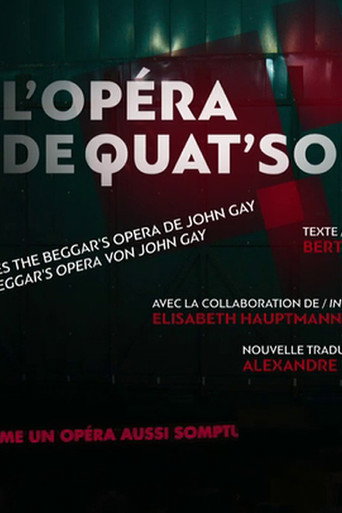
Theater director Thomas Ostermeier stages Bertolt Brecht and Kurt Weill's timelessly magnificent "Threepenny Opera" with the ensemble of the Comédie Française in Aix-en-Provence, based on a new translation of the original text by Alexandre Pateau. In London's underworld district of Soho, the beggar king Jonathan Peachum and the criminal Macheath, known as Mackie Messer, are at war. The latter also seduces the daughter of the shady "businessman". When he finds out that the two have secretly celebrated a wedding, he decides to get rid of his rival. He is aided in his endeavors by Jenny, a cunning whore who betrays her ex-lover to the police. Back to the original: First performed in 1928, the opera parody strings together one biting musical number after another in cabaret style and jazz rhythm, breaking the boundaries of the genre, which until then had been considered bourgeois. Because the "Threepenny Opera" by Bertolt Brecht and Kurt Weill is clearly political!
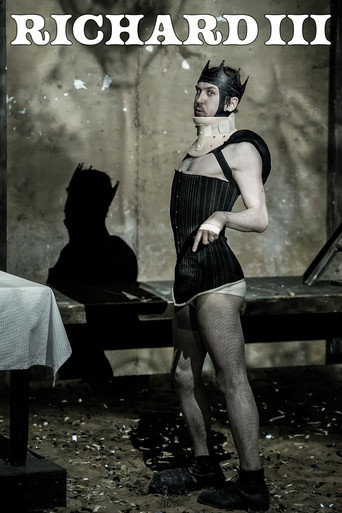
Richard of Gloucester uses murder and manipulation to claim England's throne.
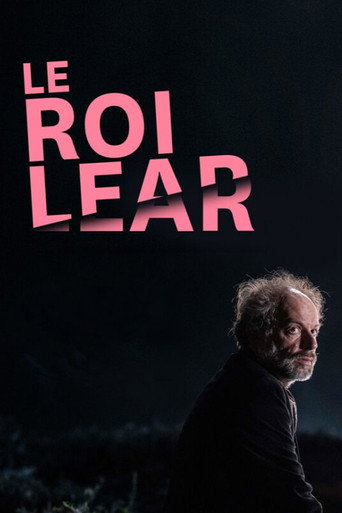
King Lear, as he ages, decides to divide his kingdom between his three daughters Goneril, Regan and Cordelia. However, the transfer of power comes with one condition: a declaration of love from each of them to their father. If Regan and Goneril serve him the speech he hoped for, Cordelia, his favorite, does not give in to the hypocrisy of her elder sisters. The restraint of his daughter triggers the anger of Lear who, humiliated, disinherits her.
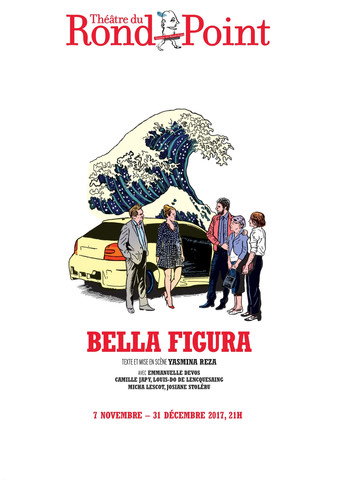
Bella Figura is a play where the stage direction "flottement" (a suspension, indeterminacy, or oscillation) occurs frequently, indicating a moment of silence when the characters and audience are left in ambiguous tension. The playwright Yasmina Reza wrote Bella Figura specifically for the Schaubühne director Thomas Ostermeier, and I imagine that she included these floating silences with him in mind.
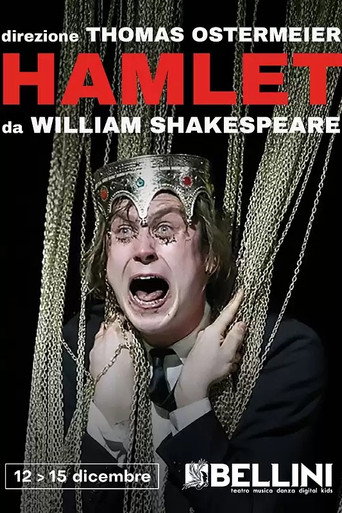
The ghost of the King of Denmark tells his son Hamlet to avenge his murder by killing the new king Claudius, Hamlet's uncle. Hamlet feigns madness, contemplates life and death, and seeks revenge. His uncle, fearing for his life, also devises plots to kill Hamlet.
Hedda and Jørgen Tesman come back from their honeymoon to their brand new house in the western part of the city. It is apparent from the start that the couple is a mismatch, and it becomes clear that Hedda will soon be bored to tears by her petit-bourgeois existence. Until she hears a man she loved a few years back is in town, the writer Eilert Løvborg.
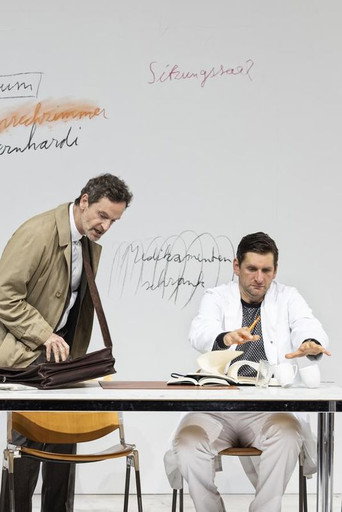
Thomas Ostermeier’s productions of classic plays which visit Britain from the Schaubühne in Berlin, of which he is artistic director, usually display at least one crucial element of flagrant reconceptualisation. In this case, however, what distinguishes his new version (edited with Florian Borchmeyer) of Arthur Schnitzler’s 1912 drama is its resolutely low-key approach. It is Hartmann’s composure that personifies the tone of the production. The set is simply a white box on which locations and descriptions are written for each act (“photographs on the walls” is, yes, written on the wall), and the affair is played as an administrative rather than a political or moral issue.
In Thomas Ostermeier's stage version of Rainer Werner Fassbinder's film, Maria marries German soldier Hermann Braun during World War II. The couple spend over a decade apart due to forces largely beyond Maria's control. To survive in postwar Germany, she becomes a sex worker, a wealthy industrialist's mistress, and eventually a ruthless capitalist during the German economic miracle, while still asserting her loyalty to Hermann.