Directing
No biography available.
Only the chosen few know this woman who started working as a secretary for the German Film and Television Academy (DFFB) on 13 February, 1966. The path of Helen’s career is paved with famous names – including that of Wolfgang Petersen, Holger Meins (who later became a member of the Red Army Faction) as well as directors Wolfgang Becker, Detlev Buck and Christian Petzold. All have fond memories of forgetting their troubles after having poured their hearts out over a cup of coffee in Helene’s office – for Helene was both friend and advisor to countless film students.
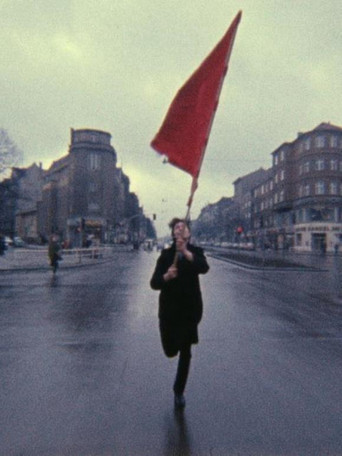
Gerd Conradt films men carrying a red flag in a relay race through Berlin, to hoist it on the balcony of the current Mayor’s seat. A cinematic experiment based on Eadweard Muybridge, Andy Warhol and New American Cinema. A study in men, movements and a symbol. This is the 7th part of this series of film exercises. The other 6 parts were staged by Harun Farocki (Part 1), Carlos Bustamante (Part 2), Helke Sander (Part 3), Holger Meins (Part 4), Wolfgang Petersen (Part 5), Philip Werner Sauber (Part 6).
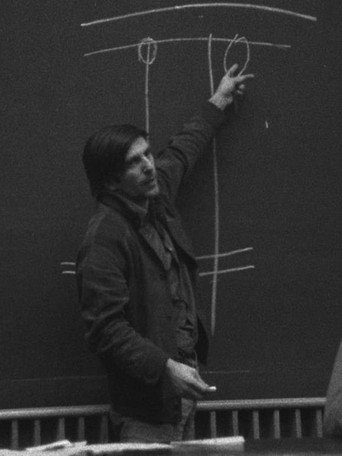
Twenty-five years after the death of Holger Meins, filmmaker and former student friend of the deceased, Gerd Conradt takes an in-depth look at the helmsman of the Baader-Meinhof gang. Who was Holger Meins? What led him into the underground? What circumstances resulted in his death, a death which made him the declared symbol of the radical opposition in Germany? What remains of his legacy?
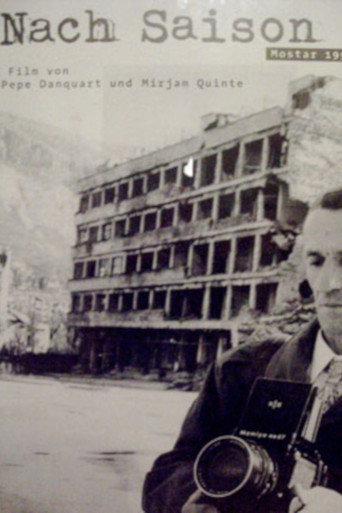
Summer 1994, Mostar, Bosnia and Herzegovina. Two civil wars in only three years has torn the city apart and destroyed it. The town is split into a Croatian majority in the west and a Muslim majority locked in the east. An invisible wall divides the two areas. The EU appoints German social democrat Hans Koschnick as municipal administrator of the town in the hope of rekindling a sense of community there.
Giefer documents the International Vietnam Congress, which took place on February 17 and 18, 1968 in the Audimax of the Technical University of Berlin (TU). With his photographs of the counter-demonstration, which was organized on 21 February 1968 under the slogan "Berlin stands for freedom and peace" on John-F.-Kennedy-Platz in Berlin-Schöneberg, Giefer also shows the counter-movement.
How could the son of a graduate historian and a secretary, who liked to adorn himself with fast cars, fake eyelashes and expensive clothes, who wanted to become an artist, journalist or film director, become the "public enemy No. 1"?
Film announcing the November 4, 1968 demonstration and urging demonstrators to be prepared to fight.
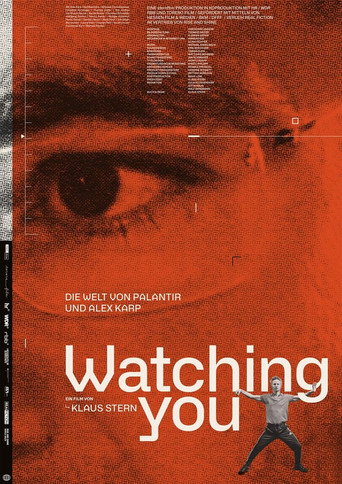
With his company Palantir, businessman Alex Karp created a powerful piece of data analysis software. It provides intelligence services, the military, and police investigative authorities with information that can be used to solve crimes or kill people. But what drives the creator of the software – ethical fundamentals or a thirst for power? Is he a Faust, a Mephisto, or both at the same time? An investigative journey in search of one of Silicon Valley’s most secretive CEOs.
The documentary, produced by the General Student Committee of Freie Universität Berlin, documents the brutal police crackdowns on anti-Shah demonstrators, preserves evidence, interviews eyewitnesses, and confronts thugs with film and photographic evidence. Thomas Giefer and Hans-Rüdiger Minow interpret the police assaults as “the first attempts to implement the state of emergency against an extra-parliamentary opposition seeking to prevent it.” The film aims to create a counter-public sphere and calls on viewers to stop the anti-democratic forces and resist.