Acting
No biography available.
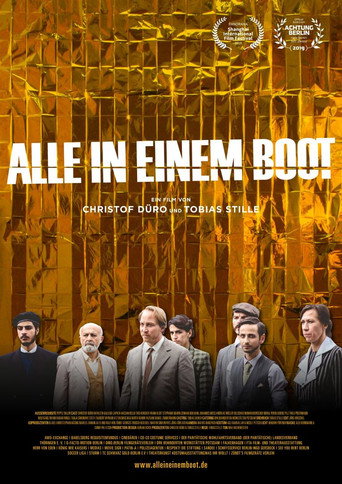
A group of actors are rehearsing an historic escape from Germany of 1939: The Cruise Liner St. Louis is on its way to Cuba, 900 Jewish refugees on board. Cuba denies access. On board: Paul, Elsa and their son. Do they have to return to Germany again and probably die? A group of today refugees from Africa, fleeing from war and death in Syria, enter the theatre. They are supposed to work here as extras. A culture clash begins and becomes a crossover story between escape 79 years ago and today.
A German documentary studying concepts of hell developed over time in Christianity, Judaism and Islam, often overlapping -but not in Catholicism- with purgatory. Special attention goes to 'physical' methods of torture in the afterlife, as in Dante's Inferno. Their inspiration stems partially from judicial torments, as used during the Inquisition to redeem 'Satanic' sinners, from witches and heretics to mere gay people. Also treated is hell's theological and 'educational' meaning.
Philipp and Anna live in the Berlin Babyboom-Kiez Kreuzberg. They also like to go to the playground, but with their little niece Nele. Anna does not want to know anything about Philipp's sudden desire to have a baby. She is on the verge of a professorship and insists on the old agreement: kK - no children! The more intently he makes his baby application to his wife, the more obvious is her rebuff.
What a curious plan of Lya. Putting sleeping pills in the morning tea of her father. Pulling the sleeping wheelchair user to the vegetable store of her brother and attending secretly the acting exam. And all this only because Lya thinks that eight years of caring for her father where enough tribute to the family.
Lilo is a resolute woman, creative in her mind and images, until a devastating diagnosis tears her from everyday life and forces her to face unpleasant truths. Without further ado, she makes her escape with the help of the illegal truck driver Sami and unintentionally sets the whole family in motion.
Germany, late 90s: Johanna is an intern at a local newspaper and is struggling with the death of her grandmother. In addition to her grief, she is burdened by conflict with her family after she angrily confronts her uncle, who is only interested in his inheritance, at the funeral. She seeks balance by throwing herself headlong into her work. In the process, she comes across an old photograph of a concentration camp guard named Anneliese Deckert. With this find, she hopes to advance her journalistic career: Johanna tracks down the now 80-year-old, but does not expect to meet her entire family on the spot, nor does she expect the fuss the photo causes.
Director Gregor Samsa, washed-up and in his late fifties, is reviewing his life. Having wasted it as a cultural worker doesn't exactly add to his joy.
When his mother dies, unlucky writer Conrad Weitzman wants to film the love story of his parents. It even seems, that editor Stuckradt Halmer is keen on the idea. Years after years of mailing and revisions the original story is hardly to recognize anymore and the production is still not in sight. Without further ado Conrad kidnaps the editor with the help of his father and the obscure world of German television network starts to unravel in front of him.
Young forester Jana Doussière takes up a short-term position at the Grunewald forestry office. Coming from a wild forest in the Vosges, the solitude-loving Jana, who tends to struggle with people, encounters the big city forest and its "Berlin peculiarities". In addition to naked men, demonstrating wild boar fans and committed conservationists, the new forest warden is also confronted with sofas in trees, a mysterious city hunter and forest warden Robin, who hasn't exactly been waiting for her. And even her best friend Aylin, who brought her here, doesn't seem to have told her everything about the new job...