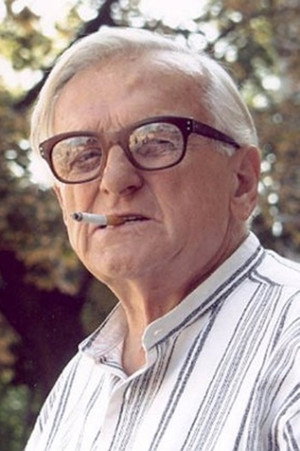
Tamás Banovich Movies, TV Shows, and Filmography
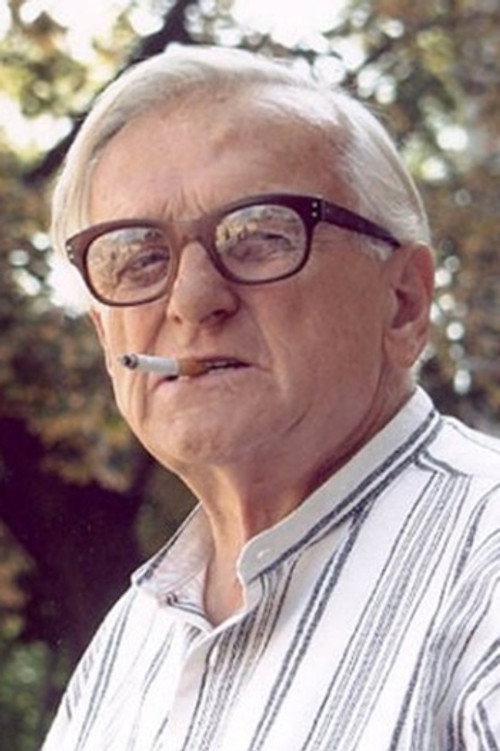
Tamás Banovich
Directing
Biography
Tamás Banovich was born on September 21, 1925 in Budapest, Hungary. He was a production designer and director, known for Az életbe táncoltatott leány (1964), Cyrano de Bergerac (1990) and Szép magyar komédia (1970). He died on February 8, 2015.
Filmography Movies
Production
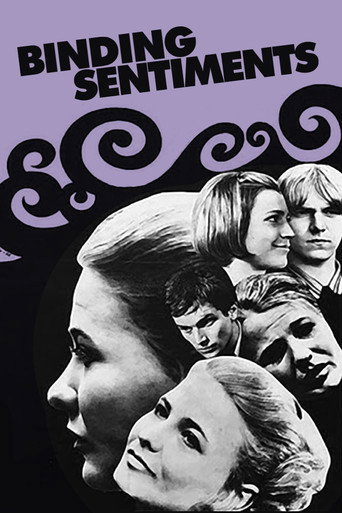
Binding Sentiments
Edit, who became the wife of a politician out of a simple peasant girl, suddenly becomes a widow as a result of an accident. She never loved her husband. She lives a wealthy and lonely life amidst false friends, facing one of the last alternatives of her life, i.e. having to face her past in the hope of an independent new beginning.

Adoption
When middle-aged Kata realises that her life will only be complete if she has a baby of her own, her longstanding-but-married boyfriend Joska refuses to comply. But by developing an unlikely friendship with the angst-ridden teenage orphan Anna, who is also involved in a controversial relationship, Kata discovers aspects of herself, and her role as a woman, that have gone unexamined throughout her entire, lonely life.
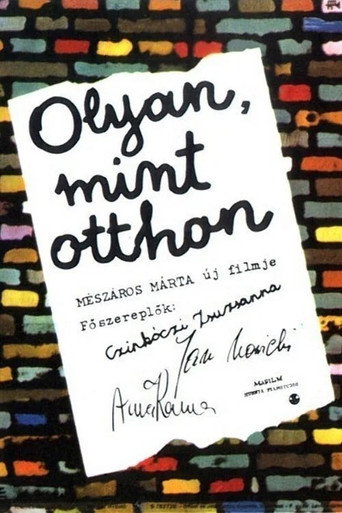
Just Like at Home
On his return from America, András simply cannot find his place: he has lost his wife, friends and job, and he cannot even find his way back to his former great love. Eventually, as a surrogate father, he takes in a wild young girl (Zsuzsa Czinkóczi) and a particularly strong bond is formed between these two rootless people. Márta Mészáros’s remarkable movie starring Jan Nowicki and Anna Karina is about displacement, loneliness and attachment.
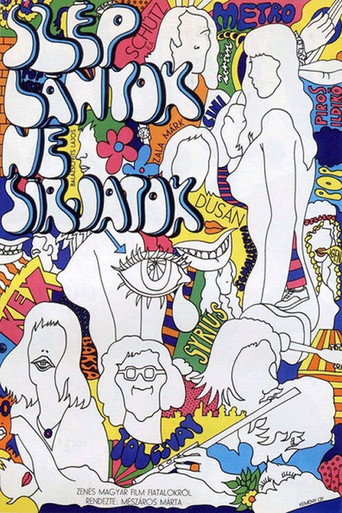
Don’t Cry, Pretty Girls!
Savanyú and his friend work at a plant. After the monotonous shifts they engage in the pleasures of the afternoon and the night, i.e. parties and concerts. Savanyú dates Juli, they are already engaged. The young men live as sub-tenants, the young women in workers' hostels. None of these places are suited for spending time together. They are in need of an apartment. Out of the ruinous apartment which they lay siege on, however, they are sent away by the otherwise friendly policeman. At a concert held in the Park of Youth, Juli gets to know Géza. They flirt, then go to the country with a pop-group. Savanyú and his friends follow them. A minor fight cools the atmosphere.
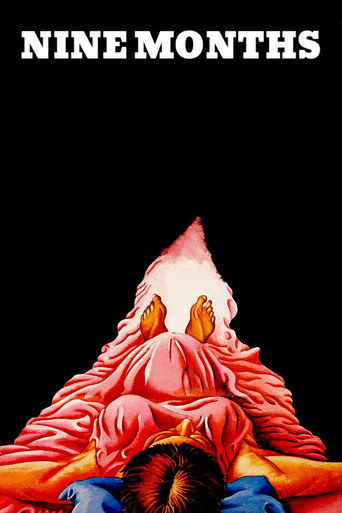
Nine Months
Juli, who works in a brick factory, begins a romantic relationship with her boss, to whom she hides the fact that she has a son.

The Round-Up
After the failure of the Kossuth's revolution of 1848, people suspected of supporting the revolution are sent to prison camps. Years later, partisans led by outlaw Sándor Rózsa still run rampant. Although the authorities do not know the identities of the partisans, they round up suspects and try to root them out by any means necessary.
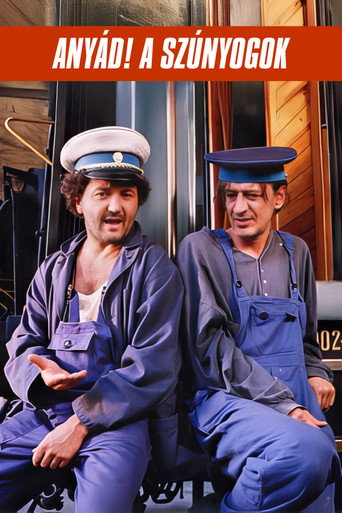
Damn You! the Mosquitoes
Kapa, Pepe and Mesi would like to buy a scrapyard of trains, to start a nostalgia train and earn a lot of money. The capital to start with they want to get from grandpa, who has come home from America with a suitcase full of money. Everybody wants Mesi to approach the old man, because she is the only one he would speak to. But Mesi is more concerned with the idea that she wants a child, by now from anyone, while Pepe is jealous. Kapa’s alleged son emerges, with the mafia behind him: they, too, are eager to get grandpa’s money. After threats and blackmailing, poisoned apples are sent, with only one side of them poisonous. Those dead, by the way, are resurrected by the sound of a song. At last, nobody manages to get the money, but it wouldn’t make sense anyway: it’s all fake. The Statue of Liberty, however, turns out to be blind.
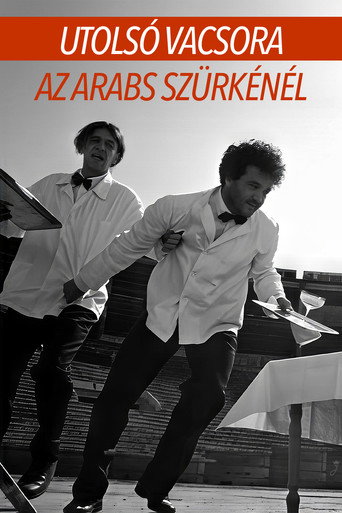
Last Supper at the Arabian Gray Horse
Waiters’ competition at Heroes’ Square in the late thirties. Dressed as waiters, Kapa and Pepe awake in the bronze chariot of the millennial sculpture group. They drive along the Danube promenade, and on the concrete reinforcement of the demolished Budapest rondella hotel they get involved in a showdown of political background. In the burnt-down Sports Hall the waiters train for a last supper, Pepe and Kapa run around the big laid table with trays in their hands. While doing so, Pepe keeps crying out: "I am the best one, I am the most beautiful one, I am the king, I am the god..." Sitting in a boat on the Danube, a ship goes past them, and the Niagara falls, majestic and breathtaking, resound in their ears. On each passing away something new will come to life – as rapped by Sub Bass Monster.
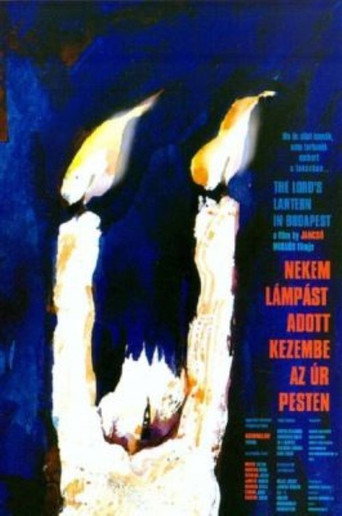
The Lord's Lantern in Budapest
In the Kerepesi Street cemetery, three grave diggers contemplate the fate of the world, then they step out of this role and in a sequence of episodes they play the typical figures of contemporary Hungarian reality, the fat cat, the swashbuckler, the victim, underworld chieftains, and present little absurd dramas of love, marriage, friendship, public order and legal safety. The author and the film director walk among them all the time, contemplating, laughing at their plays. The stories starting from the graveyard and returning there warn of the inevitability of death. The author and the director (Gyula Hernádi and Miklós Jancsó) wisely make friends with death.
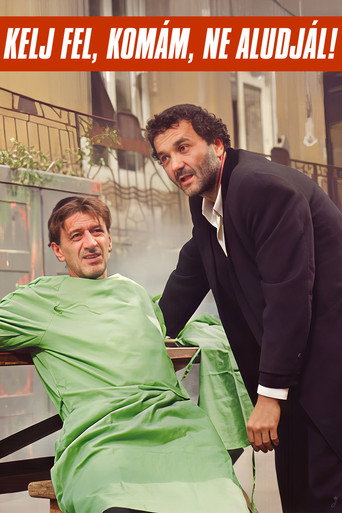
Wake Up, Mate, Don't You Sleep
This time, Kapa and Pepe are first of all prisoners of war – and convicts taken to forced labor service, Jews, Hungarian soldiers, German soldiers. Once they are to be executed, then again they are to perform executions. The film tells in spectacular episodes about the fact that in the past more than one century and a half we kept marching from war to war; occupation and liberation turned out to be indifferent, and why couldn’t the Jews execute the SS-guys? Our heroes hover about dilapidated barracks, then again on the bridges of the capital they guess whose satellites or eternal friends for all times we might be just now. In the cupboard, among the preserved fruit bottles, Stalin is still hiding. The authors of the film are cited before court, then in a showcase hospital they are waiting for the end to come. A Soviet soldier-maid closes the film with a Péter Nádas-quote.
Gallery