Takaharu Yasuoka Movies, TV Shows, and Filmography
Takaharu Yasuoka
Production
Biography
No biography available.
Filmography Movies

Production

A
Roughly chronological, from 3/96 to 11/96, with a coda in spring of 1997: inside compounds of Aum Shinrikyo, a Buddhist sect led by Shoko Asahara. (Members confessed to a murderous sarin attack in the Tokyo subway in 1995.) We see what they eat, where they sleep, and how they respond to media scrutiny, on-going trials, the shrinking of their fortunes, and the criticism of society. Central focus is placed on Hiroshi Araki, a young man who finds himself elevated to chief spokesman for Aum after its leaders are arrested. Araki faces extreme hostility from the Japanese public, who find it hard to believe that most followers of the cult had no idea of the attacks and even harder to understand why these followers remain devoted to the religion, if not the violence.
Palestine 1948: Nakba
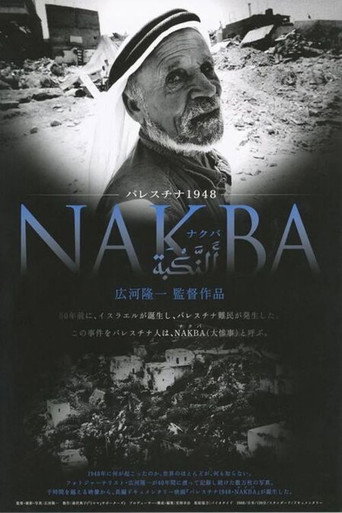
The year 2008 marks the 60th anniversary of the foundation of Israel. It marks also the beginning of 60 years of the suffering for the Palestinian people. This tragedy is referred to as the “Nakba,” meaning catastrophe in Arabic. Since 1948 at least 420 Palestinian villages have vanished. The photo journalist Ryuichi Hirokawa has filmed over 1,000 hours of footage and has taken thousands of photographs of the Palestinian people and their vanished villages. This film is a distillation of this footage
A2
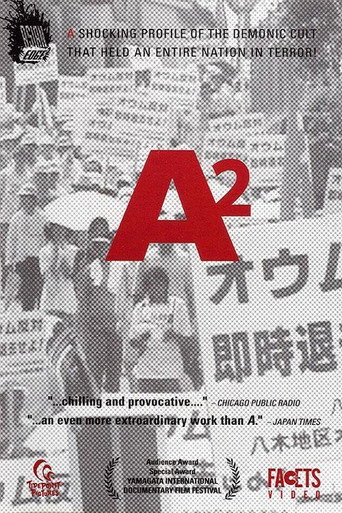
A2 is a continuation of director Tatsuya Mori's film A (1998), an incredible view inside the compound of Japan's Aum Shinrikyo cult after its leaders carried out the deadly sarin gas attacks on the Tokyo subway in 1995. Most followers had no idea that the attacks were being planned, or even that their new religion had violent aspirations. After the attacks, these followers were left to rebuild the religion where they had once found peace in the face of overwhelming, and understandable, condemnation from the rest of Japan. Central focus is placed on Hiroshi Araki, a young man who finds himself elevated to chief spokesman for Aum after its leaders are arrested. Araki faces extreme hostility from the Japanese public, who find it hard to believe that most followers of the cult had no idea of the attacks and even harder to understand why these followers remain devoted to the religion, if not the violence.
The Emperor's Naked Army Marches On
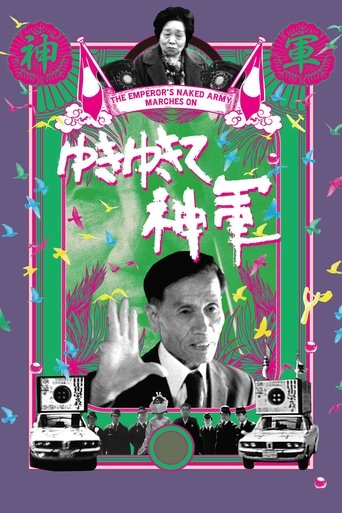
Kenzo Okuzaki, a 62-year-old veteran of the New Guinea campaign in World War II, sets out to conduct interviews with survivors and relatives to find the truth behind atrocities committed by Japanese military, in particular the unexplained killing of two Japanese privates in his unit.
The Room
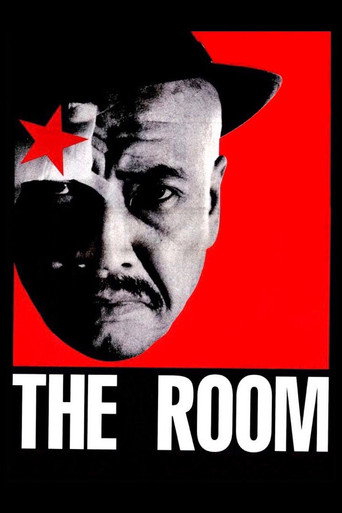
A quiet killer is looking for a room. The real state agent, shy and expressionless, guides him through Tokyo, towards the ruins the decadent economy has left behind, in hopes of finding The Room.
Shiro the White
December 1989, director Katsuyuki Hirano took on the journey of biking across Hokkaido under extreme weather. This is the documentary about that journey.
A
Roughly chronological, from 3/96 to 11/96, with a coda in spring of 1997: inside compounds of Aum Shinrikyo, a Buddhist sect led by Shoko Asahara. (Members confessed to a murderous sarin attack in the Tokyo subway in 1995.) We see what they eat, where they sleep, and how they respond to media scrutiny, on-going trials, the shrinking of their fortunes, and the criticism of society. Central focus is placed on Hiroshi Araki, a young man who finds himself elevated to chief spokesman for Aum after its leaders are arrested. Araki faces extreme hostility from the Japanese public, who find it hard to believe that most followers of the cult had no idea of the attacks and even harder to understand why these followers remain devoted to the religion, if not the violence.
Palestine 1948: Nakba
The year 2008 marks the 60th anniversary of the foundation of Israel. It marks also the beginning of 60 years of the suffering for the Palestinian people. This tragedy is referred to as the “Nakba,” meaning catastrophe in Arabic. Since 1948 at least 420 Palestinian villages have vanished. The photo journalist Ryuichi Hirokawa has filmed over 1,000 hours of footage and has taken thousands of photographs of the Palestinian people and their vanished villages. This film is a distillation of this footage
A2
A2 is a continuation of director Tatsuya Mori's film A (1998), an incredible view inside the compound of Japan's Aum Shinrikyo cult after its leaders carried out the deadly sarin gas attacks on the Tokyo subway in 1995. Most followers had no idea that the attacks were being planned, or even that their new religion had violent aspirations. After the attacks, these followers were left to rebuild the religion where they had once found peace in the face of overwhelming, and understandable, condemnation from the rest of Japan. Central focus is placed on Hiroshi Araki, a young man who finds himself elevated to chief spokesman for Aum after its leaders are arrested. Araki faces extreme hostility from the Japanese public, who find it hard to believe that most followers of the cult had no idea of the attacks and even harder to understand why these followers remain devoted to the religion, if not the violence.
A
Roughly chronological, from 3/96 to 11/96, with a coda in spring of 1997: inside compounds of Aum Shinrikyo, a Buddhist sect led by Shoko Asahara. (Members confessed to a murderous sarin attack in the Tokyo subway in 1995.) We see what they eat, where they sleep, and how they respond to media scrutiny, on-going trials, the shrinking of their fortunes, and the criticism of society. Central focus is placed on Hiroshi Araki, a young man who finds himself elevated to chief spokesman for Aum after its leaders are arrested. Araki faces extreme hostility from the Japanese public, who find it hard to believe that most followers of the cult had no idea of the attacks and even harder to understand why these followers remain devoted to the religion, if not the violence.