Writing
No biography available.
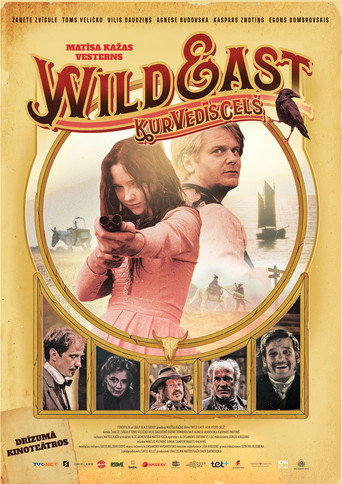
A runaway bride, a young peasant, mysterious illusionists and a manic investigator become entwined in a murderous affair at a Baltic German baron's manor.
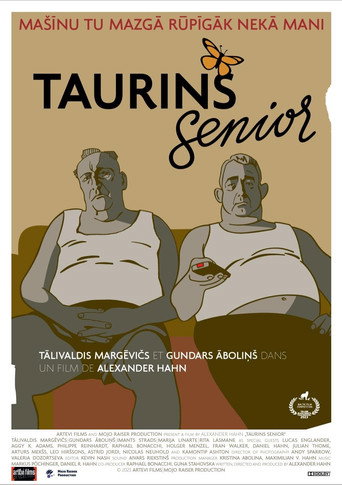
Gunars Taurins has become a dad-sitter in Latvia. He wants to return to France as soon as possible once he has found a caregiver for his father. But it's not that easy and Gunars has to stay in Riga whether he likes it or not.
Zolitude is inhabited mainly by immigrants. An extremely denational environment, a disorderly everyday life, depressing standard type architecture - these are the problems faced by the film's characters.
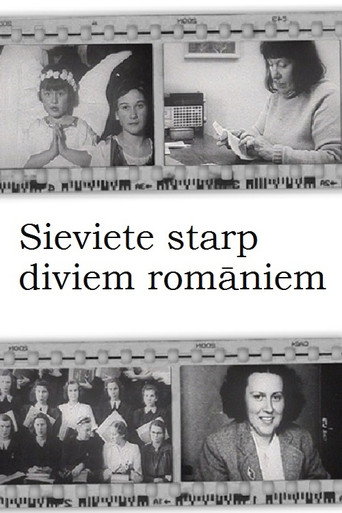
The film tells the story of writer Regīna Ezera. The writer swims in a lake, shops at the market, writes on a typewriter at home, and writes the book "Nostalgia." R. Ezera rides a train at the Riga Railway Station. Regīna Ezera at a congress in Moscow.
Ten years have passed since we made the film “Crossroad Street”, about a small street in the suburbs of the city of Riga. Now we’ve come back. Perhaps it was a sense of duty, perhaps nostalgia that brought us back – who knows? Perhaps it was both. Daiga, Aldis, Osis – they’re all our people. The first film had an impact on both the filmmakers and the residents of Crossroad Street. We found friends whom we want to meet again and again. Society has become more prosperous, several value systems coexist side-by-side. People often live in these systems as though they were in different worlds that never meet. We felt that the world inhabited by our people is sinking into oblivion, and so we wanted to show that it still has its own turbulence, that Crossroad Street resembles Latvia’s palm – the place where a fortune teller can see the lines of its destiny.
Crossroad Street is a small street just 800 metres long on the outskirts of the Latvian capital, Riga. Its various inhabitants, each with his or her own destiny, daily life and relationships with the neighbours, form a microcosm of the country during the time of the Awakening. The genuine interest of the film's creators in the so-called average person earned a number of international awards, including a European Film Award for best documentary in 1989.
The film’s protagonists Ieva and Apollon are former workers of a collective farm. Once they loved each other passionately. Yet it was in "another" life, the time of kolkholzs. The attempt to revive that love ends up in a tragedy. However the story goes on. The events around their burial are so intriguing that mass media raise them to the level of the United Nations.
She is young and beautiful. But a film portrait is more grateful to the life story of a person whose greatest works are already behind them... If the heroine of our film is so young, the most difficult path remains – to try to show how this star of the stage came to be. What was given by God and family, what was gained through the contradictions of Elīna Garanča's own soul and her passion for work.
A chronicle of LOK activities from 1997 to 2000. This short film allows viewers to experience the atmosphere of the Sydney Games and provides a glimpse into the life of the Sydney Latvian House, where Latvian athletes and their supporters gathered during the Olympic Games. Special attention is paid to race walker Aigars Fadejevs, weightlifter Viktors Ščerbatihs, gymnast Igors Vihrovs, and judoka Vsevolods Zeļonijs.
This is the 3rd film in almost 30 years about the daily lives of the people living in this small street of Pārdaugava. We first met them in the late 1980s when the Soviet Union was on the brink of collapse. We visited them again in the wild 1990s. And now we meet them in 2013, again in a whole different world.
The path of the main character to the tops of creative work is a chain of victories and losses, in which gains and irretrievable losses alternate.