Sven Grünberg Movies, TV Shows, and Filmography

Sven Grünberg
Sound
Biography
Sven Grünberg (born November 24, 1956, Tallinn) is an Estonian synthesizer and progressive rock composer and musician best known for his meditative organ and electronic works involving the concepts of Tibetan Buddhism. He has collaborated with the film director Olav Neuland and written the soundtracks for the most of his films. In the 1970s Grünberg was the leader of the progressive rock band Mess, which was founded by him in January 1974 together with Härmo Härm. Despite years of the band's existence and many live performances, Mess did not release a single studio album because of the contradictions of their musical style with the Soviet ideology; only in 1996 did Grünberg release a compilation from several surviving Mess recordings and a full remastered album in 2004. Grünberg is also the Chairman of the Board of the Estonian Institute of Buddhism.
Filmography Movies
Acting

Grisha
An up-close look into the life of the often misunderstood movie director Grigori Kromanov through the lens of old friends and colleagues.
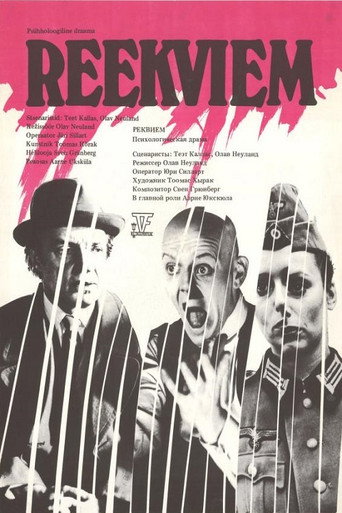
Requiem
When the frontline extends over Estonia in the summer of 1944, the pilots of a shot down Soviet airplane come to ask for help at a farm where organ builder Jaan lives with his kids.
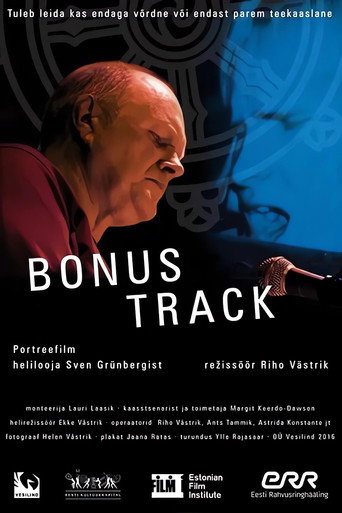
Bonus track
Sven Grünberg is a composer, musician, Buddhist thinker, the introducer of the Dalai Lama to Estonia, and a father – to name just a few roles in his life. Of course, he is also a son, husband, brother, teacher, and human being. He is a distinctive personality with a well-defined worldview. Despite his connection with Buddhism, he is a man of sharp words, yet one who is ready to take responsibility for his opinions or judgments. A few years ago, Grünberg underwent a serious heart operation, which led him to see life from a new perspective. Bonus Track portrays Sven Grünberg in the period following his operation, as he continues to create new music, ensures the flawless preservation of his earlier works, raises his preschool-aged daughter, and organizes the third visit of His Holiness the 14th Dalai Lama.

Milarepa laulud
The film is based on the works of Milarepa, the most renowned Tibetan poet and Buddhist teacher of the 11th century. A young scholar and a student journey through the sacred sites of Buryatia and Mongolia, guided by a mentor on an exploratory expedition, seeking a path to self-discovery through Milarepa's philosophy and Buddhist culture.

Rebel with a Bow Tie
Jaan Tootsen’s documentary follows President Toomas Hendrik Ilves in the last year and a half of his term in office – as he grapples with the complexities of world politics and his private life. Tootsen’s keen camera eye follows Ilves at his most difficult moments, showing no mercy, but creating a gripping, rather harsh and at the same time very human portrait of the President.
Production
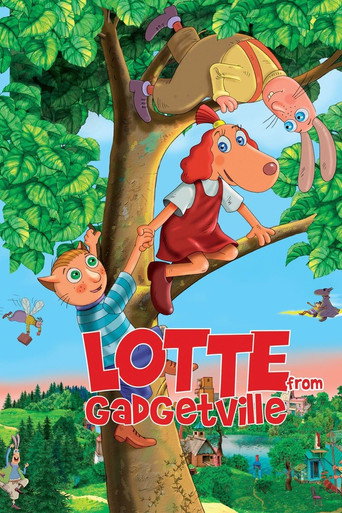
Lotte from Gadgetville
Somewhere in Europe by a great sea stands a small village, where inventing all manner of domestic gadgets is held in great esteem. Every year the villagers organize an annual competition of new inventions. One of the best inventors in the village is Oskar, Lotte's father. His primary rival is Adalbert, whose wife also partakes in the competition. On the eve of the next competition, Lotte and her friend Bruno find a book soaked in the sea, from which Susumu, a gardener from distant Japan, climbs out. Susumu teaches the villagers some judo throws before a big judo competition, which the latter will eagerly use to facilitate their daily lives.
Requiem
When the frontline extends over Estonia in the summer of 1944, the pilots of a shot down Soviet airplane come to ask for help at a farm where organ builder Jaan lives with his kids.
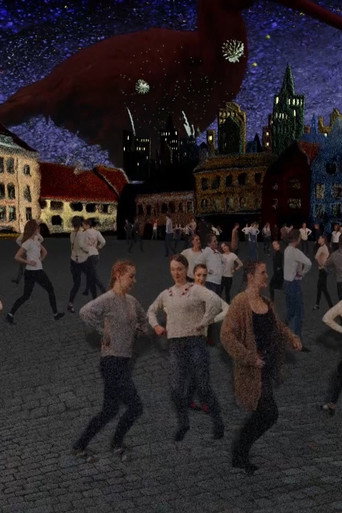
Code
The development of nature is controlled by the genetic chain. Life goes on as the information code is stored in the gene chain. Every living being tries to indulge and laze. Unfortunately, development doesn't happen this way. The gene chain only rusts. Progress will only be made if there is an urgent need for it. The protagonist's rusty gene chain only starts working when the fear of death arises. What code is hidden in the human gene chain becomes clear during development. Mankind has debated the meaning of life for a long time, not knowing that it has long been found. What everyone is striving for is collectively creating strange patterns. After that, we become the starting point of a new gene chain again.
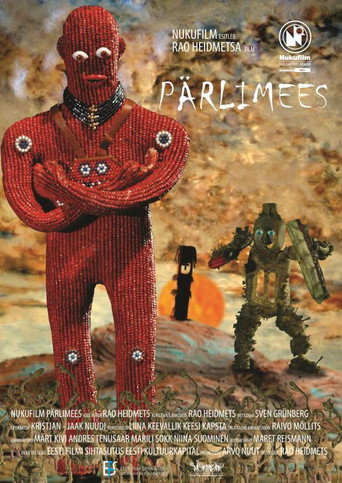
The Pearlman
A smart leader can keep the culture of his nation homogeneous for a long time, but he is helpless against the interchange of genes.
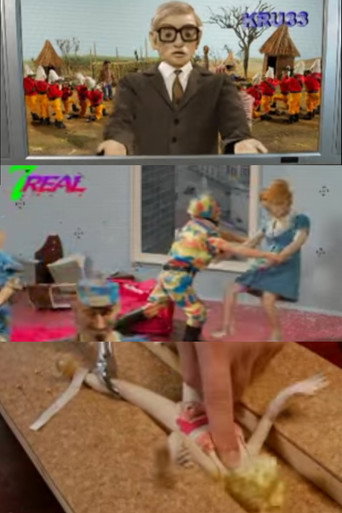
Inherent Obligations
Short film from Rao Heidmets about voyeurism, violence and media. Mixing live action with stop motion animation.

Klaabu in Space
Fantastic film about the space trip of Klaabu, Ninni and Pessik, to their help to the habitats of other planet in a release from the yoke of ominous Mushroom and transformation of motherland in a flowering garden.

Luigeluum
A documentary about the everyday life on a film set and the elusiveness that still confronts the artist and without the pursuit of which there would probably not even be failures.
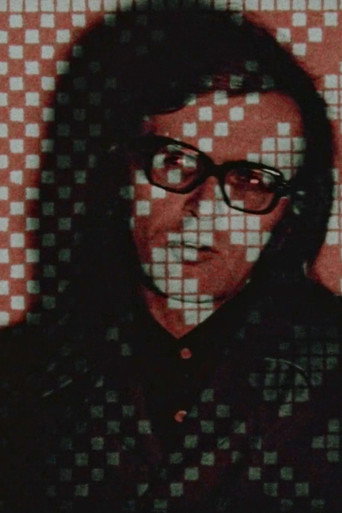
The Belt of Lielvārde
The film explores and attempts to decipher the complex ornaments encoded in the traditional folk costume accessory, Lielvārde’s belt, drawing parallels with ancient cultures in Japan, China, Egypt, and elsewhere.
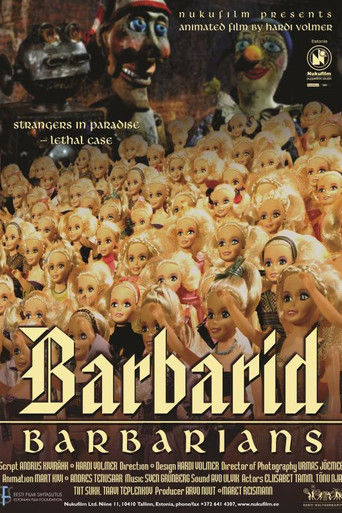
Barbarians
A mixture of popular stories are reversed and adapted to the Barbie universe. Queen Tiina (that's what these Barbies are called) asks who is the most beautiful in the city of Las Tiinas and someone dares to say that there is someone more beautiful than her. Immediately afterwards, Queen Tiina decides to kill the beautiful doll, who ends up in the sewers surrounded by forgotten toys (such as a melancholic Pinocchio and a charming rag doll).
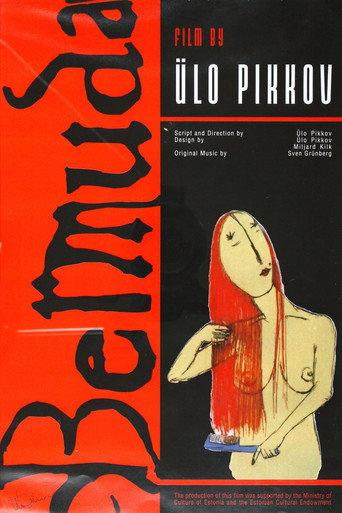
Bermuda
A dreamy love triangle between a mermaid, a sailor with a wooden leg and a flute-playing centaur, who live among the sand dunes of a desert landscape. Ülo’s debut hand-drawn film is full of charm and wit, in equal measures, and never fails to delight.
Gallery