Sut Jhally Movies, TV Shows, and Filmography

Sut Jhally
Directing
Biography
Sut Jhally is Professor of Communication at the University of Massachusetts at Amherst and founder and Executive Director of the Media Education Foundation (MEF). He is one of the world's leading scholars looking at the role played by advertising and popular culture in the processes of social control and identity construction. The author of numerous books and articles on media (including The Codes of Advertising and Enlightened Racism) he is also an award-winning teacher (a recipient of the Distinguished Teaching Award at the University of Massachusetts, where the student newspaper has also voted him "Best professor"). In addition, he has been awarded the Distinguished Outreach Award, and was selected to deliver a Distinguished Faculty Lecture in 2007. He is best known as the producer and director of a number of films and videos (including Dreamworlds: Desire/Sex/Power in Music Video; Tough Guise: Media, Violence and the Crisis of Masculinity; and Hijacking Catastrophe: 9/11, Fear & the Selling of American Empire) that deal with issues ranging from gender, sexuality and race to commercialism, violence and politics. Born in Kenya, raised in England, and educated in graduate studies in Canada, he currently lives in Northampton, Massachusetts.
Filmography Movies
Acting
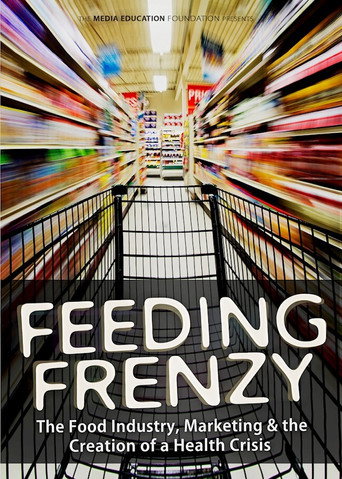
Feeding Frenzy: The Food Industry, Obesity and the Creation of a Health Crisis
In the past three decades, obesity rates in the US have more than doubled for children and tripled for adolescents, and 70% of adults are now obese or overweight. The result has been a widening epidemic of obesity-related health problems, including coronary heart disease, high blood pressure, stroke, and Type 2 diabetes. While discussions about this spiraling health crisis have tended to focus on the need for more exercise and individual responsibility, FEEDING FRENZY trains its focus squarely on the responsibility of the processed food industry and the outmoded government policies it benefits from. It lays bare how taxpayer subsidies designed to feed hungry Americans during the Great Depression have enabled the food industry to flood the market with a rising tide of cheap, addictive, high calorie food products, and offers an engrossing look at the tactics of the multi billion-dollar marketing machine charged with making sure that every one of those surplus calories is consumed.
The Codes of Gender
Arguing that advertising not only sells things, but also ideas about the world, media scholar Sut Jhally offers a blistering analysis of commercial culture's inability to let go of reactionary gender representations. Jhally's starting point is the breakthrough work of the late sociologist Erving Goffman, whose 1959 book The Presentation of the Self in Everyday Life prefigured the growing field of performance studies. Jhally applies Goffman's analysis of the body in print advertising to hundreds of print ads today, uncovering an astonishing pattern of regressive and destructive gender codes. By looking beyond advertising as a medium that simply sells products, and beyond analyses of gender that tend to focus on either biology or objectification, The Codes of Gender offers important insights into the social construction of masculinity and femininity, the relationship between gender and power, and the everyday performance of cultural norms.

The Occupation of the American Mind
Over the past few years, Israel's ongoing military occupation of Palestinian territory and repeated invasions of the Gaza strip have triggered a fierce backlash against Israeli policies virtually everywhere in the world—except the United States. This documentary takes an eye-opening look at this critical exception, zeroing in on pro-Israel public relations efforts within the U.S.

Dreamworlds 3: Desire, Sex, and Power in Music Video
Dreamworlds 3 examines the stories contemporary music videos tell about girls and women, and encourages viewers to consider how these narratives shape individual and cultural attitudes about sexuality. Illustrated with hundreds of up-to-date images, Dreamworlds 3 offers a unique and powerful tool for understanding both the continuing influence of music videos and how pop culture more generally filters the identities of young men and women through a dangerously narrow set of myths about sexuality and gender. In doing so, it inspires viewers to reflect critically on images that they might otherwise take for granted.
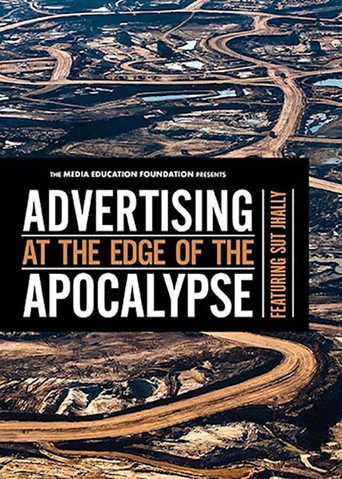
Advertising at the Edge of the Apocalypse
In this highly anticipated sequel to his groundbreaking, ADVERTISING AND THE END OF THE WORLD, media scholar Sut Jhally explores the devastating personal and environmental fallout from advertising, commercial culture, and rampant American consumerism. Ranging from the emergence of the modern advertising industry in the early 20th century to the full-scale commercialization of the culture today, Jhally identifies one consistent message running throughout all of advertising: the idea that corporate brands and consumer goods are the keys to human happiness. He then shows how this powerful narrative, backed by billions of dollars a year and propagated by the best creative minds, has blinded us to the catastrophic costs of ever-accelerating rates of consumption.
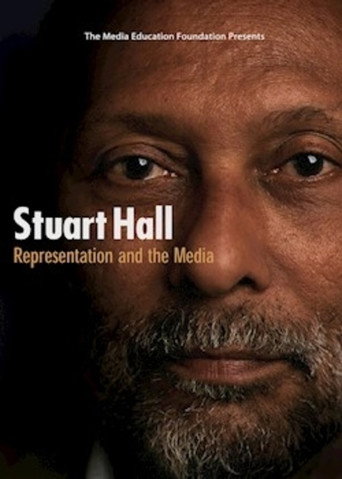
Stuart Hall: Representation & the Media
Cultural theorist Stuart Hall offers an extended meditation on representation. Moving beyond the accuracy or inaccuracy of specific representations, Hall argues that the process of representation itself constitutes the very world it aims to represent, and explores how the shared language of a culture, its signs and images, provides a conceptual roadmap that gives meaning to the world rather than simply reflecting it. Hall's concern throughout is the centrality of culture to the shaping of our collective perceptions, and how the dynamics of media representation reproduce forms of symbolic power.
Production

Peace, Propaganda & the Promised Land
This video shows how the foreign policy interests of American political elites-working in combination with Israeli public relations stratgies-influence US news reporting about the Middle East conflict. Combining American and British TV news clips with observations of analysts, journalists and political activists, Peace, Propaganda & the Promised Land provides a brief historical overview, a striking media comparison, and an examination of factors that have distorted U.S. media coverage and, in turn, American public opinion.

This Land Is Our Land
For more than three decades, transnational corporations have been busy buying up what used to be known as the commons -- everything from our forests and our oceans to our broadcast airwaves and our most important intellectual and cultural works. In This Land is Our Land, acclaimed author David Bollier, a leading figure in the global movement to reclaim the commons, bucks the rising tide of anti-government extremism and free market ideology to show how commercial interests are undermining our collective interests. Placing the commons squarely within the American tradition of community engagement and the free exchange of ideas and information, Bollier shows how a bold new international movement steeped in democratic principles is trying to reclaim our common wealth by modeling practical alternatives to the restrictive monopoly powers of corporate elites.
Tough Guise: Violence, Media & the Crisis in Masculinity
Tough Guise systematically examines the relationship between pop-cultural imagery and the social construction of masculine identities in the U.S. at the dawn of the 21st century.
The Codes of Gender
Arguing that advertising not only sells things, but also ideas about the world, media scholar Sut Jhally offers a blistering analysis of commercial culture's inability to let go of reactionary gender representations. Jhally's starting point is the breakthrough work of the late sociologist Erving Goffman, whose 1959 book The Presentation of the Self in Everyday Life prefigured the growing field of performance studies. Jhally applies Goffman's analysis of the body in print advertising to hundreds of print ads today, uncovering an astonishing pattern of regressive and destructive gender codes. By looking beyond advertising as a medium that simply sells products, and beyond analyses of gender that tend to focus on either biology or objectification, The Codes of Gender offers important insights into the social construction of masculinity and femininity, the relationship between gender and power, and the everyday performance of cultural norms.
The Codes of Gender
Arguing that advertising not only sells things, but also ideas about the world, media scholar Sut Jhally offers a blistering analysis of commercial culture's inability to let go of reactionary gender representations. Jhally's starting point is the breakthrough work of the late sociologist Erving Goffman, whose 1959 book The Presentation of the Self in Everyday Life prefigured the growing field of performance studies. Jhally applies Goffman's analysis of the body in print advertising to hundreds of print ads today, uncovering an astonishing pattern of regressive and destructive gender codes. By looking beyond advertising as a medium that simply sells products, and beyond analyses of gender that tend to focus on either biology or objectification, The Codes of Gender offers important insights into the social construction of masculinity and femininity, the relationship between gender and power, and the everyday performance of cultural norms.
The Codes of Gender
Arguing that advertising not only sells things, but also ideas about the world, media scholar Sut Jhally offers a blistering analysis of commercial culture's inability to let go of reactionary gender representations. Jhally's starting point is the breakthrough work of the late sociologist Erving Goffman, whose 1959 book The Presentation of the Self in Everyday Life prefigured the growing field of performance studies. Jhally applies Goffman's analysis of the body in print advertising to hundreds of print ads today, uncovering an astonishing pattern of regressive and destructive gender codes. By looking beyond advertising as a medium that simply sells products, and beyond analyses of gender that tend to focus on either biology or objectification, The Codes of Gender offers important insights into the social construction of masculinity and femininity, the relationship between gender and power, and the everyday performance of cultural norms.
Advertising and the End of the World
Focusing directly on the world of commercial images, Sut Jhally asks some basic questions about the cultural messages emanating from this market-based view of the world: Do our present arrangements deliver what they claim -- happiness and satisfaction? Can we think about our collective as well as our private interests? And, can we think long-term as well as short-term?
Advertising and the End of the World
Focusing directly on the world of commercial images, Sut Jhally asks some basic questions about the cultural messages emanating from this market-based view of the world: Do our present arrangements deliver what they claim -- happiness and satisfaction? Can we think about our collective as well as our private interests? And, can we think long-term as well as short-term?
Advertising and the End of the World
Focusing directly on the world of commercial images, Sut Jhally asks some basic questions about the cultural messages emanating from this market-based view of the world: Do our present arrangements deliver what they claim -- happiness and satisfaction? Can we think about our collective as well as our private interests? And, can we think long-term as well as short-term?

No Logo
There's a bad mood rising against the corporate brands. No Logo is the warning on the label. In the last decade, No Logo has become a cultural manifesto for the critics of unfettered capitalism worldwide. As the world faces a second economic depression, No Logo's analysis of our corporate and branded world is as timely and powerful as ever. Equal parts cultural analysis, political manifesto, mall-rat memoir, and journalistic exposé, No Logo is the first book to put the new resistance into pop-historical and clear economic perspective. It tells a story of rebellion and self-determination in the face of our new branded world.
Gallery