Stuart Marshall Movies, TV Shows, and Filmography
Stuart Marshall
Directing
Biography
Marshall was a founder member of London Video Arts in 1976, and was a committed advocate of British video art, as a practitioner, curator and theorist. He curated the first UK/Canadian Video Exchange in 1984 and his videos and writings were amongst the first to explore the relationship between video, television and the media. With later works such as Bright Eyes, he explored, and challenged, misrepresentations of homosexuality during the AIDS epidemic of the 1980s, at a time when lesbian and gay lifestyles and sexuality were under attack as a result of Clause 28 and the media-encouraged prejudice surrounding the spread of AIDS. Towards the end of his life, working with Maya Vision, Marshall made a number of Channel 4 commissioned documentaries concerning gay identity and he continued to be a passionate campaigner for gay rights.
Filmography Movies

Production
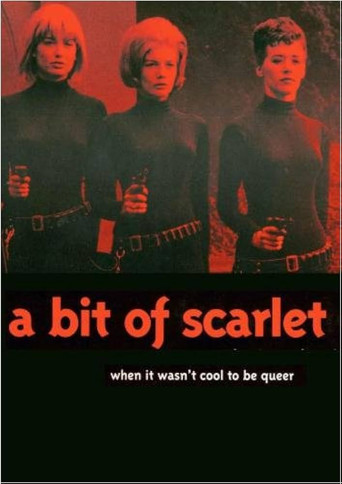
A Bit Of Scarlet
A Bit of Scarlet excavates clips from Britain's cinema archives to create a moving and humorous testament to the closeted gay and lesbian images from filmmaking's earliest days.
Bright Eyes
One of the earliest documentaries to deal with AIDS.
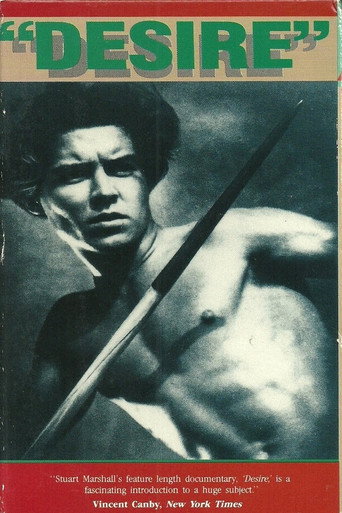
Desire
Sexuality in Germany from 1910 to 1945: beginning with back-to-nature mountain camps and schools that fused athleticism, same-sex intimacy, and nudity; the openly-gay bars during the Weimer Republic; and, Nazi suppression of male and female homosexuality. Historians discuss pedagogical Eros, Hirschfeld's theories and his institute of sexual science, and the Nazi's Paragraph 175, which outlawed homosexual behavior. Survivors describe intimidation and interrogation, the flight of friends, Himmler's edicts, and the confinement and death in concentration camps of gay men and women. The documentary ends at Amsterdam's monument to gay victims of the Holocaust.
Still Life Animation
Records a Portapak camera filming a seated man while the tape deck or the table it rests on is struck, causing the frame to skip each time.
Pedagogue
A short performance to camera by solo performer/dramatist Neil Bartlett. Pedagogue explores in comic style the possible implications of Clause 28. Through Clause 28, the British Government took powers to outlaw the 'promotion of homosexuality' in education and local government.
Go thru the Motions
An extreme close-up of a mouth is used to examine speech patterning, perception of mime, vocal cavity resonation and the electronic fracturing of speech.
Comrades in Arms
Gay men and women recall their secret lives while serving in the British armed forces during WWII.
Over Our Dead Bodies
This documentary traces the response to AIDS of gay activist groups in America and Britain. The film itself is also activist, giving platform to ACT UP, Queer Nation and Outrage, organisations fighting to keep AIDS and all the issues surrounding the disease in the public consciousness. Interviews are intercut with footage of meetings, demos and kiss-ins. The messages come hard and fast, with serious allegations levelled at church, state and health bodies. British lesbians and gays are criticised for failing to use grief and anger as political weapons for change. The opinions and statistics that dominate the film provoke a detached, intellectual response; only the few personal stories, and the scenes of demos where AIDS patients are manhandled by butch NYPD officers, encourage emotional involvement.
Blue Boys
Blue Boys is a hard-news documentary which questions operations by the Police and Customs to smash so-called 'gay sex rings'. By talking to academic experts in the gay professions, and gay men who have come up against the law (including those convicted as part of the notorious 1990 sado-maochist 'Spanner' trial), the programme describes how the policing of pornography is fed by common prejudices against gay men and their culture. Blue Boys also looks at the relationships between Christian moral pressure groups, the government, and policing agencies (including the powerful Obscene Publications Squad of New Scotland Yard). It provides new evidence to challenge myths about the volume and violence of today's pornography and the dangers presented by it.
A Plague and its Symptoms
The tape is about the way AIDS has been represented by medical journalism in particular and the dominant media in general. Contemporary medical research is destroying a movement that the gay liberation movement has built up, that is an autonomous, proud, homoerotic body, and is reconstructing that body as a pathological and morbid body that shows symptoms of disease.