Smaïn Movies, TV Shows, and Filmography

Smaïn
Acting
Biography
Smaïn (born Smaïn Fairouze, on January 3, 1958 in Constantine, Algeria) is a French comedian, humorist, writer, actor and director of Algerian descent. Born in 1958 in Constantine, Algeria, to an unknown father and mother, Smaïn Fairouze was taken in by the children's ward of the civil hospital. In 1960, brought back to France by an administrative assistant, he joined his foster family. His adoptive father, a street sweeper at the Régie immobilière de la ville de Paris, was Algerian and his adoptive mother, a cleaning lady, was Moroccan. He attended the Notre-Dame school in Saint-Mandé and then the Saint-Michel high school in St Mandé. During his childhood, he practiced choral singing for many years. Smaïn, to break into the world of show business, counted on the limitless support of his adoptive parents: «Of modest origins, they looked with suspicion at the world of artists. They constantly told me that there are many called and few chosen... But my desire quickly got the better of their advice! Unfortunately, they died too early to be able to benefit from my success. But I hope they would have been proud of it!». Smaïn began with a long career in café-théâtre in the 1980s, performing in small Parisian cabarets. Later, he met Philippe Bouvard who offered him a place in his Théâtre de Bouvard. It was there that he expanded his circle of friends by meeting Didier Bourdon, Bernard Campan, Pascal Légitimus and Seymour Brussel. With these four companions, he formed a small comedy group, Les Cinq, which toured for a few years. Smaïn ended up choosing the solo show. Little by little, with the help of his pianist Alain Bernard, he found success and performed in shows over the years: English beur in 1986 broadcast on 18 August (version filmed at the International Festival of Actors' Performance of June 1987) on La Cinq, T'en veux? in 1989, and Comme ça se prononce in 1996, a show for which he won the Molière for best Indonesian, a Victoire de la musique as well as a Grand Prix Sacem. At the same time, Smaïn was offered more and more roles in the cinema, notably in L'Œil au beur(re) noir, a film which received the César for best first film in 1988. He also participated in several shows by Enfoirés in 1992, 1993, 1995, 1997 and 1998. In 2008, he recorded with the Orchestre de la Suisse romande, Le Carnaval des animaux by Camille Saint-Saëns, for which he wrote the libretto. This will be followed by a collaboration with the Pau Pays de Béarn Orchestra who commissioned several musical tales for orchestra, Rayane and the Maestro, The Disappeared of the page 41 and most recently The Fabulous Journey of the Traveling Music Stand. In 2009, he was part of the jury of the show France has incredible talent, during the fourth season, replacing Patrick Dupond, and collaborates with Michel Legrand on the production of his album Délit de fa dièse. In 2012, Smaïn returned to the stage of the Théâtre Rive Gauche in the play Réactions en chaîne, which he performed from January to March. ... Source: Article "Smaïn" from Wikipedia in English, licensed under CC-BY-SA.
Filmography Movies
Acting

Placés
Because he forgot his identity card, Elias cannot take the entrance exam to Sciences Po. In search of a job while waiting to be able to take the exam again, he becomes an educator in a children's home. Confronted with an environment he doesn't know how to work, Elias doesn't yet know how much this experience will change his life.

Les Enfoirés - Les Enfoirés en chœur de 1985 à aujourd'hui
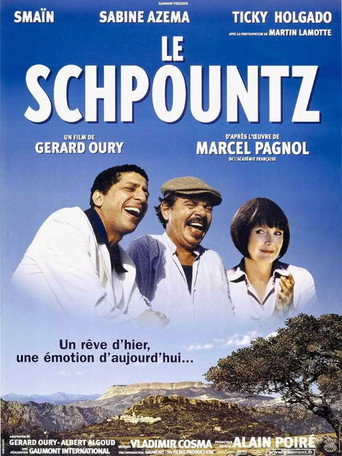
Le Schpountz
Irénée has no desire to work in his uncle's grocery shop and dreams of becoming an actor. His opportunity comes when a crew of movie makers came to his little village. Irénée begins to go over the top in order to be noticed, which earns him the traditional joke reserved to a "Schpountz" (naive person): a phoney contract and a departure for Paris.

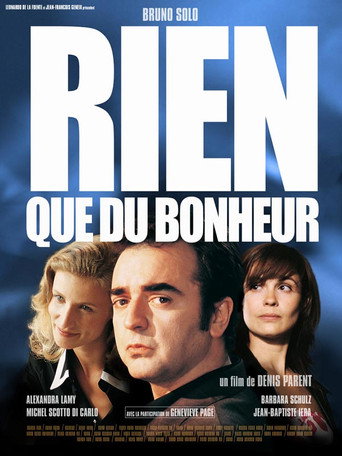
Don't Worry, Be Happy
With his vitriolic pen, Désiré Loncle, does not make the life of filmmakers easy. But chickens come home to roost, don't they? As a matter of fact, Désiré gets his due punishment when Manu, his girlfriend, kicks him out of home. At a loss, he finds refuge with Alex, a young actor. He is soon joined by Eduardo, an Italian producer, dumped like him by his wife. While Désiré tries to rebuild himself, the three men decide to write a film script that will be the basis of a vehicle for Alex.
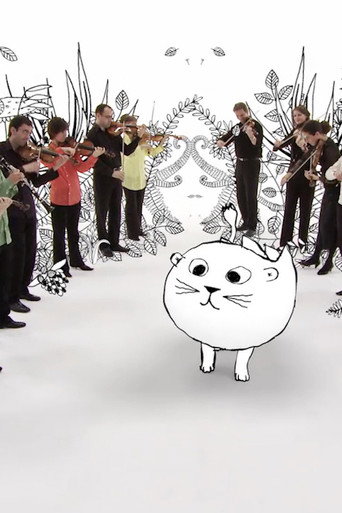
Le Carnaval des animaux
Every night, a father tells his son a bedtime story. As if by challenge, the child always chooses the same book, with scores, orchestra photos and images of animals. It’s about Camille Saint-Saëns’ “Carnival of the Animals”. Under the impetus of the gentle complicity of father and son, this somewhat austere book is transformed, comes to life and makes music: the carnival animals come to life...
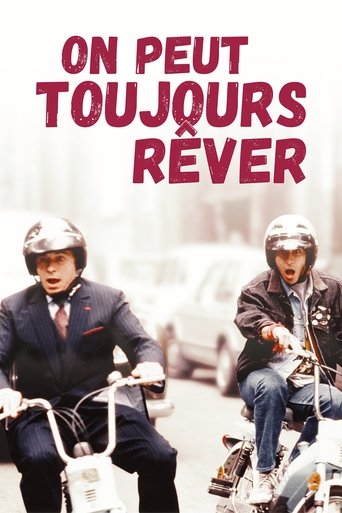
One Can Always Dream
A billionaire Charles de Boisleve becomes a friend of a petty criminal Rachid after two of them meet in the supermarket.
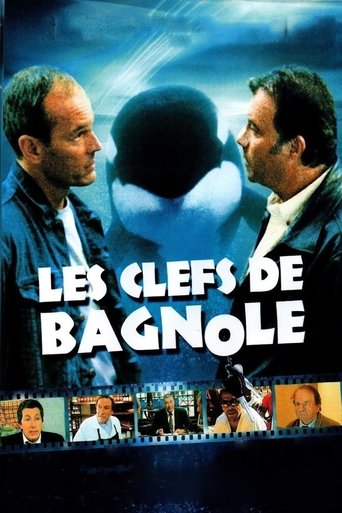
The Car Keys
Who would think losing car keys could lead us that far ? Be careful, adventure is on every street corner...
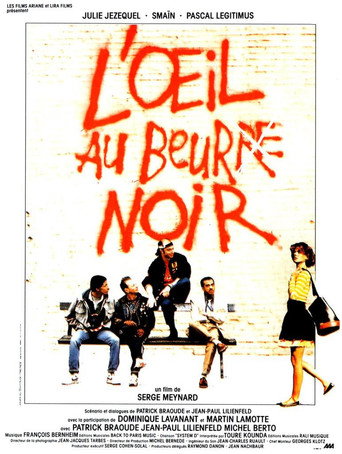
L'Œil au beur(re) noir
Denis and Rachid, a black and an Algerian, are looking for an apartment in Paris. Both meet Virginie, whocould rent them the vacant apartment of her stepfather, but she'd rather rent to some low-lifes than to a black or an Algerian.
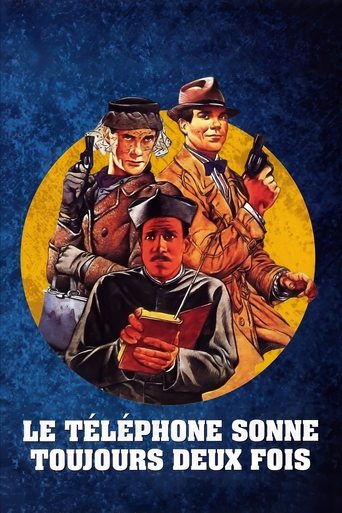
The Telephone Always Rings Twice
Marc Elbichon, a novice private sleuth, is investigating a wave of assassinations bearing a particular characteristic: the perpetrator, dubbed the "telephone killer" always strangles his female victims with a telephone cord.
Production
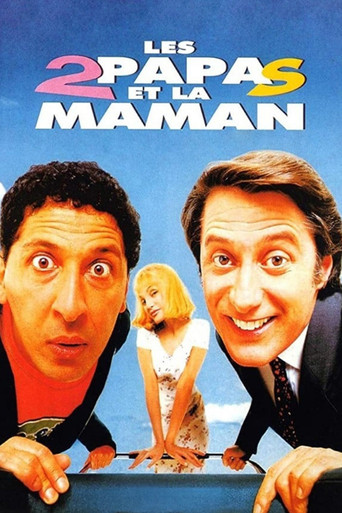
Two Dads and One Mom
Jérôme and Delphine want a child but Jerome is sterile. They then ask the best friend of Jerome, Salim, to be the donor for artificial insemination of the mother...
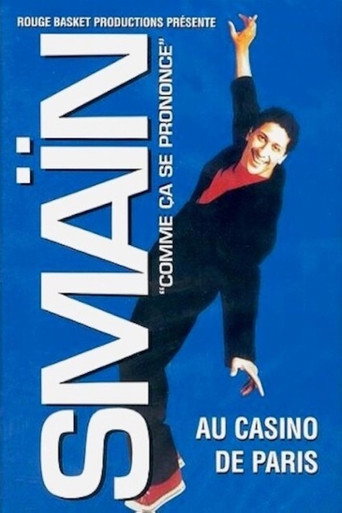
Smaïn - Comme ça se prononce
THE SHOW: In 1996, Smaïn achieved recognition by winning the Molière Award for Best "One-man Show" for his performance "Comme ça se prononce" at the Casino de Paris. 10 totally outrageous sketches! A humor that is more than ever sharp and hilarious! SKETCHES: 1 My look, my style 2 It's moving! 3 Here I am! 4 I can't take it anymore 5 I'm brand new! 6 Movie soundtracks 7 I have a cramp 8 Shut up...! I'm rich! 9 Isn't my life beautiful! 10 Haven't you seen my sister?

Smaïn: Rebelote
From a tour of Paris in a tourist bus, to a father who has decided to become a "stay-at-home dad", to a manager who believes in his rap group, Smaïn underlines with his words and humor the flaws of our society that are, in the end, so familiar to us.
Gallery