Slimane Benaïssa Movies, TV Shows, and Filmography

Slimane Benaïssa
Acting
Biography
Slimane Benaïssa (in Arabic: سليمان بنعيسى), born on December 11, 1943, in Guelma in eastern Algeria, he is one of the pioneers of Algerian Popular Theater, but above all an internationally recognized director. Slimane Benaïssa's two sons, Mehdi Benaïssa and Khaled Benaïssa, also practice an artistic discipline. However, his university career is not, a priori, that of a literary person, he began studying Mathematics before doing his military service in 1965 in Cherchell. The ruins of the Roman theater of ancient Caesarea in Mauritania (now Cherchell) will have more resonance in him than the bugle of the military barracks, he then began a career in theater in 1967. At that time, he wrote Boualem Zid El Goudem (Boualem goes forward), at the same time as he co-directed the first amateur theater troupe in Algeria, "Théâtre et Culture". Close to Kateb Yacine, he adapted La Poudre d'Intelligence for the theater, this work will continue with the translation into dialectal Arabic of all his work, with in particular a collaboration for the dialectal formatting of Mohamed Prends Ta Valise (which will tour in France in 1970 and 1971), Palestine Trahie, Le Roi de l'Ouest and La Guerre De Deux Mille Ans. In 1978 he created his own independent theatre company in Algeria, within which he staged Boualem Zid El Goudem, then Youm El Djem'a (Friday), El Mahgour (The Contempt), Babour Ghraq (The Sinking Boat), which was performed more than 500 times in less than six years, and Rak Khouya Ou Ana Chkoune? (Beyond the Veil). Since its creation, the troupe has performed more than 1,200 times in Algeria and abroad (France, Belgium, Switzerland, Germany, Kuwait, Malta, Tunisia). After more than twenty years of theatre activity in his country, Slimane Benaïssa was forced to go into exile in France in 1993. The same year he won the Grand Prix Francophone from the Société des Auteurs et des Compositeurs Dramatiques (SACD). From 1995 to 1997, he was an associate professor at the Faculty of Letters at the University of Limoges and supervised internships in Luxembourg (1995), Dijon (2003) and Massilly (2004). His first novel "Le Fils De L'Amertume", published by Plon, was a great success. Adapted for the theater on the occasion of the Avignon Festival by the GRAT company of Jean-Louis Hourdin, the play was revived at the MC93 Bobigny before undertaking an impressive tour in France and Switzerland. Following this success, Slimane Benaïssa was appointed in 2000 by the President of the French Republic as a member of the High Council of the Francophonie. The show Prophète Sans Dieu was programmed at the Théâtre International de Langue Française (TILF) in Paris. After a tour, the play was presented at the 2001 Avignon Festival. In 2005, he became an honorary Doctor of the National Institute of Oriental Languages and Civilizations (INALCO). The text Au-delà Du Voile was republished by Lansman in 2008 and staged at the Avignon Festival by Agnès Renault of the company the Arcade.
Filmography Movies
Acting
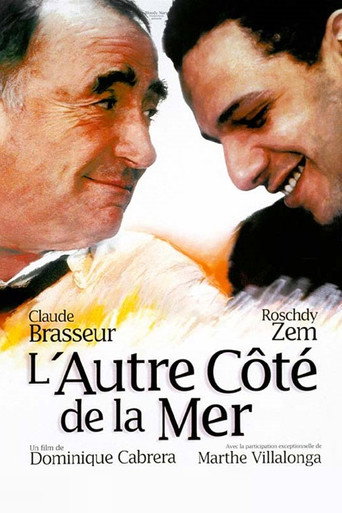
The Other Shore
This film deals with the aftermath of the Algerian war of liberation. Georges Montero, an Algerian-born Frenchman, manages an olive canning factory in Oran. He travels to Paris for a cataract operation. Marinette, his sister, and Belka, his friend and a recent immigrant, want him to return to France permanently. Friction develops between the two friends as Georges is pressured to sell his factory. Friendship developed between Georges and his surgeon, who as a French Arab has severed ties with his culture and country of origin.
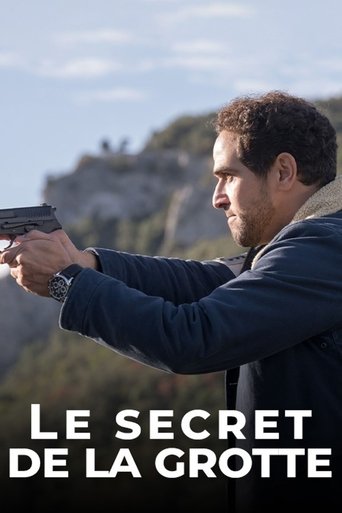
Le Secret de la grotte
On the banks of the Ardèche, near Vallon-Pont-d'Arc, kayakers find the body of the museum president of a recently discovered Paleolithic cave. A 40,000-year-old carved stone was embedded in his neck. To investigate, Captain Manon Ferret-Duval of the research section teams up with her counterpart Riad Lekcir. They must overcome a shared past: she is convinced that her partner's older brother is responsible for the murder of her parents in 1994. Riad has no doubt that Kamel, now deceased, is innocent.
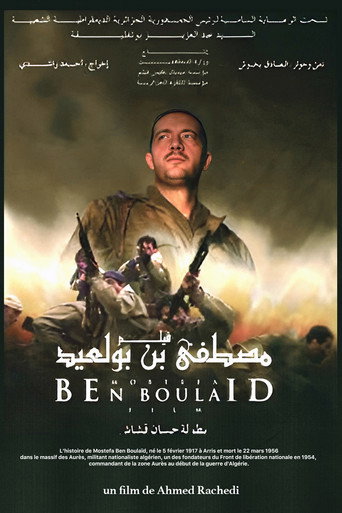
Mostefa Ben Boulaïd
The film revolves around the life of the martyr Mustapha Ben Bouleid (1917-1956), who was a member of the Algerian National Movement, who worked with his comrades to explain the idea of the armed revolution in which he led in Aures region in 1954. The film depicts how Ben Bouleid traveled to a number of Arab countries Disguised to bring arms to Algeria for the revolution and how the French colonial forces arrested him in the Tunisian-Libyan border, and from there to Algeria to be sentenced to death.
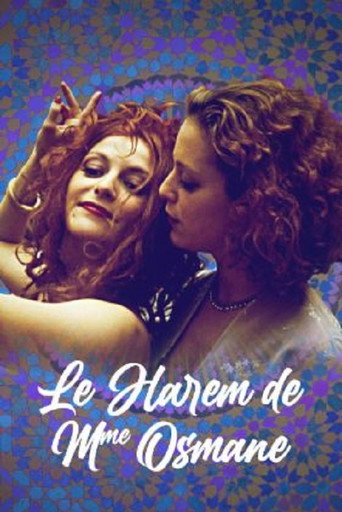
The Harem of Madame Osmane
In Algiers in 1993, while the civil war is starting, Mrs Osmane's tenants have to endure her bad temper. Her husband left her and the fear to lose her respectability haunt her. The former member of the Resistance during the Independence War persists in controlling the slightest moves of the households rather than struggle against her own frustrations. Learning her daughter is in love, the possibility of finding herself alone will push her to the limit: The symbolical Mrs Osmane "harem" is about to collapse.
Le Secret de la grotte
On the banks of the Ardèche, near Vallon-Pont-d'Arc, kayakers find the body of the museum president of a recently discovered Paleolithic cave. A 40,000-year-old carved stone was embedded in his neck. To investigate, Captain Manon Ferret-Duval of the research section teams up with her counterpart Riad Lekcir. They must overcome a shared past: she is convinced that her partner's older brother is responsible for the murder of her parents in 1994. Riad has no doubt that Kamel, now deceased, is innocent.
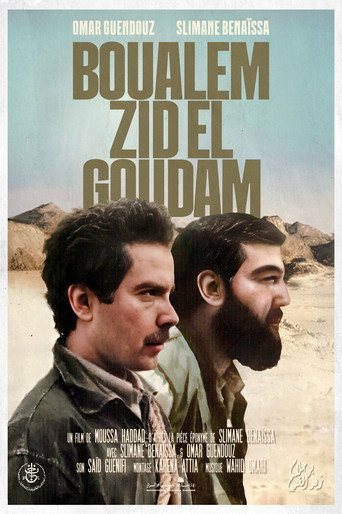
Boualem Zid El Goudam
Two travelers, Boualem and Sekfali, cross the hostile and endless desert. Boualem pulls a cart on which old books, pictures, relics and memories of Sekfali are piled up. Two men, two attitudes towards life, two visions of the world. Where do they come from, where are they going? The journey would be completely calm and happy if each of them were not inhabited by their pasts, determining their different visions of the future. Boualem's childhood was marked by the Algerian war of liberation. His dream is to achieve a socialist society, which is for him the only path to salvation. Sekfali, who tries to dissuade Boualem from continuing the journey, has the attitude of an aristocrat. For him, socialism is a heresy and people do not like responsibility, they only act if a leader gives them the injunction.
The Harem of Madame Osmane
In Algiers in 1993, while the civil war is starting, Mrs Osmane's tenants have to endure her bad temper. Her husband left her and the fear to lose her respectability haunt her. The former member of the Resistance during the Independence War persists in controlling the slightest moves of the households rather than struggle against her own frustrations. Learning her daughter is in love, the possibility of finding herself alone will push her to the limit: The symbolical Mrs Osmane "harem" is about to collapse.
Gallery