Siegfried Kühn Movies, TV Shows, and Filmography
Siegfried Kühn
Directing
Biography
No biography available.
Filmography Movies
Production
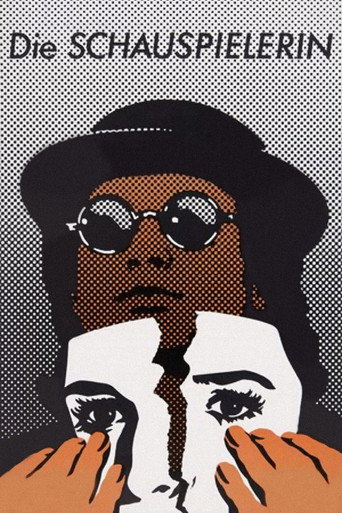
The Actress
The year 1933: Successful actress Maria Rheine is in love with her Jewish colleague Mark Löwenthal. When the Nazis implement the racist Nuremberg Laws, their relationship is severely endangered. Defiant Maria decides to stay together with Mark and ends her promising career: She assumes a Jewish identity and continues to work under the name Manja Löwenthal. She and Mark perform at the Jewish Theatre in Berlin, until they become victims of an intrigue: Their colleague Judith, who has a crush on Mark, denounces them to the secret police.
The Actress
The year 1933: Successful actress Maria Rheine is in love with her Jewish colleague Mark Löwenthal. When the Nazis implement the racist Nuremberg Laws, their relationship is severely endangered. Defiant Maria decides to stay together with Mark and ends her promising career: She assumes a Jewish identity and continues to work under the name Manja Löwenthal. She and Mark perform at the Jewish Theatre in Berlin, until they become victims of an intrigue: Their colleague Judith, who has a crush on Mark, denounces them to the secret police.
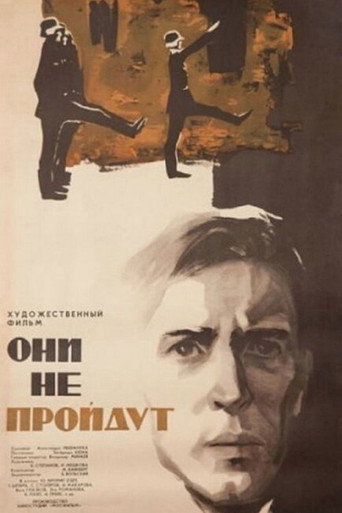
Они не пройдут
1934. After the suppression of the uprising of the Schutzbund workers, engineer Hans Müller leaves Austria and emigrates to the USSR. In Russia Hans finds his love. His relationship with Galina is not simple. Her son Sanka agonizes over the arrival of a stranger in the house. But, in the end, Hans wins the boy's trust. When in Spain begins the Frankist rebellion, Hans voluntarily goes to fight in the ranks of the interbrigade. And after the liberation of Vienna, he returns to his homeland.
Unterwegs nach Atlantis
At the end of the 19th century, German archaeologist Professor Bohmann is searching for the remains of the legendary island Atlantis. But he is not the only one who is trailing the myth. His adversary, the British scientist Sir Grey claims to have already found Atlantis. In different masks and guises, he sets cunning traps to keep off his adversary from finding Atlantis.
Unterwegs nach Atlantis
At the end of the 19th century, German archaeologist Professor Bohmann is searching for the remains of the legendary island Atlantis. But he is not the only one who is trailing the myth. His adversary, the British scientist Sir Grey claims to have already found Atlantis. In different masks and guises, he sets cunning traps to keep off his adversary from finding Atlantis.
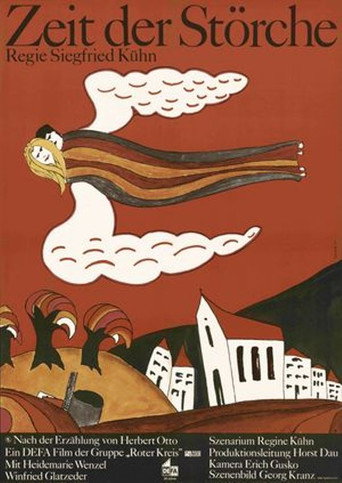
Zeit der Störche
Susanne and Christian get to know each other during a wonderful week in summer - and fall in love. This, however, leads to conflicts: up to now, Susanne has been living with Wolfgang, a biologist. This shared life was harmonious and based on mutual trust. Wolfgang is not only resolute and in full command of social situations; he has also always been the stabilizing force in the relationship. This is precisely why Susanne now feels drawn to the unsettled, unsteady and frivolous Christian, the complete opposite of the calm, well-balanced Wolfgang. And Christian, working as a shift boss on a natural gas derrick, has become more aware of his personal and social responsibilities as a result of loving Susanne.
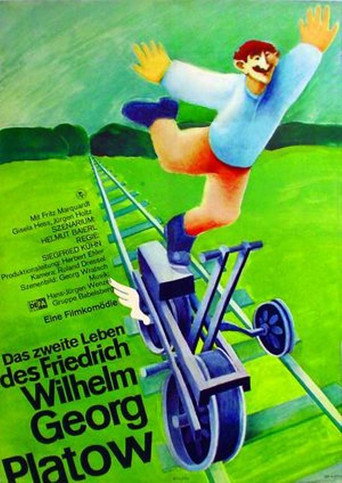
The Second Life of F.W.G. Platow
Friedrich Wilhelm Georg Platow worked for the railways his entire working life. He took up service at the small station of Luege 34 years ago. Now, the line is to be electrified and Platow, who cannot cope with the new technology, has to work on a secondary local line. Georg, his son, a railway worker as well, is to attend a training course, but Georg refuses to go. Then his father comes to a surprising and highly unusual decision. He pretends to be Georg Platow, making himself twenty years younger than he really is and registers for the course.
Heute sterben immer nur die anderen
Maria tells her former colleague, Hanna, that she has undergone a cancer operation but is now cured. Soon after, she suffers a relapse. The doctors believe that she should be told the truth about her condition, and Hanna is willing to do so. For Maria, it is the beginning of several long, agonizing weeks until she is ready to accept that she has only a very small amount of time left to live. In the meantime, Hanna has to decide how she can help her friend die; an almost unbearable decision, but once made she carries it out to the last consequence.
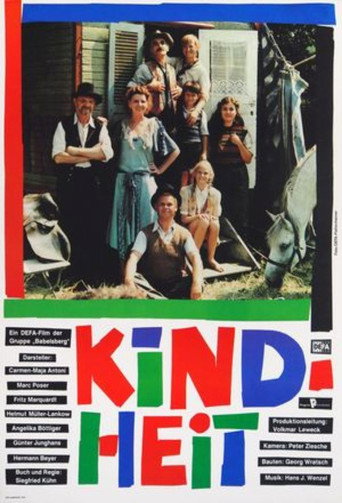
Childhood
Alfons lives with his grandparents on a Silesian village farm at the end of WWII. He adores his grandmother, who runs everything after her husband dies. But everything changes after the appearance of a traveling showman in the xenophobic village.
The Elective Affinities
Eduard and Charlotte live an isolated and idyllic life together. But soon Eduard feels that something is missing and he invites his friend Otto to come stay. Charlotte, meanwhile, decides that her foster daughter Ottilie should come live with them. Complex and passionate relationships between the four people begin. Based on Goethe's novel of the same title.