Shekhar Chattopadhyay Movies, TV Shows, and Filmography

Shekhar Chattopadhyay
Acting
Biography
Shekhar Chatterjee (1924–1990) was an Indian actor and film director. Chatterjee was born in Kolkata in 1924. He began his career in the Bengali theatre in the 1950s. He was associated with several leftist theatre groups, including the Communist Party's Indian People's Theatre Association, Utpal Dutt's Little Theatre Group, and Joan Littlewood's Theatre Workshop, as well as his own group, Theatre Unit, which he formed in 1958. As a stage actor, he was well known for his Shakespearean roles and for playing Shardul Singh in Dutt's 1965 play Kallol. His directorial work focused on works by German-language playwrights Bertold Brecht, Friedrich Dürrenmatt, Peter Handke, and Franz Xaver Kroetz. Chatterjee's Brecht productions were rarely adapted to a local setting, and while critics unanimously praised this approach as "authentic", his colleague Dutt attacked it for failing to communicate Brecht's political symbolism to an Indian audience.
Filmography Movies
Acting

Joradighir Chowdhury Paribar
‘Joradighir Choudhury Paribar’ is the story of landlords, their ego, love and revenge. Despite ancestral differences, the Choudhury family’s landlord and Indrani, the landlady of Raktadaha decide to get married. But circumstances for him to marry Banamala to save her from Parantap Roy. Roy marries Indrani to take revenge against Jora Dighi. Misunderstanding turns lovers into enemies leading to their fatal end.
Sangsar Simantey
Endearingly realist love story between a prostitute and a thief. Rajani (Roy), a streetwalker, shelters the thief Aghor (So. Chatterjee) but he steals her money.

The Royal Hunt
A British administrator with a flair for game hunting develops a friendship with a commoner who is an expert archer in an Indian village. The movie portrays the relationship between the British colonialists, and native villagers who were exploited by Indian landlords in 1920s India. This happens against the backdrop of the awakening of the Indian people against the British rule.
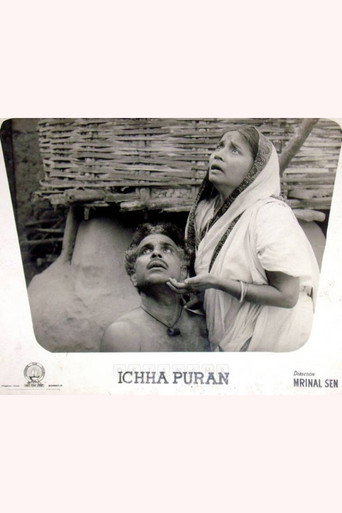
The Wish Fulfilment
A young boy wishes to switch roles with his father, and the wish is granted for a trial period. Mrinal Sen made this film for the Children's Film Society of India, based on a short story by Rabindranath Tagore. This happens to be the only work by Tagore that he made into a film.
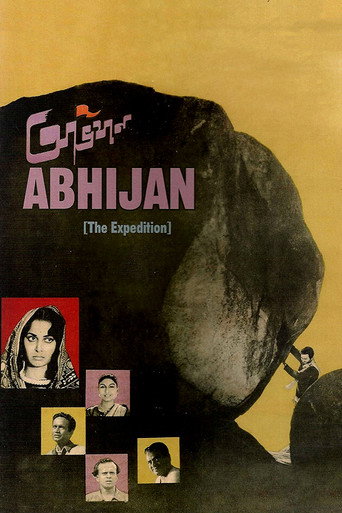
The Expedition
Narsingh, a North Indian taxi driver, attempts to reinvent his life by visiting his native place, but instead gets embroiled in a local Marwari businessman's smuggling and human trafficking business.

Gandhi
In the early years of the 20th century, Mohandas K. Gandhi, a British-trained lawyer, forsakes all worldly possessions to take up the cause of Indian independence. Faced with armed resistance from the British government, Gandhi adopts a policy of 'passive resistance', endeavouring to win freedom for his people without resorting to bloodshed.

Maa
Pradeep realises that the real reason for his father's violent behavior at home is due to the problems at the tea garden. When he grows up, he decides to resolve these issues by joining a movement.
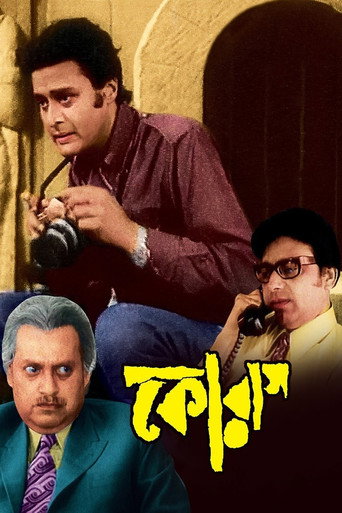
Chorus
A small company advertises for 100 vacancies and 30,000 apply. The applicants are all from the ranks of the poor and there is a virtual riot. Everyone around is seeking for opportunities. Among them are the applicants who desperately need the job, the photographer who is busy seeking a scoop, the village moneylender who is busy exploiting the poor, the ineffective police, the employers who are advertising posts even while a six month old strike has nearly caused the workmen to become destitute. It is a story of society captured in a tiny framework of a small business. Ultimately, the workmen, the unemployed and the farmers all get to gether to protest against this exploitation.
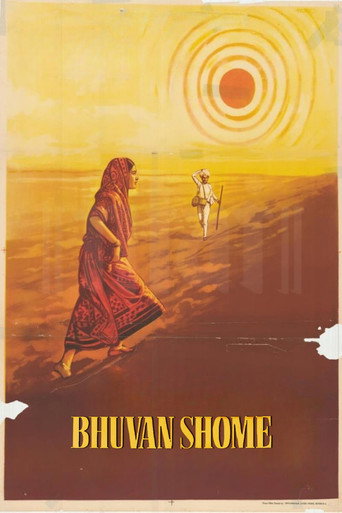
Bhuvan Shome
Bhuvan Shome is a lonely widower, a proud old man and a strict disciplinarian. Looking back on the trodden path, strewn with staunch determination and drab attitudes, Bhuvan Shome, a thoroughly unenchanted man, seeks escape in a holiday.
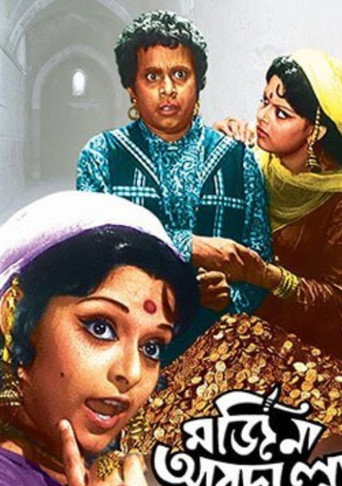
Marjina Abdulla
Alibaba was a simple, hardworking, middle-class personality who once went to a forest for some purpose. When he entered that forest he found a deep secret, a formula to enter a cave. Actually, that cave was filled with robbed jewelry and gold coins. He took some with him and became very rich. But those robbers realized that something was missing from their hidden treasures. So, they began their investigation of the lost treasure. But in the meantime, a neighbor of Alibaba also tried for the same thing but he got caught and killed by the robbers. After that, the robbers successfully traced those hidden treasures, entered the city, and found Alibaba. But Marjina and Abdullah understand their plans and catch them by their sheer intelligence and wit.
Production
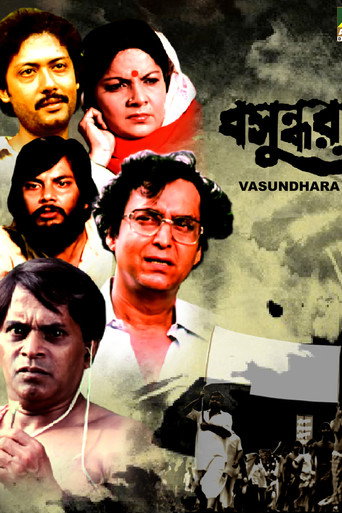
Vasundhara
Haji and Rupchand are amongst those who oppress the poor sharecroppers of Asmanpur. Eventually, Jagra and Nitai raise their voices against them but are incessantly harassed.
Vasundhara
Haji and Rupchand are amongst those who oppress the poor sharecroppers of Asmanpur. Eventually, Jagra and Nitai raise their voices against them but are incessantly harassed.
Marjina Abdulla
Alibaba was a simple, hardworking, middle-class personality who once went to a forest for some purpose. When he entered that forest he found a deep secret, a formula to enter a cave. Actually, that cave was filled with robbed jewelry and gold coins. He took some with him and became very rich. But those robbers realized that something was missing from their hidden treasures. So, they began their investigation of the lost treasure. But in the meantime, a neighbor of Alibaba also tried for the same thing but he got caught and killed by the robbers. After that, the robbers successfully traced those hidden treasures, entered the city, and found Alibaba. But Marjina and Abdullah understand their plans and catch them by their sheer intelligence and wit.

Sangini
This story concerns an honest police officer Amit Sen and his wife Seema. Seema has to kill a smuggler, Changez in self-defence, but she cannot tell anything to Amit. Changez's boss Shamsher Singh harasses her for the diamonds that Changez has accidentally dropped in her house, but she has no clue about. In due course, Seema is arrested. Finally, Amit catches Shamsher Singh and proves Seema's innocence in court.

Basanta Bilap
A romantic comedy about a series of clashes between the female residents of a ladies' hostel Basanta Bilap, and four boys of the neighbourhood, aided and abetted by their boudi (sister-in-law).
Gallery