Directing
No biography available.
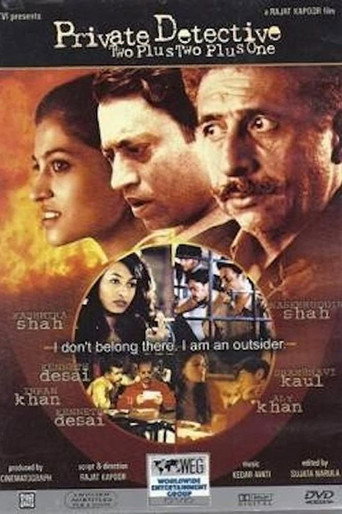
An urban contemporary film about adultery, murder and betrayal in the film noir style. A simple story to which the director imparts a feeling of unrest and disquiet, catching the city in its various moods. The film breaks generic conventions, notably in the presentation of the private detective through his deglamourised life and his process of discovery of 'who did it'. It is not constructed through his point of view at all. In fact the policeman and the detective, the fact finders, are in the dark about the crime, to the very end.
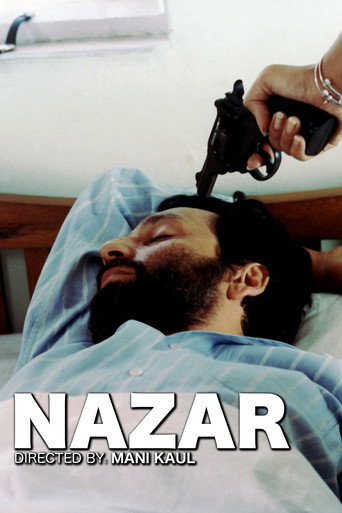
A middle-aged antique dealer and money lender recollects his marriage to a 17-year-old orphan girl.
Laida Lertxundi continues her exploration of the American West with the intimately scaled 025 Sunset Red, which folds in autobiography as she looks back to her parents' radical activism in Spain.
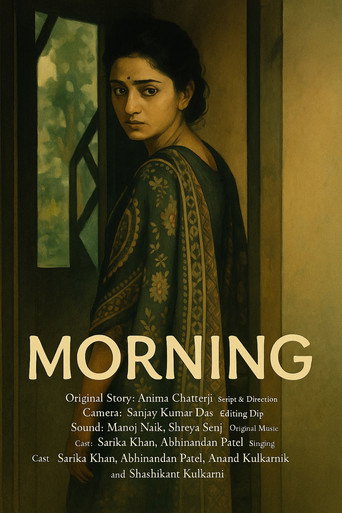
Maya is a teenager young girl who is working as a housemaid in a rich family. She is required to do all household work and also look after a small child. She toils from dawn to dusk and cannot get peaceful sleep. She, therefore, wants to get rid of it. One night, she kills the child in the cradle and then, relieved of her burden, quietly sleeps on the ground.
A rich reflection on the intersections between myth and reality, as the filmmaker trains her camera on a World Heritage Site overrun by langurs in Hampi, India, revealing an uncanny co-existence between past and present.
A strange yet familiar sense of place dominates Shambhavi Kaul's deceptively disorienting and visually entrancing Mount Song. As a wild, foreboding gust courses through the night, a subdued elegance is brought forth from past cinema spectacles, whose generic albeit highly suggestive set constructions remain lodged in our imaginary.
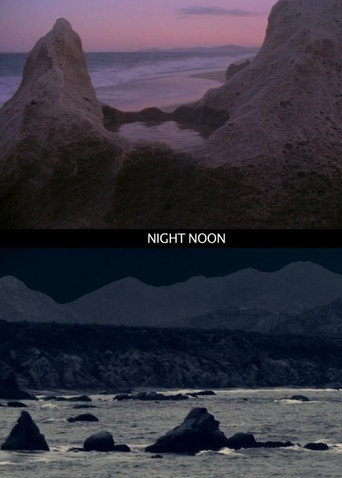
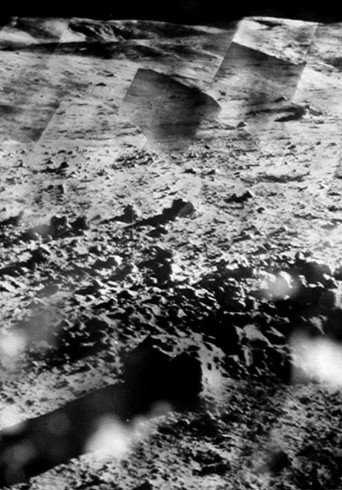
Shambhavi Kaul sets up dialectical dread in Death Valley in a series of uncanny shots of geological formations, eroded mountains, dunes and dried lava contrasted against images of shimmering night skies.
A household landscape of mirrors. A child and its reflection are inscribed in a shadowy lunar patchwork. The camera switches its optical pursuit: the child disappears and a bird emerges. The surveying mirror implodes or explodes into space. Its mottled hallway glass both indicates and becomes a PLACE FOR LANDING. After a series of clever misdirections by the mirror, all is redeemed by a fragment of song in this unsettling haptic illusion.
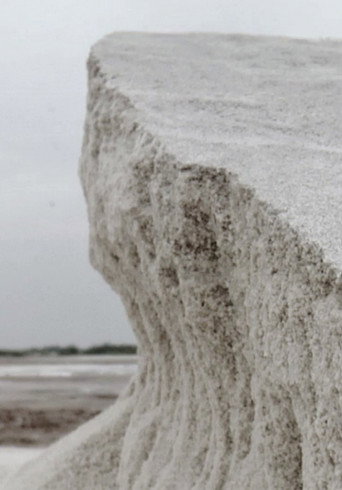
Scene 32 maps the terrain that lies between a beloved place and the things that represent it. The salt fields of Central Kutch are examined through High Definition video and hand processed 16mm film to become another thing altogether: neither a specific location in India nor its representation but a rebuilt world of precipices and gullies, untouchable textures and unfathomable scale.
21 Chitrakoot exhumes a mystical land composed of 1980s chroma-key backdrops from a famous Indian television series.