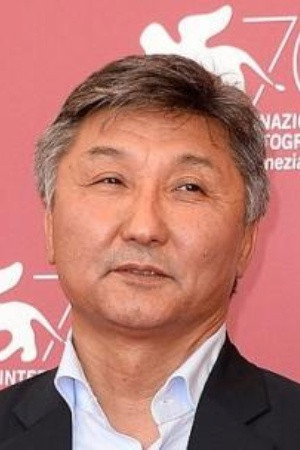
Serik Aprimov Movies, TV Shows, and Filmography
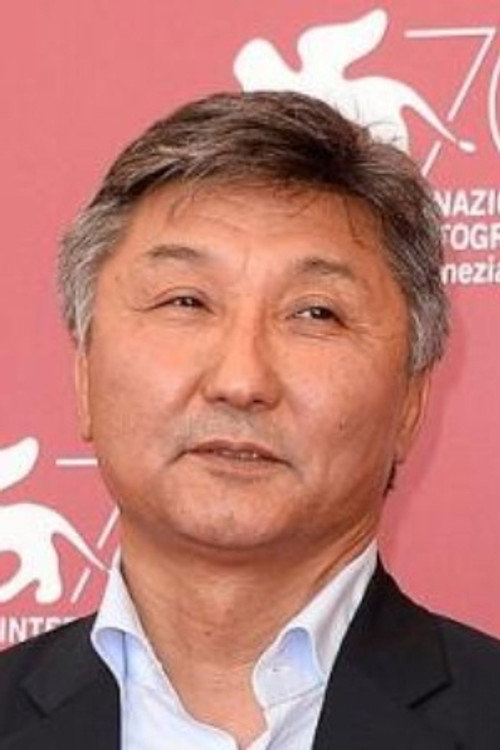
Serik Aprimov
Directing
Biography
Serik Sekenovich Aprymov (Kazakh: Серік Секенович Апрымовтың; born 28 October, 1960; Aksuat) is a Soviet and Kazakh film director, screenwriter, producer. Graduated from Almaty technical college in 1979. Following the military service, he took up film studies in directing at the Moscow's prestigious Film School (VGIK). He was one of the young Kazakh talents who was chosen to attend the workshop of well-known Russian director Sergei Solovyov in 1989. The group went on to establish the "new wave" of Kazakh cinema. Aprymov made his first full feature film "Last Stop" at the age of 28. It received international acclaim but angered the natives of his village, who were shocked at his portrayal of their real lives. Aprymov's second film The Hypnotist was never released. The film Aksuat (1998) revealed again his keen eye for realistic detail and was successful at the 1998 Eurasia Film Festival in Almaty (Kazakhstan), after which it was screened at the 1999 International Berlin Film Festival. The film won Audience Award at Nantes Three Continents Film Festival 1999 in France. In 1999 he directs Three Brothers - this poignant tale about the gulf between childhood fantasy and stark reality. The film was screened at the 2000 International Berlin Film Festival. It was awarded at Tokyo International Film Festival 2000. The film won Holden Award for the Best Script, Jury Special Prize at the International Feature Film Competition, and was nominated for Prize of the City of Torino Best Film - International Feature Film. Returning to the familiar theme of village life, Serik Aprymov offers a beautifully rendered Kazakh interpretation of the classic coming-of-age film in The Hunter (2004). In 2003 the film participated in Cannes Film Festival 2003 in Camera d'Or Special Mention program.
Filmography Movies
Acting
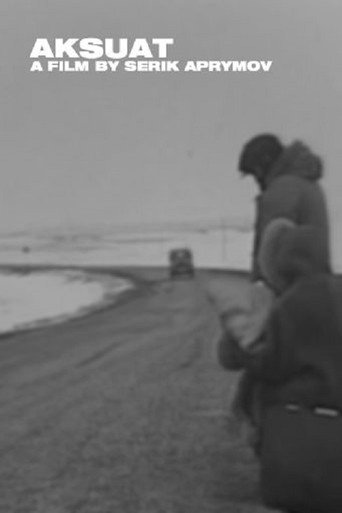
Aksuat
A Kazakh villager has to take care of his pregnant sister-in-law after his brother is thrown in jail.

The Road
A filmmaker, Kobessov, awakens from an anxiety nightmare: during the preview of his newest film, the projectionist mixes up the reels and begins to show a bad karate film by accident. Although Kobessov objects to the mix-up, the public is ecstatic and refuses to allow the projectionist to interrupt the screening to show Kobessov's film.
Production
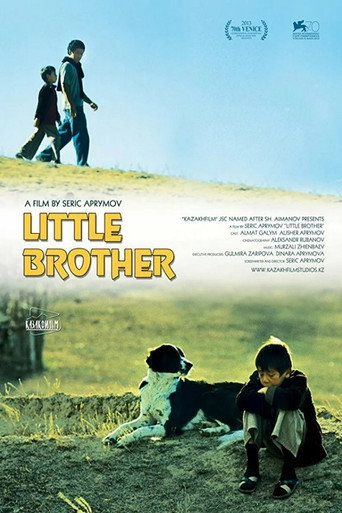
Little Brother
Yerken is nine years old and lives alone in a remote village in the mountains. When his older brother returns after a long absence, the young boy’s heart leaps with joy. But it doesn’t last long, his older brother has become a cold and heartless person… Serik Aprymov was born in 1960 in Kazakhstan and studied film at the Moscow Film School (VGIK). Along with other young directors from his country, he became part of the “new wave” of Kazakh cinema. At the Locarno Film Festival in 2004, he presented Okhotnik (The Hunter), in which a young boy suffers the contrast between the traditions of his people now on the decline and the progress of an increasingly urbanized new society.
Little Brother
Yerken is nine years old and lives alone in a remote village in the mountains. When his older brother returns after a long absence, the young boy’s heart leaps with joy. But it doesn’t last long, his older brother has become a cold and heartless person… Serik Aprymov was born in 1960 in Kazakhstan and studied film at the Moscow Film School (VGIK). Along with other young directors from his country, he became part of the “new wave” of Kazakh cinema. At the Locarno Film Festival in 2004, he presented Okhotnik (The Hunter), in which a young boy suffers the contrast between the traditions of his people now on the decline and the progress of an increasingly urbanized new society.
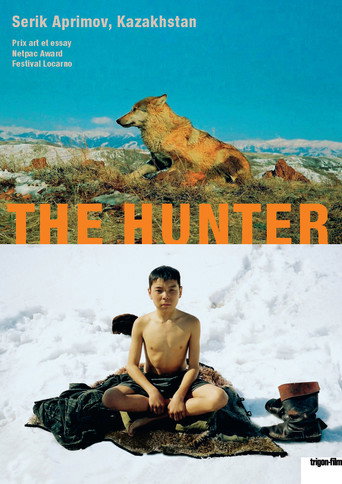
The Hunter
In an isolated village in the Kazakhstan mountains, Erken, a boy of 12, lives with his mother, a beautiful and alluring single woman. One night, when the mother is visited by a hunter, Erken steals the latters horse and his gun to hold up a shop. Sought by the police, he is found by the hunter who gives him a choice: to go to prison or to go and live with him in the mountains. Thus begins a voyage of initiation, in the course of which the hunter tries to pass on his taste for and understanding of life.
And We Will Save the Love
Anthology film by the group of young Kazakh filmmakers trained by Sergey Solovyov. Includes novels about love-driven suicide attempt, tank division and a summer camp for children. Was never finished.
The Stray White and the Speckled
In a poor provincial town, the ragamuffin boys are frenziedly drilled for combat, and at nights the local elite, gathered in a pool room, boasts of fictitious biographies, while bands of boys amuse themselves with bloody fights on trashy vacant plots… One of the most vivid staples of the postwar childhood were pigeons. They could be bought, sold or stolen. One day a beautiful white dove appeared over the town. Risking his life, Ivan caught the White. And immediately became the target of the "pigeon" mafia…
Two Were Riding a Motor Cycle
The meaning of the life of the two heroes, their perception of the world, their attitude to people are revealed in the process of communication, seemingly with random people.
Aksuat
A Kazakh villager has to take care of his pregnant sister-in-law after his brother is thrown in jail.
A Dream in a Dream
The story of Jerken, a young stage director, obsessed with his love for and his life with the theater. Something terrible has happened, a girl has been murdered. In Jerken's diary, he deals with four themes: theater, dreams, the woman he loved, and a friend. An investigator shows up and takes the diary with him. He tries to reveal the reasons for this tragedy. The main theme of the film is the quest for inner harmony, for a balance between the human soul and objective reality.
The Last Stop
A young man comes home to his Kazakh village after finishing up his stint in the Soviet Army. All that he finds are his old friends drinking, senselessly carousing, tumbling into one violent brawl after another.
Aksuat
A Kazakh villager has to take care of his pregnant sister-in-law after his brother is thrown in jail.
Gallery