Sergei Loznitsa Movies, TV Shows, and Filmography

Sergei Loznitsa
Directing
Biography
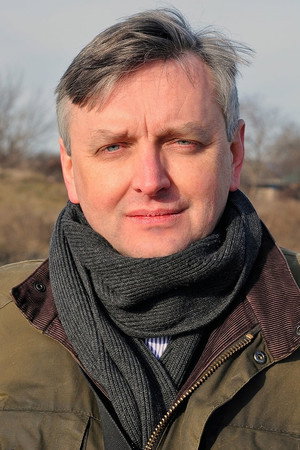
Sergei Vladimirovich Loznitsa (Belarusian: Сяргей Уладзіміравіч Лазніца, Ukrainian: Сергій Володимирович Лозниця, Russian: Сергей Владимирович Лозница; born 5 September, 1964; Baranovichi, Brest Voblast) is a Ukrainian director of Belarusian origin known for his documentary as well as dramatic films. Born in 1964, Ukrainian filmmaker Sergei Loznitsa grew up in Kyiv, and graduated from Kyiv Polytechnic in 1987 with a degree in Applied Mathematics. In 1997, Loznitsa graduated from the Russian State Institute of Cinematography (VGIK) in Moscow, where he studied feature filmmaking. Sergei Loznitsa has directed 18 documentary films since 1996 and has received numerous international awards, including festival prizes in Karlovy Vary, Leipzig, Oberhausen, Krakow, Paris, Madrid, Toronto, Jerusalem and St. Petersburg, as well as the Russian National Film awards “Nika” and “Laurel”. Loznitsa’s feature debut My Joy (2010) premiered in competition at the Festival de Cannes, and was followed by In the Fog, which also premiered in competition at the Festival de Cannes in May 2012, where it was awarded the FIPRESCI Prize. His feature film A Gentle Creature premiered in competition at the Festival de Cannes in May 2017.
Filmography Movies
Acting
A Nation Denied: Ukraine's Battle for History
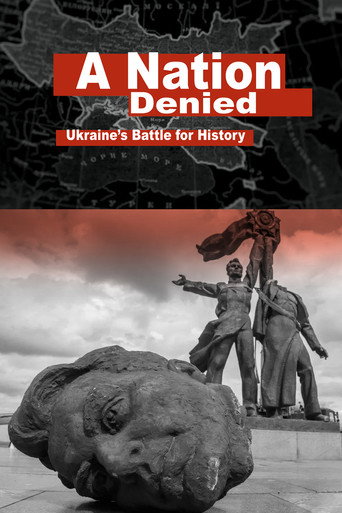
A critical and objective look back at Ukraine's tumultuous and tragic history, from its mythical founding in the 10th century to the Russian invasion in 2022.
Butterflies
Alexey is shooting a movie about himself. He is in search of a boyfriend. Everything would be alright, if Alexey's mother could accept his sexuality. Alexey comes to visit her and admits that he likes boys, saying 'Don't you anticipate any grandchildren from me'. We find Alexey at Tarkovsky film festival, where he apparently came to rest. Alexey meets Grisha, and a stormy holiday romance begins.
Production
Blockade
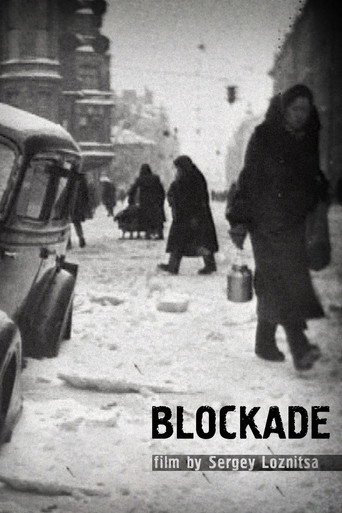
The images comprise only of material Sergei Loznitsa found in the Moscow film archives about the siege of Leningrad during the World War II. By providing the originally silent images with a meticulously reconstructed soundtrack, the scenes from everyday life under siege seem to be set in the present. By not intervening in the montage but giving the scenes room to tell a story, the scenes transcend the specific historic events and lead a new life. They do not evoke memories of the past, but become a breathtaking reanimation of reality.
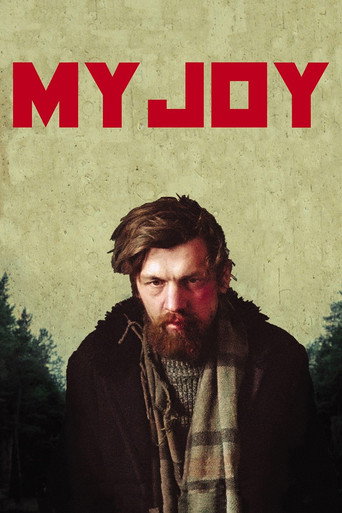
My Joy
Georgy is driving a load of freight into Russia when, after an unpleasant encounter with the police at a border crossing, he finds himself giving a lift to a strange old man with disturbing stories about his younger days in the Army. After next picking up a young woman who works as a prostitute and is wary of the territory, Georgy finds himself lost, and despite asking some homeless men for help, he’s less sure than he was before of how to make his way back where he belongs. As brutal images of violence and alienation cross the screen, Georgy’s odyssey becomes darker and more desperate until it reaches an unexpected conclusion.
My Joy
Georgy is driving a load of freight into Russia when, after an unpleasant encounter with the police at a border crossing, he finds himself giving a lift to a strange old man with disturbing stories about his younger days in the Army. After next picking up a young woman who works as a prostitute and is wary of the territory, Georgy finds himself lost, and despite asking some homeless men for help, he’s less sure than he was before of how to make his way back where he belongs. As brutal images of violence and alienation cross the screen, Georgy’s odyssey becomes darker and more desperate until it reaches an unexpected conclusion.
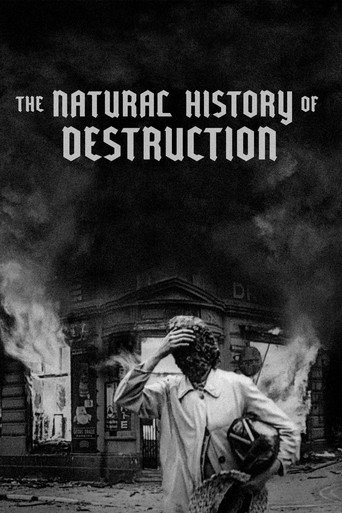
The Natural History of Destruction
Is it morally acceptable to use the civilian population as yet another tool for waging war? Is it possible to justify death and destruction for the sake of supposedly lofty ideals? The question remains as pertinent today as it was at the beginning of World War II, and it is becoming increasingly urgent to answer, as countless tragedies have been caused by unethical political decisions.
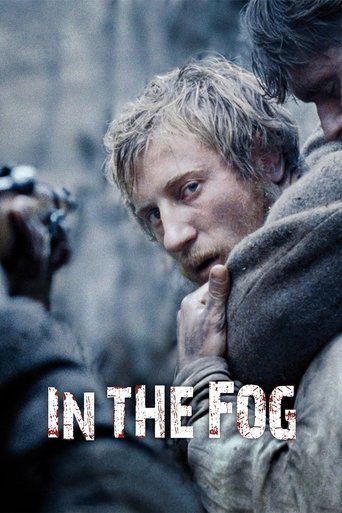
In the Fog
Western frontiers of the USSR, 1942. The region is under German occupation. A man is wrongly accused of collaboration. Desperate to save his dignity, he faces an impossible moral choice.
In the Fog
Western frontiers of the USSR, 1942. The region is under German occupation. A man is wrongly accused of collaboration. Desperate to save his dignity, he faces an impossible moral choice.
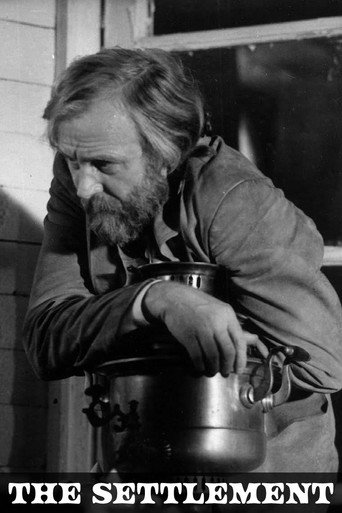
The Settlement
This movie is about a day in life of the settlement for people with mental problems. Located in a peaceful countryside, it conveys an image of a pure, happy place, where people live and work together, in complete harmony. But there is a growing unexplainable feeling of anxiety and hopelessness.
Blockade
The images comprise only of material Sergei Loznitsa found in the Moscow film archives about the siege of Leningrad during the World War II. By providing the originally silent images with a meticulously reconstructed soundtrack, the scenes from everyday life under siege seem to be set in the present. By not intervening in the montage but giving the scenes room to tell a story, the scenes transcend the specific historic events and lead a new life. They do not evoke memories of the past, but become a breathtaking reanimation of reality.
The Letter
A remote village in the Northwest of Russia. A mental asylum is located in an old wooden house. The place and its inhabitants seem to be untouched by civilization. In this pristine setting, no articulate human voice is heard, and pain is muted. The landscapes and buildings are not so much inhabited as lightly entwined and then passed through by their anonymous residents, like some creeping mist. Phantoms half stuck, half undone in a phantom world—lost persons from a lost society?
The Halt
Trains travel through the night without stopping. The clatter of the carriages quickly disappears, along with the wail of the locomotive. The people at the station are all asleep. But why are they so exhausted ? And what are they waiting for? Set inside an isolated train depot, The Train Station is one of Sergei Loznitsa's most haunting films. It is also one of his most pointed social critiques. In this film, we are brought to a remote train station deep in the Russian woods. It's nighttime. In the distance, we hear the clatter of locomotives. The station, a small wooden building, sits silently, surrounded only by snow and train tracks.
Gallery