Acting
No biography available.
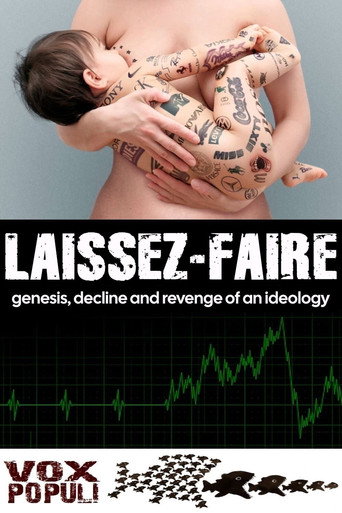
A historical perspective to understand Neoliberalism and to understand why this ideology today so profoundly influences the choices of our governments and our lives.
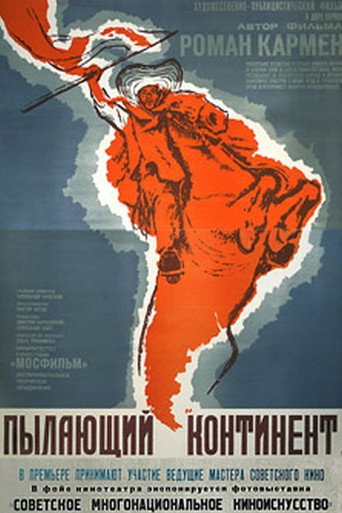
Roman Karmen's documentary on the political turmoil of 1970s Latin America.
Salvador Allende’s last radio speech is given in full; nothing is interposed. The translation of the speech appears in subtitles, individual passages are placed into the center of the picture. Film scenes and photos underline Allende’s call to his citizens. The film ends with a slow close-up to the face of the President.
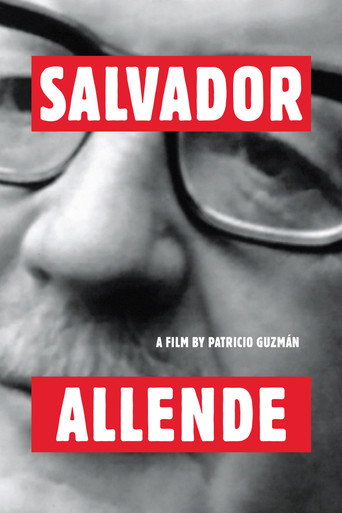
A leftist revolutionary or a reformist democrat? A committed Marxist or a constitutionalist politician? An ethical and moral man or, as Richard Nixon called him, a "son of a bitch"? In SALVADOR ALLENDE, acclaimed Chilean filmmaker Patricio Guzmán (The Battle of Chile and Chile, Obstinate Memory) returns to his native country thirty years after the 1973 military coup that overthrew Chile's Popular Unity government to examine the life of its leader, Salvador Allende, both as a politician and a man.
A film about Salvador Allende's 1964 presidential campaign.
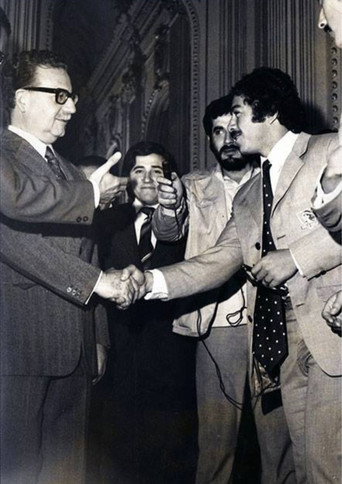
Just when Chile was experiencing the last months of the Popular Unity of President Salvador Allende, Colo Colo - the most popular team in Chilean soccer - faced the 1973 Copa Libertadores de América. This benchmark led by footballers Carlos Caszely, Francisco "Chamaco" Valdés and coach Luis "Zorro" Álamos, not only managed to play the final of this competition against Independiente of Argentina, but also, its brilliant game, dynamics and drive popular turned it into the necessary balm for the fans, at a time when the Chilean political and social situation became extremely acute. Thirty-four years later, the protagonists of Colo Colo 73 relive this Copa Libertadores campaign.
Documentary that reviews Salvador Allende's last speech through various voices of today to think about the present and the future.
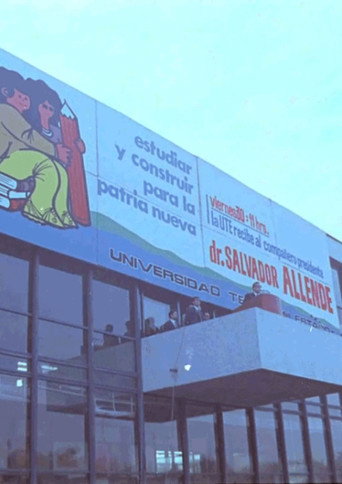
Made by Fernando Balmaceda in 1972, it is a documentary that shows the presence of the State Technical University throughout Chile through its provincial headquarters, with teaching, scientific research, technological development, cultural extension and the relationship with the historical moment of the country.