Sócrates Movies, TV Shows, and Filmography
Sócrates
Acting
Biography
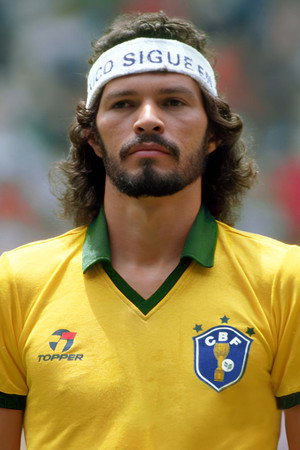
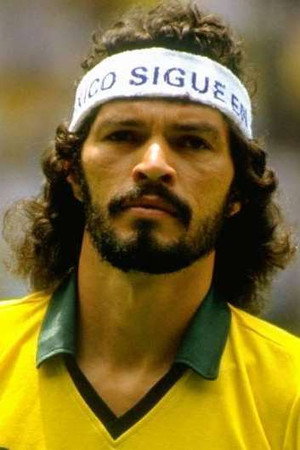
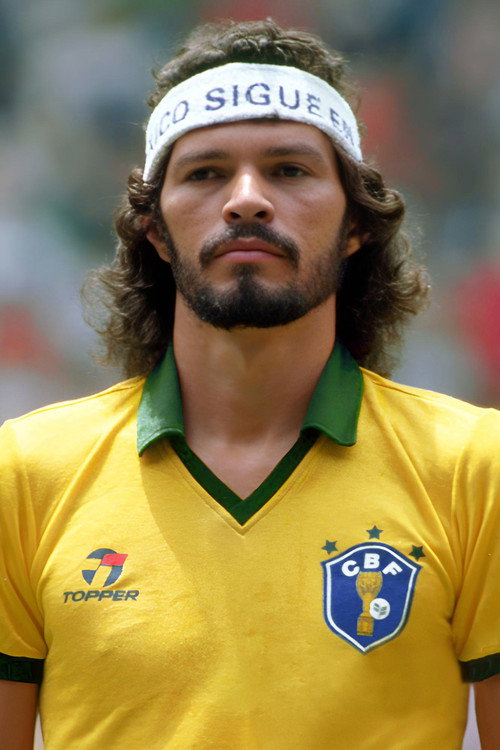
Sócrates Brasileiro Sampaio de Souza Vieira de Oliveira, better known as "Sócrates" and nicknamed "The Doctor," was born on February 19, 1954, in Belém, Brazil, and died on December 4, 2011, in São Paulo. An elegant, tall, and highly technical midfielder, he left his mark on Brazilian football history as much for his skill as for his intelligence and charisma. In his childhood, he grew up in a family that provided him with a good education, which also explains his atypical path from footballer to doctor. In addition to his footballing prowess, the towering Sócrates (1.93m) successfully pursued his medical studies in São Paulo, later practicing as a sports medicine specialist. Despite his reputation for laziness, his talent was undeniable, and he began his career at Botafogo, where he became the league's top scorer. He was then ready to join a major club in São Paulo, before establishing himself primarily at Corinthians between 1978 and 1984, where he became an idol. He also played in Italy for Fiorentina, then in Brazil with Flamengo, Santos, and again Botafogo-SP, before a more symbolic end to his career in England with Garforth Town. With Brazil, he earned 60 caps and scored 22 goals, and participated in the 1982 and 1986 World Cups. His achievements include three São Paulo state championships with Corinthians in 1979, 1982, and 1983, as well as reaching the Copa América final in 1983 with the Seleção. His image remains linked to the "Corinthian Democracy," an internal movement within the club where players collectively voted on decisions, a powerful symbol of protest during the Brazilian military dictatorship. Politically, Sócrates was a staunch advocate for democracy, displaying his convictions on the field and supporting the right to vote. He became an intellectual and activist figure with a romantic vision of football, respected far beyond the sport. In Brazil, during the revolution, the government was forced to yield, and for the first time since 1964, elections were held in São Paulo in 1982. Corinthians added the word "democracy" and red stains representing the blood of opponents to their jerseys. They even went so far as to add the phrase "go vote." The dictatorship finally fell in 1985 after the three Corinthians participated in the demonstrations, with Sócrates promising to stay and play in the country if direct suffrage was implemented. The dictatorship fell, but indirect suffrage was reinstated. Sócrates then left for Italy, Casagrande was injured, and a new president reimposed a more traditional structure on Corinthians. This marked the end of Corinthians' golden age. At the end of his career, Dr. Sócrates succumbed to alcoholism but made a wish: "I wish to die on a Sunday when Corinthians are champions." He died on Sunday, December 4, 2011, and that very evening, Corinthians became champions after a draw in the São Paulo derby. The players celebrated the title in the same way Sócrates had celebrated his goals, with his right fist raised.
Filmography Movies
Acting
Futebol Arte
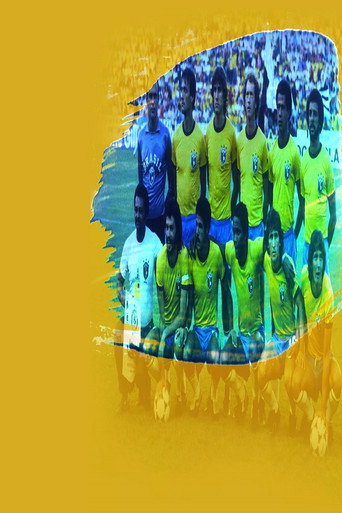
Zico, Falcao, Socrates and so many more... In this documentary, featuring exclusive interviews with the protagonists, discover what made the Brazilian team at 1982 FIFA World Cup so spellbinding to watch. Experience the joy, excitement and ultimately heartbreak of the team that turned football into art.
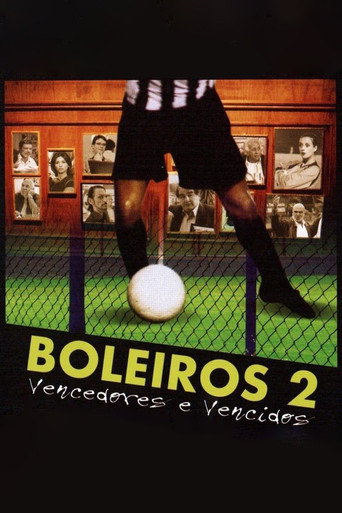
Boleiros 2: Vencedores e Vencidos
A public appearance from international soccer player Marquinhos at Aurelio's bar launches a series of vignettes which spotlight Brazil's obsession with the round ball game
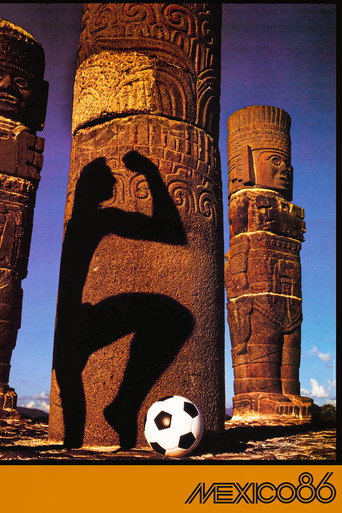
Hero
1986 FIFA World Cup Official Film. Mexico had just recovered from a devastating earthquake, but the nation put on a great tournament and Argentina, inspired by Maradona, justified "favourite" status. Eighty-six minutes of football magic from numerous world stars, including Diego Maradona, Gary Lineker, Michel Platini, Socrates, Rummenigge, Sanchez, Laudrup and many others. Michael Caine narrates this, the official FIFA coverage.
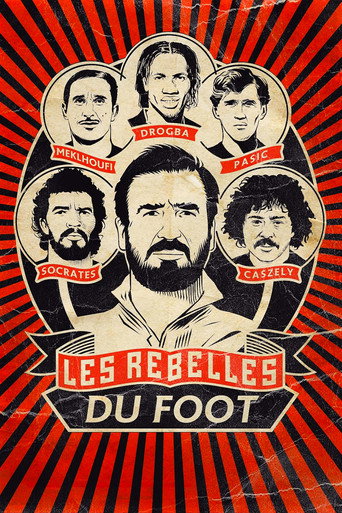
Football Rebels
Five stories that tell how a handful of football stars took the risk of losing everything and put their fate in the balance to make a difference by becoming the symbol of a fight.
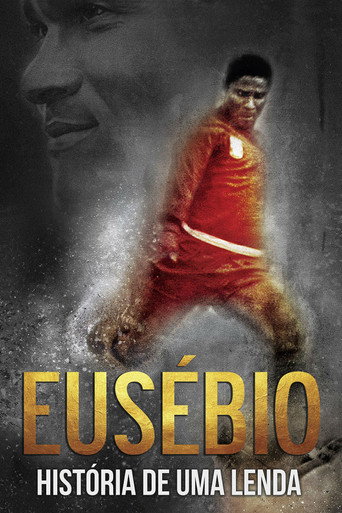
Eusébio: Story of a Legend
It all started in Mafalala, a poor neighborhood on the outskirts of Lourenço Marques, Mozambique. A kid kicked into rag balls and did not care much about school. This kid was called Eusébio da Silva Ferreira and would become one of the best footballers of all time.
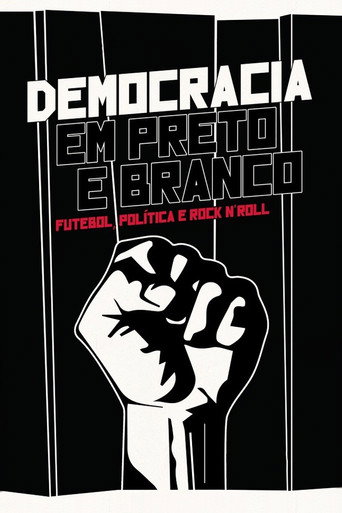
Democracia em Preto e Branco
Brazilian soccer players Sócrates, Casagrande and Vladimir lead a historic movement in sports by adopting a democracy within their team, making a statement against the country's military dictatorship.
Um Craque Chamado Divino
A documentary about the life of Brazilian footballer Ademir de Guia (o Divino) who played his whole professional career for Palmeiras.
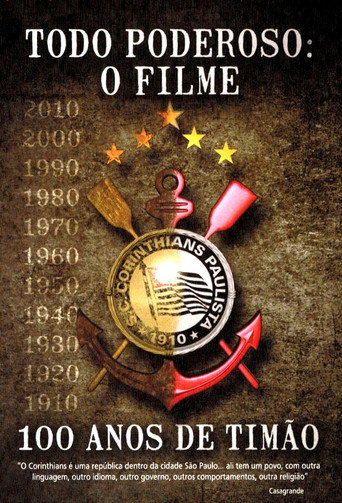
Todo Poderoso: O Filme - 100 Anos de Timão
Todo Poderoso: O Filme - 100 anos de Timão tells the saga of a team that was born from the hands of five workers to become a real social phenomenon. Rescues images never before seen footage as the first of Corinthians in 1929, plus historic interviews of the first team's idols, as Neco, Del Debbio, Baltazar and Luizinho. Brings together for the first time, the major superstars that recall the glories of these 100 years of history through more than 200 goals. It features unreleased song of Bid, Rappin Hood and Negra Li composed especially for the film's official centenary of Timão.
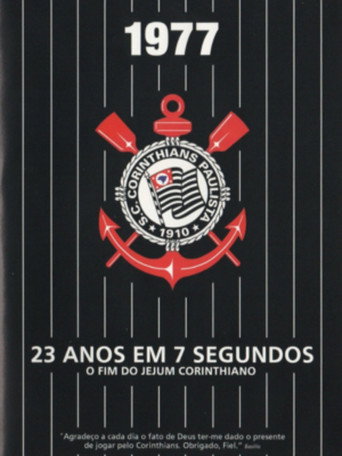
23 Anos em 7 Segundos
The documentary tells the Corinthians passion through one of his most famous moments, when the team, who was 23 years without a title, won the Campeonato Paulista final of 1977 against Ponte Preta. The Timão is and always will be the sole, the better. Win or lose. Same spirit that permeated the loyal fans and has only grown in the 23 years that the Corinthians were without titles.
Carta ao Magrão
Gallery