Acting
No biography available.
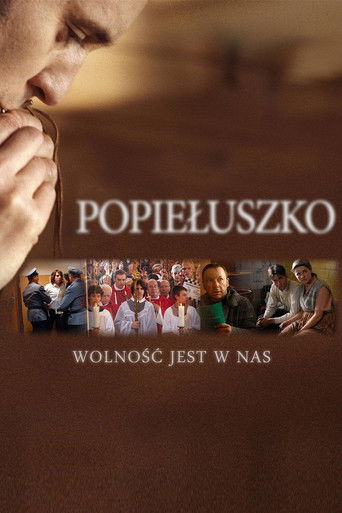
Story of life of Father Jerzy Popieluszko, the priest called "The Solidarity Chaplain", murdered by communist secret police.
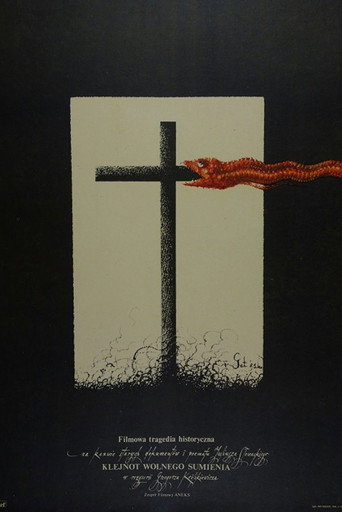
The Republic of Poland of the 16th century. During the period of religious tolerance, the Sieniawski and Bielecki families compete with each other.
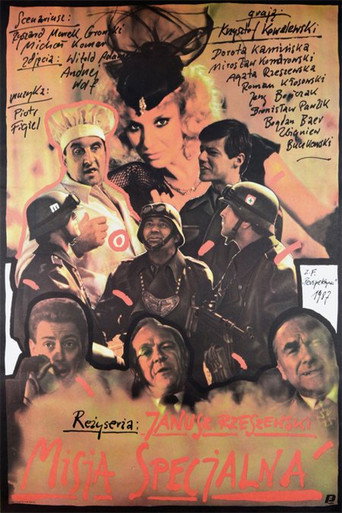
In 1943, a drunk cook is mistaken for a secret agent and sent on a special mission from London to Nazi-occupied Poland.
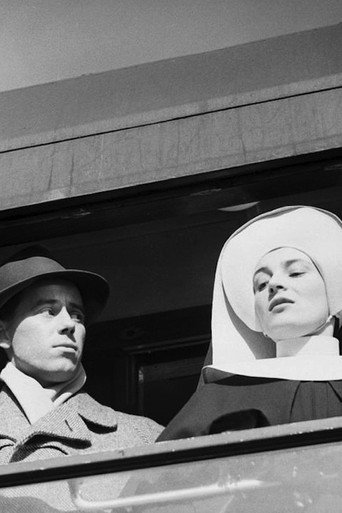
Originally, Munk intended Eroica to be a triptych with Con bravura being the first part, but he ultimately gave up on this film, deeming it weaker artistically than the two counterparts. Con bravura is about conspiracy conflating the paths of a rather unconventional nun and an intrigued young man – each of them bears secrets and the encounter could incite a flaming romance, though one suffocated by war.Munk set the film in the mountain capital of Zakopane and its vicinity, allowing breathtaking views from a cable car and using his experiences of the Nazi occupation in the area to add gritty reality. The director plays a cameo as a priest with several of his industry friends also making appearances.
Jurek, a medical student and notorious womanizer, spends the night with Anka, a carefree and spirited girl who does not want to continue the relationship. The couple meets again after a few months. Jurek is forced to look for a place to live. He finds an offer for a room for a medical student in exchange for caring for a sick person. Together with the girl, Monika, they go to the address provided. It turns out that the sick person is Anka. She had an accident while horseback riding and is now in a wheelchair. After some hesitation, she agrees to let Jurek take care of her.
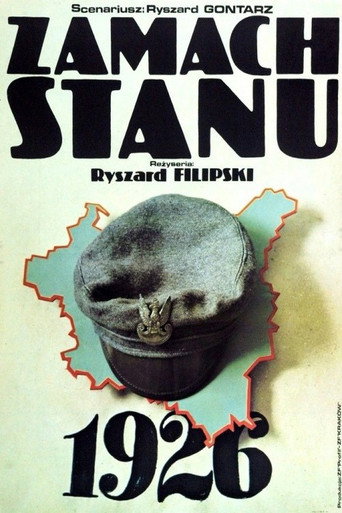
Fall 1925. Six hundred officers demonstrate in front of Józef Piłsudski’s country house in Sulejówek, demanding the Marshal’s return to active political life. May 1926—a government crisis; Wincenty Witos forms a new government. Piłsudski’s move sparks clashes between supporters and opponents of the ousted government. Piłsudski appoints Kazimierz Bartel as prime minister. The beginning of the “moral reform.” Ignacy Mościcki becomes president. Summer 1930. A joint platform of opponents to the Sanacja government is formed. “Centrolew” is established.
Zenon Ziembiewicz, a young, budding journalist, comes to his parents' manor house for a vacation. Here he enters into an affair with the lovely Justyna Bogutówna, the daughter of a cook. When the canicule comes to an end, Zenon packs his bags and leaves for Paris to study. Returning after a year with a doctorate in political science, he makes a fast and glamorous career. He becomes the editor-in-chief of the local newspaper and, soon after, mayor of the city. He also marries Elzbieta Biecka, but still does not break up with Justyna.
Ewa and Stefan Hauser, with their children Monika and Wolf, live an average middle-class life in East Berlin in 1969. Under Stasi blackmail, Stefan is coerced into cooperation, prompting the family’s escape attempt to West Berlin. The plan fails: the couple is imprisoned for four years, the children adopted by separate families. After early release and permission to relocate west, the Hausers spend decades fruitlessly searching for their lost children, only to be reunited twenty years later amid Europe’s political upheavals.
When a political decision is made as to the location of a new large chemical factory, Stefan Bednarz is put in charge of it. This honest communist party man has to confront the local community opposing the construction.
In Nazi-occupied Warsaw, teenage scouts Alek, Rudy, and Zośka risk their lives pulling down a swastika and hoisting the Polish flag atop the German “Zachęta” cultural center and then blowing up a mobile propaganda cinema.