Ryan Trecartin Movies, TV Shows, and Filmography

Ryan Trecartin
Directing
Biography
Ryan Trecartin is an American artist and filmmaker currently based in Athens, Ohio. He studied at the Rhode Island School of Design, graduating with a BFA in 2004. Trecartin has since lived and worked in New Orleans, Los Angeles, Philadelphia and Miami.
Filmography Movies
Acting
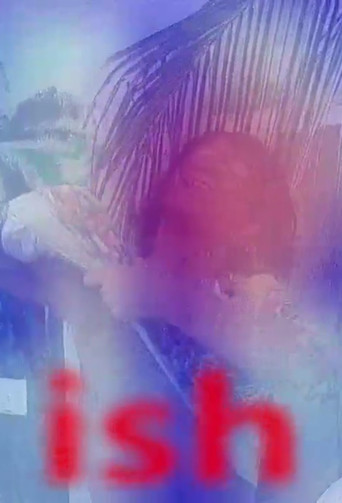
Sibling Topics (Section A)
Trecartin returns to his conception of family-as-business-enterprise, casting parent figures as managers and executives on one end of the spectrum, estranged children as freelancers on the other. The director plays four sisters named Ceader, Britt, Adobe and Deno, the boundaries of whom are indistinct. It is difficult to tell where one sister ends and the next begins. The sisters' questing—for identity, for romance, etc.—leads them on an episodic series of adventures, several of which are defined as "premises." A Trecartin premise plays out as a predetermined situation where the character initiating it has already set the tone, terms, and trajectory of the experience in their mind. The actual, lived event serves only as the shading-in of the outline.
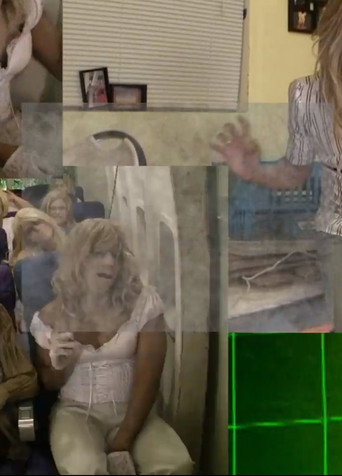
K-CoreaINC. K (section a)
The video revolves around an unending "meeting" - a busy, aimless meeting that goes in circles to evade a traditional narrative arc. The meeting is essentially a party, and the entire company bumps and grinds with itself everywhere from in boardrooms to airplanes. K-Corea INC. K processes ideas of automation and containment, embodied by these hyper-controlled locations and by the seemingly looping actions that take place in them. Meetings, where discrete parts of a corporate body come together to attempt to "get on the same page," display the futility of corporate unity, and of individual purpose or voice remaining intact within a corporate culture.
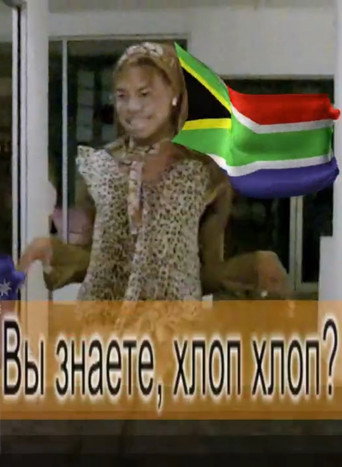
P.opular S.ky (section-ish)
In P.opular S.ky (section ish), a character played by Trecartin informs us that she wants ‘to live in a world where narration is the devil’. The ability to script oneself is an inalienable right, and anything that opposes that right must be rejected.
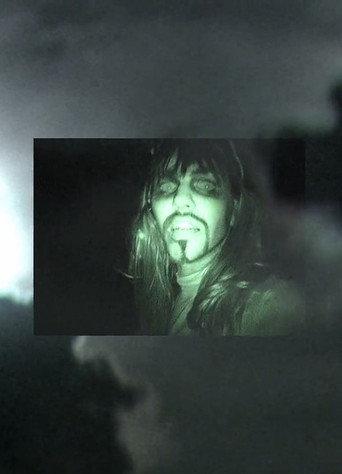
Mark Trade
Shot in 2013 - In 'honor, of cause fake news - less gravity here - don't bird watch with a gun - remember your dreams before they remember you : the sloppy mix, bullshit version coming near soon USA.
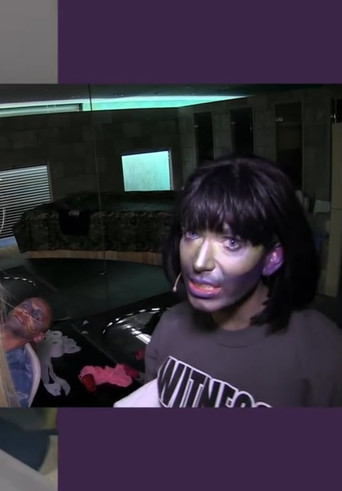
Comma Boat
In Comma Boat, we're stuck in a mock-authoritarian fantasy--a power trip. The film centers around a director-character played by Trecartin who oscillates between feelings of omnipotence and self-doubt. As if a post-human, post-gendered reincarnation of the Fellini character in 8 ½, the director gloats and frets about professional and ethical transgressions. "I know I lied to get ahead," he admits at one point. "I've made up so many different alphabets just to get ahead in my field." The director is fancier now, but the fear nags that he might be "repeating" himself "like a dumb soldier ova and ova and ova and ova." The meta-connection to the artist's own career, while obvious, is also a decoy. All art, at some level, is about the artist. Here, reflexivity is the surface level, providing a decodable veneer that encases something more unsettling and complex. Single-channel and 3-channel versions.
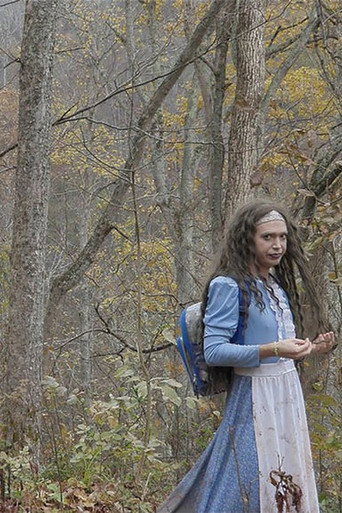
Plot Front
A delirious movie installed inside a ghostly barn made with prefabricated materials. The oscillatory movement of the rocking chairs on which visitors sit partly helps to alleviate the syncopated rhythm of the montage and the frenzy of images that follow. A series of brassy characters in wigs and thick make-up map the various locations of the film: a lazy river, a hobby barn, and forest watchtower.
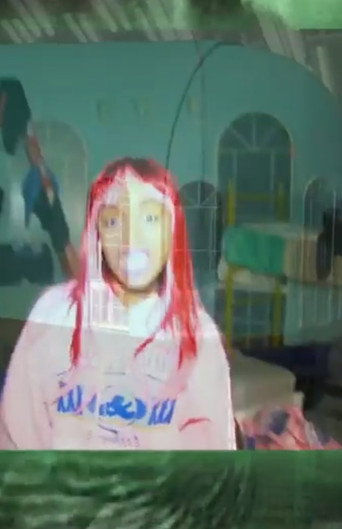
Item Falls
In Item Falls, we are peaking. We start out at a casting call, but before long we're firmly in the grip of hallucination, shedding our anxieties and evidently regressing to the animation era, a time when stunt chickens were mere chicklets. Friendly archetypes float in and out of what seems like our bedroom. The red-headed Jenny has returned, but this time she's squeaky and trusting. Unlike in Center Jenny, here our perspective is literally centered. The camera seems to be the in middle of the room, which is good, because we're too blissed out to move. Luckily, our hallucinations look directly at us.

Wayne's World
Trecartin and his collaborator/co-star Lizzie Fitch ponder the messages delivered by the most banal forms of mass media and pop culture in their own unique version of a music video. They voice questions in song and dance segments that feature a deliberately ill-fitting pastiche of discarded fashions of the past two decades and recycled pop-music clichés. Totally immersed in their meticulously crafted private universe, Trecartin and Fitch coyly point at the gaudy artifice surrounding us in our own.
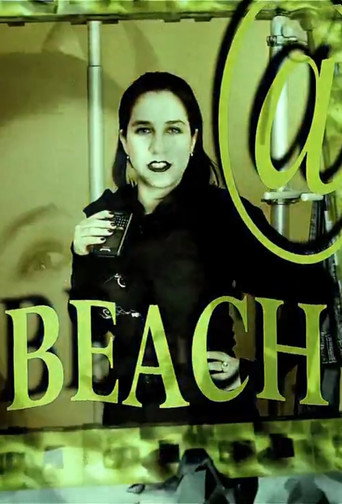
Ready
In Ready, Wait, played by Trecartin, is introduced as the eponymous figure of the series. Wait waits. He forsakes a "career" in favor of a "job," the execution of which Trecartin calls a "work performance." A careerist like Y-Ready (Veronica Gelbaum) may call the shots, but she is locked in her own endless narcissistic ascent, whereas Wait can retire from his job at anytime, and does, only to come back from vacation marked for containment. A third type of worker, Able (Lizzie Fitch), more fluidly adopts and discards the gestures of job and career, positing herself as a hobbyist who contrives the situations and outcomes she needs to keep her wave going.
Temp Stop
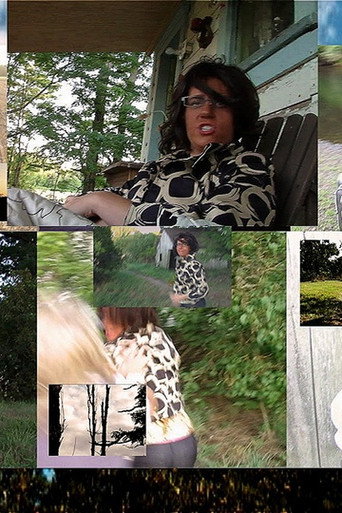
Temp Stop, as the title implies, has a disjunctive quality that separates it from the other parts of Re'Search Wait'S. As if emanating from the basement of Any Ever, each scene plays like a hidden-away epilogue rendering characters comparatively surreal--in part because they are often straightforward and ordinary. The movie opens with a less omnipotent Y-Ready barking an abusive monologue to hypothetical subservients and bidding Able to use The Re'Search to brainwash JJ into a duplicate of Wait. Able's work alter ego, Past Jessica, is battered by her office. She is out of time, and by that extension, timelessness in Any Ever is not equated with limitlessness but with total lack: no time.
Production
A Family Finds Entertainment
A Family Finds Entertainment chronicles the story of mixed up teenager Skippy and his adventures in ‘coming out’. In this over the top celebration of queerness, Trecartin’s film mines the bizarre and endearing in an unabashed pastiche of ‘bad tv’ tropes. Cheesy video special effects, dress-up chess costumes, desperate scripts, and ‘after school special’ melodrama combine in the fluency of youth-culture lingo, reflecting a generation both damaged and affirmed by media consumption.
A Family Finds Entertainment
A Family Finds Entertainment chronicles the story of mixed up teenager Skippy and his adventures in ‘coming out’. In this over the top celebration of queerness, Trecartin’s film mines the bizarre and endearing in an unabashed pastiche of ‘bad tv’ tropes. Cheesy video special effects, dress-up chess costumes, desperate scripts, and ‘after school special’ melodrama combine in the fluency of youth-culture lingo, reflecting a generation both damaged and affirmed by media consumption.
A Family Finds Entertainment
A Family Finds Entertainment chronicles the story of mixed up teenager Skippy and his adventures in ‘coming out’. In this over the top celebration of queerness, Trecartin’s film mines the bizarre and endearing in an unabashed pastiche of ‘bad tv’ tropes. Cheesy video special effects, dress-up chess costumes, desperate scripts, and ‘after school special’ melodrama combine in the fluency of youth-culture lingo, reflecting a generation both damaged and affirmed by media consumption.
(Tommy-Chat Just E-mailed Me.)
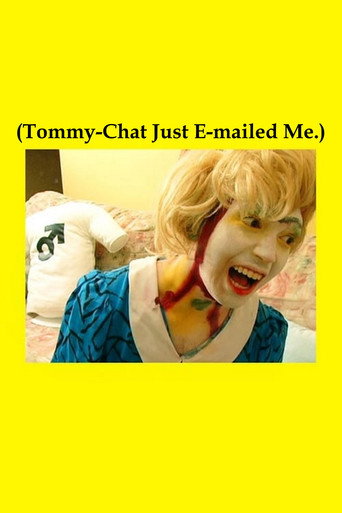
Trecartin describes (Tommy-Chat Just E-mailed Me.) as a "narrative video short that takes place inside and outside of an e-mail." Trecartin's intense visualization of electronic communication is inhabited by a cast of stylized characters: Pam, a lesbian librarian with a screaming baby in an ultra-modern hotel room; Tammy and Beth, who live in an apartment filled with installation art; and Tommy, who is seen in a secluded lake house in the woods. Pam, Tommy and Tammy are all played by Trecartin, who, wearing his signature make-up, jumps back and forth between male and female roles. Totally self-absorbed and equipped with vestigial attention spans, the characters are constantly communicating with one another on the phone or online.
(Tommy-Chat Just E-mailed Me.)
Trecartin describes (Tommy-Chat Just E-mailed Me.) as a "narrative video short that takes place inside and outside of an e-mail." Trecartin's intense visualization of electronic communication is inhabited by a cast of stylized characters: Pam, a lesbian librarian with a screaming baby in an ultra-modern hotel room; Tammy and Beth, who live in an apartment filled with installation art; and Tommy, who is seen in a secluded lake house in the woods. Pam, Tommy and Tammy are all played by Trecartin, who, wearing his signature make-up, jumps back and forth between male and female roles. Totally self-absorbed and equipped with vestigial attention spans, the characters are constantly communicating with one another on the phone or online.
Center Jenny
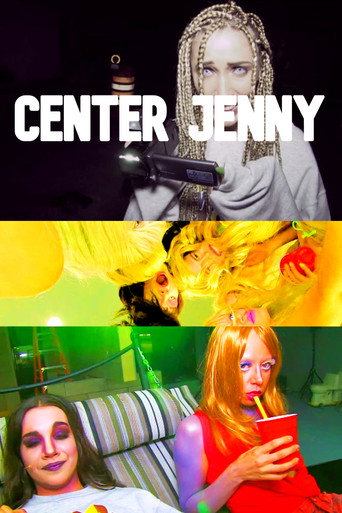
The film focuses on the life of Jenny who has, according to many of the other characters, become too “left-of-center” while pursuing her interests.
Center Jenny
The film focuses on the life of Jenny who has, according to many of the other characters, become too “left-of-center” while pursuing her interests.
Center Jenny
The film focuses on the life of Jenny who has, according to many of the other characters, become too “left-of-center” while pursuing her interests.
Center Jenny
The film focuses on the life of Jenny who has, according to many of the other characters, become too “left-of-center” while pursuing her interests.
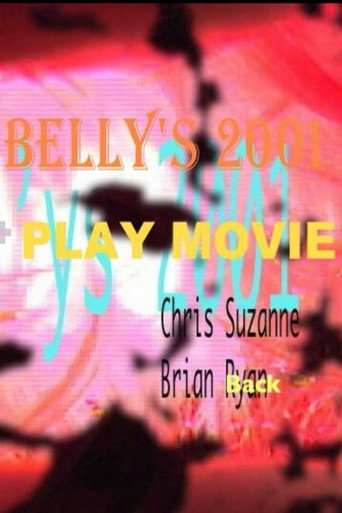
Belly's
This rare collection of Ryan Trecartin's early short films, produced as a student at the Rhode Island School of Design, showcase the artist's maturation in experimental video which would culminate in his debut feature film - "A Family Finds Entertainment." Included are seven of Trecartin's titled short films, ranging from 2001-2003, and a number of secret extras scattered around the DVD menus. While there is no official information to be found about this DVD, the elaborate menu graphics and wildly varied original sound design point to this DVD as potentially a form of portfolio, allowing the artist to showcase their early work alongside original digital manipulations.
Gallery