Ruth Beckermann Movies, TV Shows, and Filmography

Ruth Beckermann
Directing
Biography
The filmmaker and writer was born in Vienna, Austria. Her films include The Paper Bridge and East of War. Her film Those Who Go Those Who Stay won Best Documentary at the 2014 Diagonale in Graz. Two years later, The Dreamed Ones won Beat Feature Film at the same festival. The Waldheim Waltz received several prizes including the Glashütte Original – Documentary Award at the 2018 Berlinale and was also nominated as Austria’s entry for the Oscars. In 2022, MUTZENBACHER screened in the Encounters section of the Berlinale where it won the award for Best Film.
Filmography Movies
Acting

Cinema Austria, the first 112 Years
This historical and analytical documentary draws attention to the background of the roots of "New Austrian Cinema" and presents Austria as a film country to be taken seriously. The audience gets to see rare early works by well-known filmmakers as well as shots of landscapes that served as a source of inspiration and locations that have produced important Austrian films since the end of the 19th century.
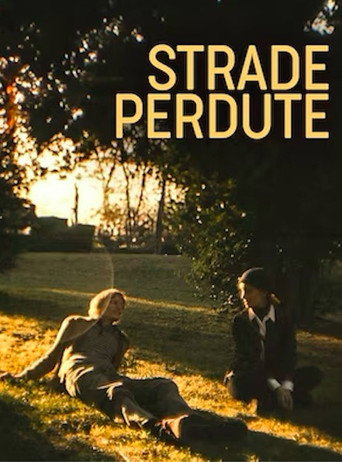
Strade perdute - Filmmaker 23
For Filmmaker Film Festival (2023), Fulvio Baglivi and Cristina Piccino asked some filmmakers (R. Beckermann, J. Bressane, D’Anolfi/Parenti, T. De Bernardi, L. Di Costanzo, A. Fasulo, F. Ferraro, M. Frammartino, S. George, ghezzi/Gagliardo, C. Hintermann, G. Maderna, A. Momo, A. Rossetto, M. Santini, C. Simon, S. Savona) to give us their own "lost road," that is, a sequence, scene or piece of editing that did not later find its way into the final version of one of their works. Each fragment has its own accomplished presence, often has a different title from the film it was made for, which is not necessary to have seen in order to find meaning; on the contrary, those who set out thinking they know the world they are walking through will find themselves displaced.
Mutzenbacher
An audition for men aged between 16 and 99. There are no props nor make-up, just pure improvisation. All that is required is the willingness to engage openly with the topic and language of the words on the page. No small challenge, since the text in question is the scandalous novel published anonymously in 1906 “Josefine Mutzenbacher, or the Life Story of a Viennese Whore, as Told by Herself” which, as this film confirms, continues to be the subject of passionate and controversial discussions about desire, even today. What might be world-class pornographic literature for some is seen by others as an abusive depiction of child sexuality.
Production
Favoriten
Favoriten is one of the most culturally diverse neighborhoods in Vienna and the starting point of Ruth Beckermann’s latest documentary, in which she accompanies a class of pupils from the age of seven to ten. Their ambitious teacher, Ilkay, is determined to create an inclusive, supportive and safe environment for the kids. The majority of children don’t speak German at home, some families are wounded by war experience and many face discrimination. Despite few resources from the educational system, Ilkay gently navigates her class through daily adventures, defeats and victories. The result is an astonishingly cheerful portrait of a small community mirroring the complexities of contemporary European society. The film is an ode to childhood, celebrating the work of educators and lifelong learning in and outside the classroom.
Favoriten
Favoriten is one of the most culturally diverse neighborhoods in Vienna and the starting point of Ruth Beckermann’s latest documentary, in which she accompanies a class of pupils from the age of seven to ten. Their ambitious teacher, Ilkay, is determined to create an inclusive, supportive and safe environment for the kids. The majority of children don’t speak German at home, some families are wounded by war experience and many face discrimination. Despite few resources from the educational system, Ilkay gently navigates her class through daily adventures, defeats and victories. The result is an astonishingly cheerful portrait of a small community mirroring the complexities of contemporary European society. The film is an ode to childhood, celebrating the work of educators and lifelong learning in and outside the classroom.
American Passages
Initially, there's that moment of happiness: an African-American celebrating in Harlem cheers "We're free!" as if Barack Obama's victory meant the ultimate end of slavery. AMERICAN PASSAGES is an associative journey through the United States: a disillusioned Iraq veteran, gay adoptive fathers, black judges, white party animals and a pimp at a casino table in Las Vegas. The extreme contrasts of black and white, rich and poor, winners and losers are often as surprising as the meaning of the constitutional right to the pursuit of happiness in these times of crisis. An epic panorama of America.
American Passages
Initially, there's that moment of happiness: an African-American celebrating in Harlem cheers "We're free!" as if Barack Obama's victory meant the ultimate end of slavery. AMERICAN PASSAGES is an associative journey through the United States: a disillusioned Iraq veteran, gay adoptive fathers, black judges, white party animals and a pimp at a casino table in Las Vegas. The extreme contrasts of black and white, rich and poor, winners and losers are often as surprising as the meaning of the constitutional right to the pursuit of happiness in these times of crisis. An epic panorama of America.
Mutzenbacher
An audition for men aged between 16 and 99. There are no props nor make-up, just pure improvisation. All that is required is the willingness to engage openly with the topic and language of the words on the page. No small challenge, since the text in question is the scandalous novel published anonymously in 1906 “Josefine Mutzenbacher, or the Life Story of a Viennese Whore, as Told by Herself” which, as this film confirms, continues to be the subject of passionate and controversial discussions about desire, even today. What might be world-class pornographic literature for some is seen by others as an abusive depiction of child sexuality.
Mutzenbacher
An audition for men aged between 16 and 99. There are no props nor make-up, just pure improvisation. All that is required is the willingness to engage openly with the topic and language of the words on the page. No small challenge, since the text in question is the scandalous novel published anonymously in 1906 “Josefine Mutzenbacher, or the Life Story of a Viennese Whore, as Told by Herself” which, as this film confirms, continues to be the subject of passionate and controversial discussions about desire, even today. What might be world-class pornographic literature for some is seen by others as an abusive depiction of child sexuality.
Mutzenbacher
An audition for men aged between 16 and 99. There are no props nor make-up, just pure improvisation. All that is required is the willingness to engage openly with the topic and language of the words on the page. No small challenge, since the text in question is the scandalous novel published anonymously in 1906 “Josefine Mutzenbacher, or the Life Story of a Viennese Whore, as Told by Herself” which, as this film confirms, continues to be the subject of passionate and controversial discussions about desire, even today. What might be world-class pornographic literature for some is seen by others as an abusive depiction of child sexuality.
The Dreamed Ones
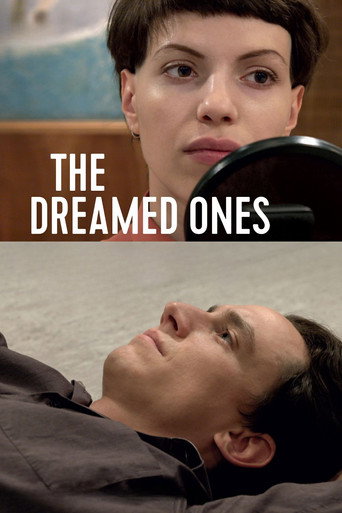
It’s not uncommon for a film to have a moving love story at its core. Yet this particular set-up is unusual. The lovers here are Ingeborg Bachmann and Paul Celan, both important representatives of post-war German-language poetry. The story of the relationship between the Austrian and the Jew from Czernowitz is told through their nearly 20-year correspondence (1948–1967). Or, more precisely, by a young woman and a young man reading from their letters in a studio in Vienna’s venerable Funkhaus.
The Steel Hammer Out There On the Grass
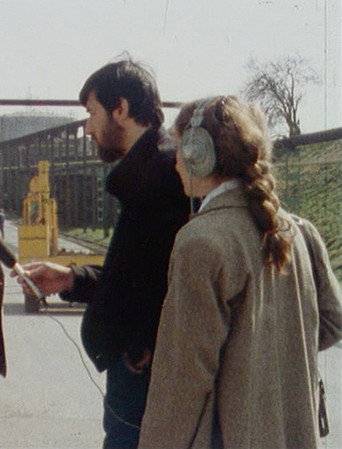
On March 28th 1981, 10.000 people take to the streets. The city of Judenburg demonstrates for the preservation of their steel plant. The demonstration is a start, a late attempt to avert the threat of job loss. The film shows how the international steel crisis affects Austria.
Jackson/Marker 4am
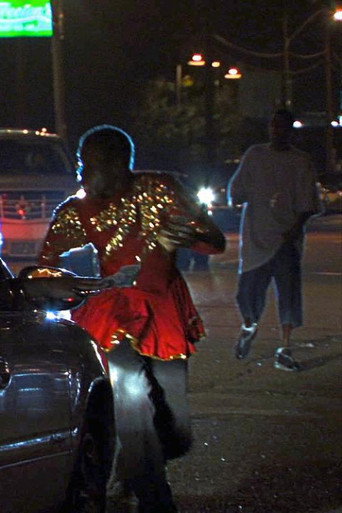
Introduced with a quote that invents its own creator, someone is dancing in a figure skating costume to a piece of music that conceals its source.
Gallery