Camera
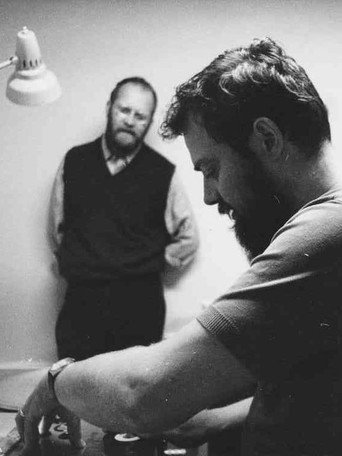
Rudolf Körösi is an Austrian cinematographer and documentary film director.
An odyssey through Beethoven’s lasting presence and influence in our modern world – viewed through the eyes of the composer himself.
The film develops 5 questions about documentary film against the background of the media-political situation of the early 1970s in West Germany. The following topics are developed: (1) the personal approach of filmmaker Klaus Wildenhahn to his profession; (2) the technical and technical approach of cameraman Rudolf Körösi; (3) the development of documentary film based on John Grierson's British School of Documentary Film; (4) the working conditions and political framework for the production of documentary films at WDR and NDR; (5) the constitutive characteristics of socially relevant documentary film.
In the Second World War, spring 1944: shortly before the planned Ardennes offensive, Germans and Americans stand waiting on the German-Belgian border. The small Eifel village of Winterspelt threatens to become the scene of a bloody battle. A German officer comes up with a plan to hand over his battalion to the Americans without a fight. He finds support from three inhabitants of the small village, who help him to present his offer of surrender to the Americans, which they ultimately reject.
Four hours by boat from the lightship Elbe 1 is the southern entrance and lock of the Kiel Canal. There, in Brunsbüttelkoog, is a seamen's home run by Klara Andresen. This is the main setting of the movie. In the sailors' wives' home, the wives of sailors wait for their return. Klara Andresen not only looks after the concerns of the waiting sailors' wives, but also her brother-in-law Gustav Andresen . Gustav has gone to sea as a ship's cook and now wants to get married. That's why he has placed a marriage announcement and is waiting for the reactions.
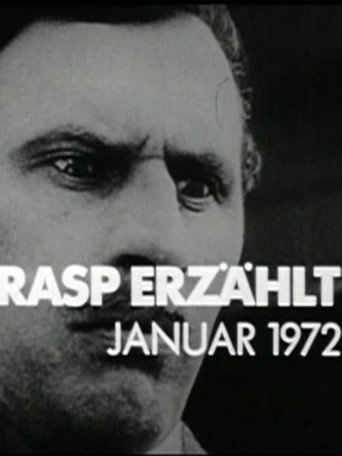
A talk with actor Fritz Rasp about his career.
In this two-part documentary, Eberhard Fechner reconstructs the story of a class of pupils who passed their A-levels at Berlin's Lessing-Gymnasium in 1937. The starting point for the research is the class photo that gives the film its title. The conversations with the men, which revolve around their lives, bring back memories. However, it becomes clear how many of them have repressed the events of the Nazi era. Apologies, excuses and trivialization of the violence and crimes come out of many mouths.
Observational documentary about the Merce Cunningham Dance Company rehearsing throughout the summer of 1967 in New York.
Impressions of a party congress of the German social democrat party (SPD) in 1964, featuring politicians Max Brauer, Fritz Erler and Willy Brandt.
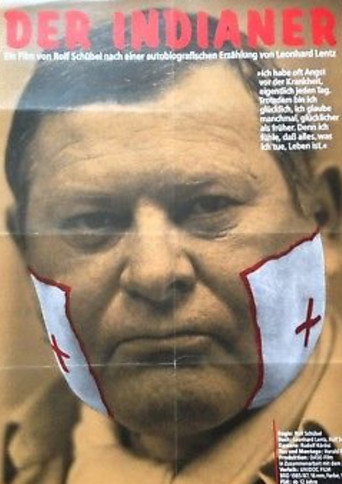
Based on the autobiographical notes by Leonhard Lentz the film tells the story of a man who was diagnosed with throat cancer. Besides the progress of the desease this film also focuses on the emotions and insights of the protagonist while being in therapy.
A young officer suffers under his ambitious wife, who is determined to make a captain out of him. Meanwhile, ship's cook Andresen becomes a father and, for the sake of his wife, becomes an innkeeper ashore, but he is still driven by wanderlust.
An outlook on working from home and how this could affect women.