Acting
No biography available.
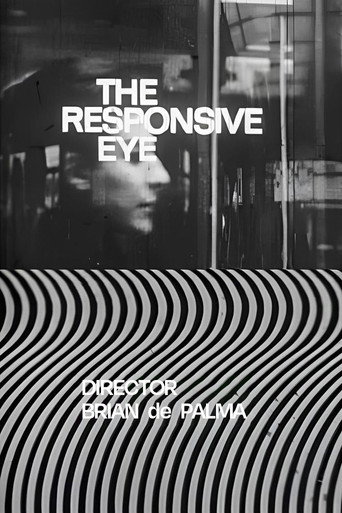
A documentary short directed by Brian De Palma, The Responsive Eye documents the 1965 exhibition of optical art at the Museum of Modern Art in New York. Curated by William C. Seitz, the exhibition was the first major museum show dedicated to Op Art. The film captures both the artworks and the reactions of attendees, offering a snapshot of a pivotal moment in the relationship between contemporary art and public perception.
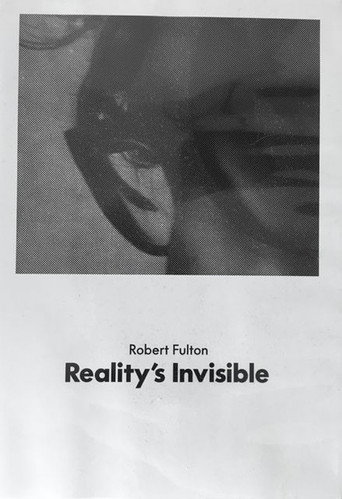
Fulton made the film during his brief time at Harvard, where he had been invited to teach by Robert Gardner, his friend and collaborator (Fulton would later serve as a cinematographer on Gardner’s 1981 documentary Deep Hearts, among others). Reality’s Invisible could be described as a portrait of the Carpenter Center, yet it is a portrait of an extremely idiosyncratic and distinctive sort. Fulton moves us through the concrete space of the Center’s Le Corbusier-designed building—the only structure by the architect in North America—but, more centrally, presents us footage of students making and discussing their work alongside figures like Gardner, theorist Rudolf Arnheim, artist Stan Vanderbeek, filmmaker Stan Brakhage, and graphic designer Toshi Katayama.
Short film presented by the American Federation of Arts about the physics and characteristics of abstraction. Distorting physical items from science, nature, and intangible items in math and art can all be understood as abstraction. Abstract concepts in design, art, and language are shown.
Following his use of art, painting and sculpture, in his work of the previous decades, Hurwitz took on a project for the American Foundation of the Arts aimed on deepening and enriching, for art students, the way in which we see. Working with his second wife, the editor Peggy Lawson, he made four short films comprising The Art of Seeing Series. The films, made without words, are beautiful poems to the pleasure of sight. This is the second part of his series.