Romeo Castellucci Movies, TV Shows, and Filmography
Romeo Castellucci
Directing
Biography
No biography available.
Filmography Movies
Acting
Projet Castellucci
In the autumn of 2014, playwright and theatrical director Romeo Castellucci participated in the Festival d'Automne in Paris. Nicolas Klotz resumed the show, questioning its creator in a triptych dedicated to his daring creative process.
DAU. Degeneration
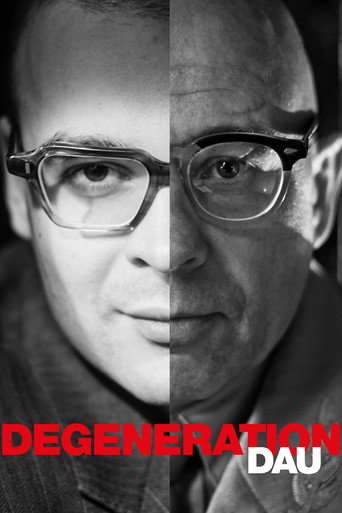
A secret Soviet Institute conducts scientific and occult experiments on animals and human beings to create the perfect person. The KGB general and his aides turn a blind eye to erotic adventures of the director of the Institute, scandalous debauches of prominent scientists and their cruel and insane research. One day, a radical ultra right-wing group arrives in the laboratory under the guise of test subjects. They get a task - to eradicate the decaying elements of the Institute’s community, and if needs be, destroy the fragile world of secret Soviet science.
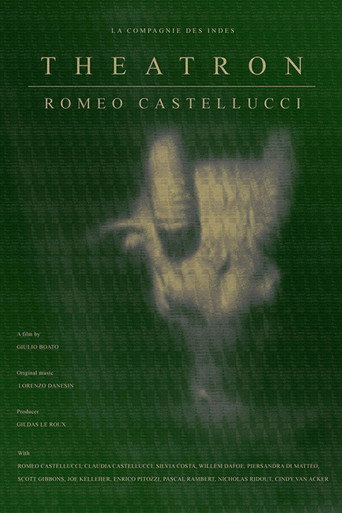
Theatron. Romeo Castellucci
Theatron, the film by the multi-award-winning film-maker Giulio Boato, is an unprecedented portrait of Romeo Castellucci. Castellucci and his theatre company, the Socìetas Raffaello Sanzio, are key protagonists of avantgarde theatre. To a Vivaldi soundtrack, Theatron layers Romeo and Claudia Castellucci’s comments with the testimonies of dramaturgs, composers, choreographers, critics and actors (including Willem Dafoe) who have collaborated with the director. Between rehearsals and international tours, the film is a deep reflection not just on the performances, but also on the connection between the author and the representation of human nature.
Take5*
Take5* is a filmed series of encounters between 5 artists and 2 guests who meet for the first time in a specific city to speak about Europe, festivals, the arts and their role in society.
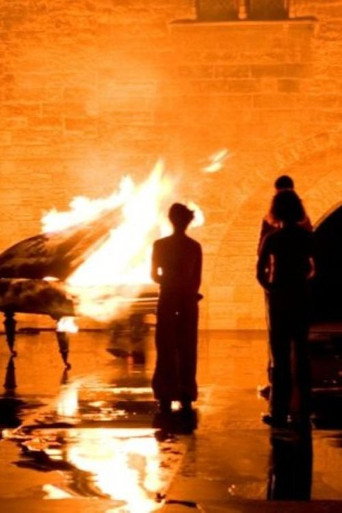
Inferno
Dante's 'La Divina Commedia' is a poem in three parts about a journey to hell, purgatory and finally, paradise. Romeo Castellucci created his own free adaptation on the gigantic stage of the Cour d'Honneur in Avignon, in the palace where the first French pope, Clement V, resided. The pope allows Dante to descend into the inferno. We are confronted with man's confusion, the fragmentation of the community and the darkness of art.
TRAGEDIA ENDOGONIDIA - C.#11 CESENA
A nightmare which envelops the everyday tranquility of domestic life, turning it into a tragedy. Confusion between man, animal and God.
Production
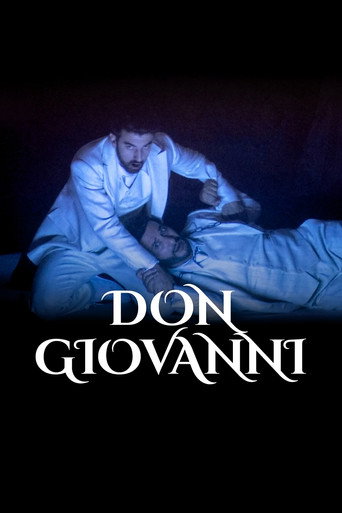
Mozart: Don Giovanni
Premiered in 1787, “Don Giovanni” exposes the timeless theme of a man hovering between vitality and destruction. Neither morality nor the law can stop this serial lover in his quest to conquer all women as he places his own pleasure above all other principles. Today, the rich depth of Mozart’s masterpiece still astonishes audiences with its mix of comedy and seriousness, pleasure and love, entertainment and murder. At the helm of this new Salzburg Festival production, in a near-live broadcast from the Great Festival Hall, director Romeo Castellucci promises to focus on the ambiguity and inner turmoil of this serial lover whose immoral behaviour condemns him to a deadly solitude. The exceptional cast – featuring Italian baritone Davide Luciano (Don Giovanni), Russian soprano Nadezhda Pavlova (Donna Anna) and Finnish bass Mika Kares (the Commendatore) – is accompanied by the chorus and musicians of the musicAeterna ensemble, conducted by Vitaly Polonsky and Teodor Currentzis.
Mozart: Don Giovanni
Premiered in 1787, “Don Giovanni” exposes the timeless theme of a man hovering between vitality and destruction. Neither morality nor the law can stop this serial lover in his quest to conquer all women as he places his own pleasure above all other principles. Today, the rich depth of Mozart’s masterpiece still astonishes audiences with its mix of comedy and seriousness, pleasure and love, entertainment and murder. At the helm of this new Salzburg Festival production, in a near-live broadcast from the Great Festival Hall, director Romeo Castellucci promises to focus on the ambiguity and inner turmoil of this serial lover whose immoral behaviour condemns him to a deadly solitude. The exceptional cast – featuring Italian baritone Davide Luciano (Don Giovanni), Russian soprano Nadezhda Pavlova (Donna Anna) and Finnish bass Mika Kares (the Commendatore) – is accompanied by the chorus and musicians of the musicAeterna ensemble, conducted by Vitaly Polonsky and Teodor Currentzis.
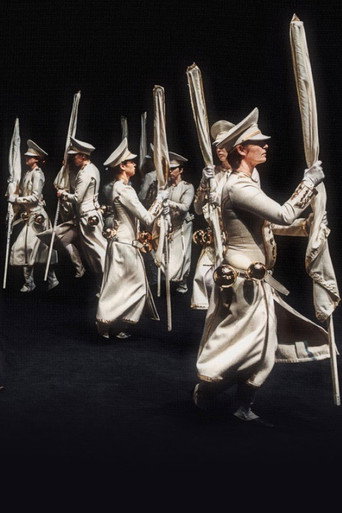
Democracy in America
Romeo Castellucci is one of Europe’s best-known directors, a firebrand known for productions that are as thought-provoking as they are visually stunning. He returns to Peak Performances with the American premiere of “Democracy in America,” freely inspired by the work of Alexis de Tocqueville. Castellucci conjures majorettes who stir the crowd’s enthusiasm for democracy in America, colonial settlers who confound the native Americans, and a puritan couple who struggle to farm a barren land. He asks us to consider the empty promises of a political system steeped in Biblical egalitarianism rather than the concept of tragedy so essential to ancient Greek democracy, the dangers of majority rule, and the inherent violence that springs from religious puritanism and territorial conquests. His challenging, soul-stirring brand of theatrical magic transposes these painful, profound ideas into an enticing, vibrant, celebratory work of art.
Democracy in America
Romeo Castellucci is one of Europe’s best-known directors, a firebrand known for productions that are as thought-provoking as they are visually stunning. He returns to Peak Performances with the American premiere of “Democracy in America,” freely inspired by the work of Alexis de Tocqueville. Castellucci conjures majorettes who stir the crowd’s enthusiasm for democracy in America, colonial settlers who confound the native Americans, and a puritan couple who struggle to farm a barren land. He asks us to consider the empty promises of a political system steeped in Biblical egalitarianism rather than the concept of tragedy so essential to ancient Greek democracy, the dangers of majority rule, and the inherent violence that springs from religious puritanism and territorial conquests. His challenging, soul-stirring brand of theatrical magic transposes these painful, profound ideas into an enticing, vibrant, celebratory work of art.
Democracy in America
Romeo Castellucci is one of Europe’s best-known directors, a firebrand known for productions that are as thought-provoking as they are visually stunning. He returns to Peak Performances with the American premiere of “Democracy in America,” freely inspired by the work of Alexis de Tocqueville. Castellucci conjures majorettes who stir the crowd’s enthusiasm for democracy in America, colonial settlers who confound the native Americans, and a puritan couple who struggle to farm a barren land. He asks us to consider the empty promises of a political system steeped in Biblical egalitarianism rather than the concept of tragedy so essential to ancient Greek democracy, the dangers of majority rule, and the inherent violence that springs from religious puritanism and territorial conquests. His challenging, soul-stirring brand of theatrical magic transposes these painful, profound ideas into an enticing, vibrant, celebratory work of art.
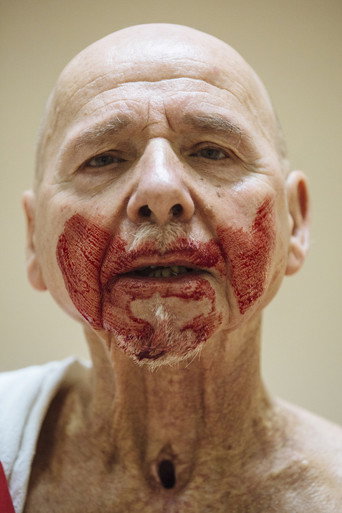
Julius Caesar. Spared Parts.
Famed Italian director Romeo Castellucci re-envisions his groundbreaking 1997 production Giulio Cesare (Julius Caesar) as a series of “fragments” rearranged and positioned against each other—a clash between the ethereal and the obscure, the power of rhetoric and language stripped to its source.
Julius Caesar. Spared Parts.
Famed Italian director Romeo Castellucci re-envisions his groundbreaking 1997 production Giulio Cesare (Julius Caesar) as a series of “fragments” rearranged and positioned against each other—a clash between the ethereal and the obscure, the power of rhetoric and language stripped to its source.
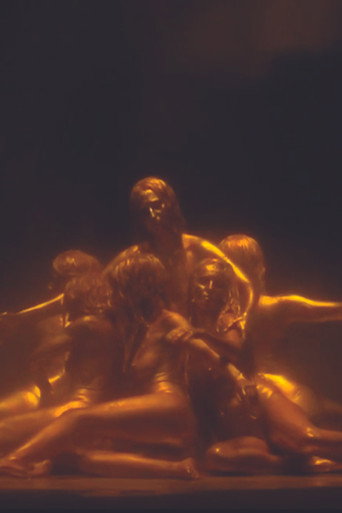
Wagner: Das Rheingold
Director and visual artist Romeo Castellucci will tackle this mythological material and project his visions over the course of the journey performed by the characters, representing concretely such key elements of the Ring as water and fire. This symbolic reading will concentrate on essential aspects of the libretto, inviting spectators to forge their own interpretation. Avoiding irony, Castellucci will treat each protagonist with equal importance, highlighting the aspirations, emotions and thoughts that animate them: absolute love and the conquest of power.
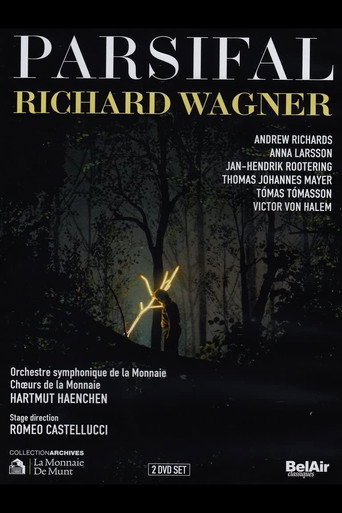
Parsifal
A mythical performance from la Monnaie - Bruxelles. Parsifal is a strange and enigmatic work. At the end of his life, did Wagner wish to celebrate asceticism, which he himself had never practised? Did he fall upon his knees before the Cross, as claimed by Nietzsche? And what does the secret society of knights based on pure blood signify, desperately waiting for the saviour to regenerate it? What is the true nature of the opposition between the worlds of Klingsor and the Grail? What can Parsifal tell us today? In his artistic will and testament, Wagner condenses his moral idea of the world and returns to the roots of love and religion - to the very heart of art according to him. With the participation of conductor Hartmut Haenchen who is passionated by the score, Italian stage director Romeo Castellucci proposes an original reading of this brilliant work and explores the essence of Wagnerian ‘Kunstreligion’ in a different light.
Gallery