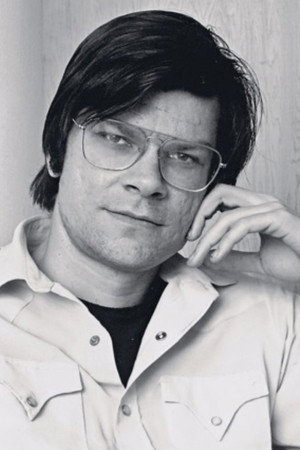
Robert Smithson Movies, TV Shows, and Filmography
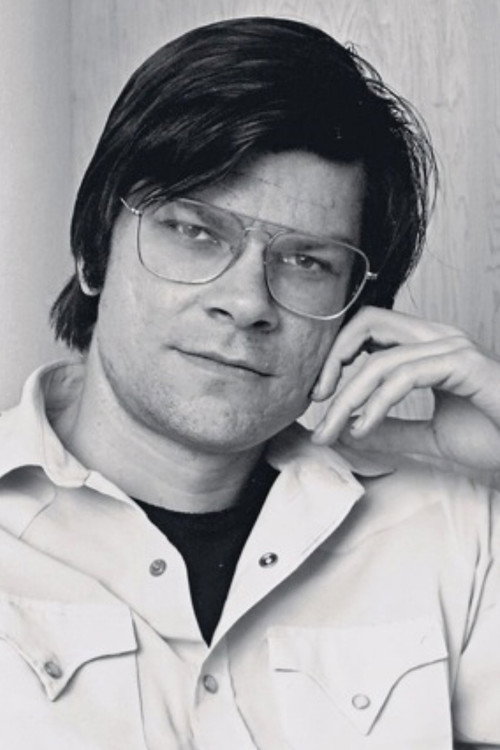
Robert Smithson
Directing
Biography
Robert Smithson (January 2, 1938 – July 20, 1973) was an American artist famous for his land art.
Filmography Movies
Acting
Mono Lake
Mono Lake is a document of a unique natural environment, a "home movie" of the artists' 1968 road trip, and an intimate view of three seminal figures in the earth art movement as they interact with the Western landscapes that are so central to their work.
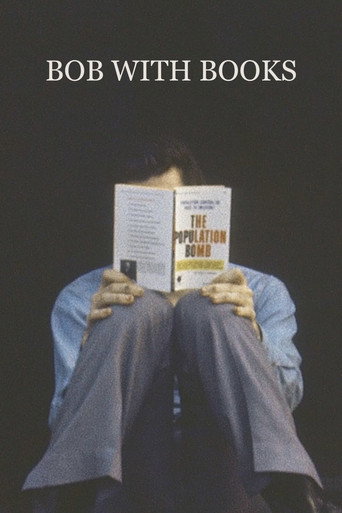
Bob with Books
Shot on the roof of 799 Greenwich St., New York, Bob with Books is a short silent film by Nancy Holt on her husband, artist Robert Smithson, two years before he passed away.
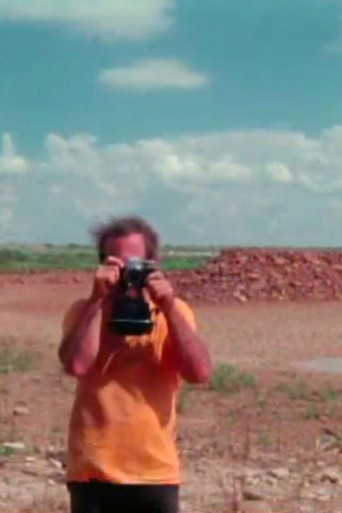
The Making of Amarillo Ramp
The Making of Amarillo Ramp documents the construction of Robert Smithson's earthwork Amarillo Ramp. At age thirty-five, while photographing the site of the earthwork in progress, Smithson died in a small airplane accident, along with pilot Gale Ray Rogers and photographer Robert E. Curtin. After Smithson's passing, Nancy Holt, Richard Serra, and Tony Shafrazi completed Amarillo Ramp according to Smithson's specifications. This film documents the sounds and actions of the powerful machinery necessary to create an earthwork of this scale, while underscoring the human skill and personal relationships that were integral to the completion of the work.
Breaking Ground: Broken Circle/Spiral Hill
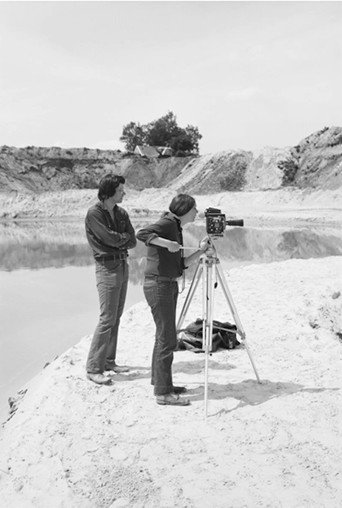
40 years after the completion of the work 'Broken Circle/Spiral Hill', the film that Robert Smithson was never able to finish due to his untimely death has been completed in collaboration between artist Nancy Holt and SKOR.
Utah Sequences
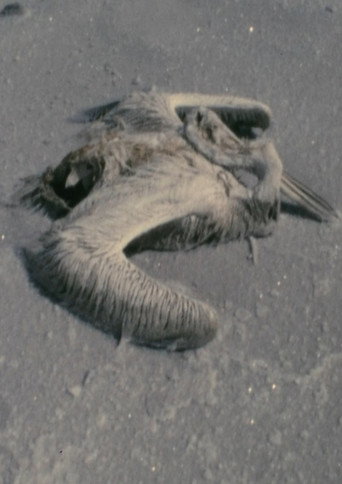
The film explores the environment—manmade and natural—at Rozel Point on the north arm of Great Salt Lake. The film captures wood cabins, an amphibious vehicle, and remnants of oil drilling that have largely disappeared from the site today, but the tar seeps and salt-encrusted pelicans so present in this film remain a constant at the site.
Production
Swamp
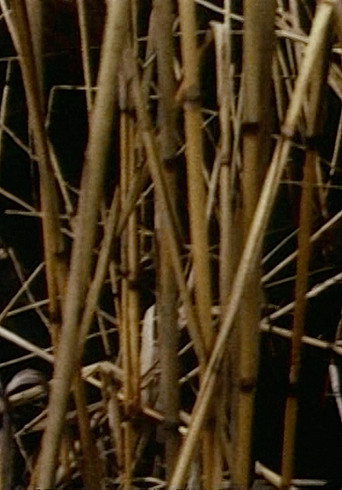
The action of the film is direct: Holt walks through the tall grasses of a swamp while filming with her Bolex camera, guided only by what she can see through the camera lens and by Smithson's verbal instructions. The viewer experiences the walk from Holt's point of view, seeing through her camera lens and hearing Smithson's spoken directions. Vision is obstructed and perception distorted as they stumble through the swamp grasses.
Spiral Jetty
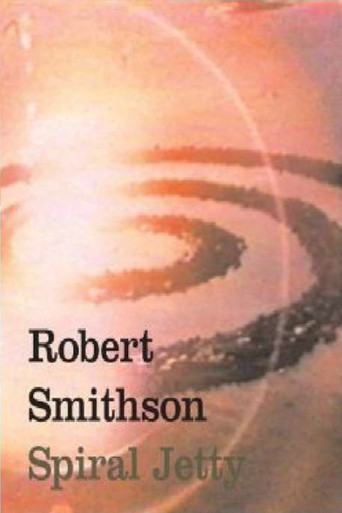
This film, made by the artist, Robert Smithson, with the assistance of Virgina Dwan, Dwan Gallery & Douglas Christmas, Director, Ace Gallery, (the aforementioned Dwan & Christmas also assisted Smithson financially with the making of the Spiral Jetty), is a poetic and process minded film depicting a "portrait" of his renowned earth work -- The Spiral Jetty, as it juts into the shallows off the shore of Utah's Great Salt Lake. A voice-over by Smithson reveals the evolution of the Spiral Jetty.
Mono Lake
Mono Lake is a document of a unique natural environment, a "home movie" of the artists' 1968 road trip, and an intimate view of three seminal figures in the earth art movement as they interact with the Western landscapes that are so central to their work.
East Coast, West Coast
East Coast, West Coast, Holt and Smithson's first collaborative experiment with video, takes the form of a humorous bi-coastal art dialogue. Joined by their friends Joan Jonas and Peter Campus, Holt and Smithson improvise a conversation based on opposing - and stereotypical - positions of East Coast and West Coast art of the late 1960s. Holt assumes the role of an intellectual conceptual artist from New York, while Smithson plays the laid back Californian driven by feelings and instinct. Their deadpan exchange ironically lays bare the limitations and contradictions of both sides in the debate.
Bird Box
Five years after an ominous unseen presence drives most of society to suicide, a survivor and her two children make a desperate bid to reach safety.
Breaking Ground: Broken Circle/Spiral Hill
40 years after the completion of the work 'Broken Circle/Spiral Hill', the film that Robert Smithson was never able to finish due to his untimely death has been completed in collaboration between artist Nancy Holt and SKOR.
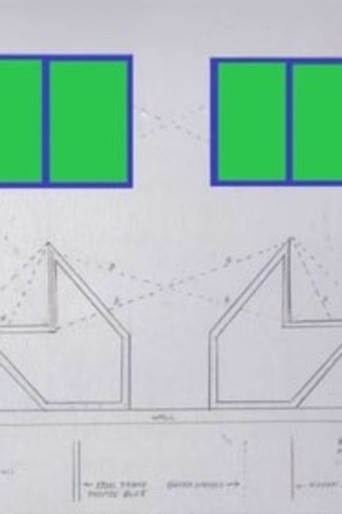
Enantiomorphic Chambers
n 1964 Robert Smithson made a sculpture called Enantiomorphic Chambers that cleverly exploited our two-eyed nature to haunting metaphysical ends. Stepping between the two chambers, the viewer sees his or her image cancelled out by precisely coordinated mirrors, accomplishing Smithson’s task of “eliminating the consciousness that regulates binary vision.” Curators Kevin Regan and Christopher Howard have teamed up to turn NURTUREart Gallery into an entantiomorphic chamber of their own devising, though with a rather different aesthetic than Smithson’s. Noticing a simple iconographic trend in which a number of contemporary practices make use of reflected images, Regan and Howard have turned this underrecognized phenomenon into a full-scale metaphysical research project, complete with its own blog to document ongoing discoveries.
Partially Buried Woodshed
Partially Buried Woodshed, one of Smithson's iconic works, was executed at Kent State University in Ohio in January 1970. The piece was created by partially burying an empty shed under mounds of dirt with a backhoe until the shed's roof beam collapsed. The physical structure has long since been degraded by weather, vandalism and neglect; it has "gone back to the land," as the artist expected. However, the infamous Kent State shootings in May of 1970, in which National Guardsmen opened fire on students protesting the Vietnam War, killing four of them, has lent Smithson's entropic monument a peculiar historical resonance as a metaphorical locus of the forces and conflicts of its era.
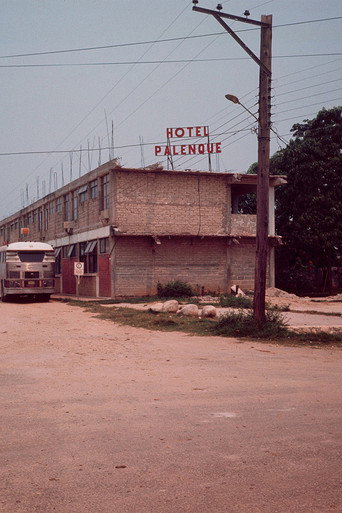
Hotel Palenque
Hotel Palenque, a slideshow of Robert Smithson’s photographs, reveals an unfinished hotel on the Mayan architectural site of Palenque, Mexico.Taken in 1969 during his travels to northern Yucatán, these photographs reveal spatial and architectural uncertainties, transitioning between temporal boundaries of the past and present. This “non-site”, a place lacking purpose, is evidence of a vision not realized and a man-made intervention entropically falling back into the earth.
Gallery