Robert Guédiguian Movies, TV Shows, and Filmography

Robert Guédiguian
Directing
Biography
Robert Jules Guédiguian (born 3 December 1953) is a French filmmaker, producer and actor. Most known for Marius and Jeannette (1997) and Gloria Mundi (2019), his films usually star his wife Ariane Ascaride or Jean-Pierre Darroussin. Guédiguian is the son of a German mother and an Armenian father, whose family immigrated to France in the early 20th century after the Armenian genocide. He evokes his paternal roots in his 2006 film Le Voyage en Armenie. He has a working-class background, as his father is a worker on the Marseille docks. Guédiguian became concerned with political questions and for a while was involved with the French Communist Party. In 2008 he joined the Left Party in France. He has been married to actress Ariane Ascaride since 1975 and they have two daughters, Valentine and Madeleine. Like Marcel Pagnol and René Allio before him, he anchors his films in social reality. His films are strongly marked by the local and regional environment of the city of Marseille, and in particular L'Estaque (north-west Marseille), for example in Marius et Jeannette. His 2011 film The Snows of Kilimanjaro premiered in the Un Certain Regard section at the 2011 Cannes Film Festival. In December 2023, alongside 50 other filmmakers, Guédiguian signed an open letter published in Libération demanding a ceasefire and an end to the killing of civilians amid the 2023 Israeli invasion of the Gaza Strip, and for a humanitarian corridor into Gaza to be established for humanitarian aid, and the release of hostages. Source: Article "Robert Guédiguian" from Wikipedia in English, licensed under CC-BY-SA.
Filmography Movies
Acting

Il était une fois Marseille
The heroine of this film is immortal. She is over 2600 years old. This is the self-portrait of the oldest city in France. A city whose landscapes bear the scars of a destiny that has spared it no trials. Gateway to the Orient, crossroads of trade and immigration, Marseille is a mosaic with 111 districts and 200 nationalities. Rebellious, chaotic, in turn desired, torn apart, transformed, it is reborn each time from its ashes. Marseille tells us more about the history of France and sheds light on what France is today.



Marius and Jeannette
Jeannette is a single mother living in a working-class community in Marseilles; she tries to support herself and her two kids on her salary as a check-out girl at a supermarket and lives in an apartment complex where everyone is thrown into close proximity with everyone else. Marius is working as a security guard at a cement factory that has gone out of business; he's also squatting in the building, since the plant is soon to be demolished and he'll be needing his money later on. One day, Jeannette happens by the factory, and spotting several cans of paint, tries to take two of them home with her. Marius spots her and tries to chase her away, while she rails at him with curses against the capitalist system. The next day, an apologetic Marius appears at her doorstep, cans of paint in hand; the two soon become friendly, and a romance begins to bloom, though it quickly becomes obvious that Jeannette's romance novel fantasies are a bit off the mark from what Marius has in mind.
Robert Guédiguian, cinéaste
For over twenty years, Robert Guédiguian has been making films that occupy an essential place in French cinema. In film after film, he evokes the social chronicle of his working-class childhood. We witness an adventure rich in reflections on the film director’s profession, political commitment, the intimate relation between real and fictional characters, and a shared desire to create.
In the Musical Intimacy of a Film Score
It is the story of a love affair between a musical score and a screenplay! Chief editor Bernard Sasia observes and interviews the key figures of this journey. Centered on the collaboration between composer Michel Petrossian and director Robert Guédiguian, Sasia uses his editing tools to capture the sudden emergence of a musical creation for the cinema.
Production

Cockles and Muscles
Crustacés et coquillages is a fresh French comedy film with numerous surprise turnarounds and about the tolerance of a family of four. The family spend an idealistic summer vacation together where each of the family members gets involved in a new or old relationship.

Army of Crime
This gripping historical drama recounts the story of Armenian-born Missak Manouchian, a woodworker and political activist who led an immigrant laborer division of the Parisian Resistance on 30 operations against the Nazis in 1943. The Nazis branded the group an Army of Crime, an anti-immigrant propaganda stunt that backfired as the team's members became martyrs for the Resistance.
Army of Crime
This gripping historical drama recounts the story of Armenian-born Missak Manouchian, a woodworker and political activist who led an immigrant laborer division of the Parisian Resistance on 30 operations against the Nazis in 1943. The Nazis branded the group an Army of Crime, an anti-immigrant propaganda stunt that backfired as the team's members became martyrs for the Resistance.

Marie-Jo and Her 2 Loves
Marie-Jo is a middleaged woman living an ordinary life in Marseilles with her husband, Daniel and her daughter, Julie. Daniel runs a small construction business in which Marie-Jo helps. She also works at the local hospital. Outwardly their marriage is loving. But Marie-Jo has been in love with another man for more than twelve months.Marco works as a harbour pilot and is deeply in love with Marie-Jo. Learning that loving two men is impossible, Marie-Jo is forced to make a choice.
Marie-Jo and Her 2 Loves
Marie-Jo is a middleaged woman living an ordinary life in Marseilles with her husband, Daniel and her daughter, Julie. Daniel runs a small construction business in which Marie-Jo helps. She also works at the local hospital. Outwardly their marriage is loving. But Marie-Jo has been in love with another man for more than twelve months.Marco works as a harbour pilot and is deeply in love with Marie-Jo. Learning that loving two men is impossible, Marie-Jo is forced to make a choice.
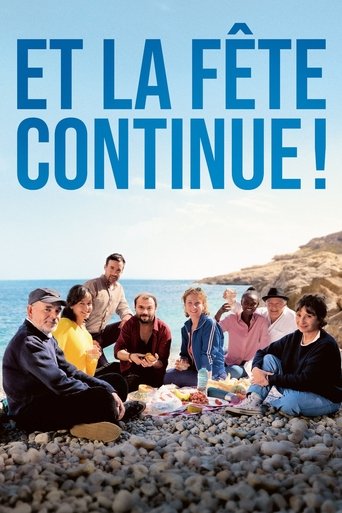
And the Party Goes On
In Marseille, Rosa, 60, dedicated her life to family and politics with the same sense of duty. Everyone considers her unwavering, until the day she falls in love with Henri. For the first time, Rosa is afraid to commit. Between the pressure of his family, politics and a desire to indulge in her feelings, the conflict is difficult to sustain.
And the Party Goes On
In Marseille, Rosa, 60, dedicated her life to family and politics with the same sense of duty. Everyone considers her unwavering, until the day she falls in love with Henri. For the first time, Rosa is afraid to commit. Between the pressure of his family, politics and a desire to indulge in her feelings, the conflict is difficult to sustain.
And the Party Goes On
In Marseille, Rosa, 60, dedicated her life to family and politics with the same sense of duty. Everyone considers her unwavering, until the day she falls in love with Henri. For the first time, Rosa is afraid to commit. Between the pressure of his family, politics and a desire to indulge in her feelings, the conflict is difficult to sustain.
Marius and Jeannette
Jeannette is a single mother living in a working-class community in Marseilles; she tries to support herself and her two kids on her salary as a check-out girl at a supermarket and lives in an apartment complex where everyone is thrown into close proximity with everyone else. Marius is working as a security guard at a cement factory that has gone out of business; he's also squatting in the building, since the plant is soon to be demolished and he'll be needing his money later on. One day, Jeannette happens by the factory, and spotting several cans of paint, tries to take two of them home with her. Marius spots her and tries to chase her away, while she rails at him with curses against the capitalist system. The next day, an apologetic Marius appears at her doorstep, cans of paint in hand; the two soon become friendly, and a romance begins to bloom, though it quickly becomes obvious that Jeannette's romance novel fantasies are a bit off the mark from what Marius has in mind.
Marius and Jeannette
Jeannette is a single mother living in a working-class community in Marseilles; she tries to support herself and her two kids on her salary as a check-out girl at a supermarket and lives in an apartment complex where everyone is thrown into close proximity with everyone else. Marius is working as a security guard at a cement factory that has gone out of business; he's also squatting in the building, since the plant is soon to be demolished and he'll be needing his money later on. One day, Jeannette happens by the factory, and spotting several cans of paint, tries to take two of them home with her. Marius spots her and tries to chase her away, while she rails at him with curses against the capitalist system. The next day, an apologetic Marius appears at her doorstep, cans of paint in hand; the two soon become friendly, and a romance begins to bloom, though it quickly becomes obvious that Jeannette's romance novel fantasies are a bit off the mark from what Marius has in mind.
Gallery