Directing
No biography available.
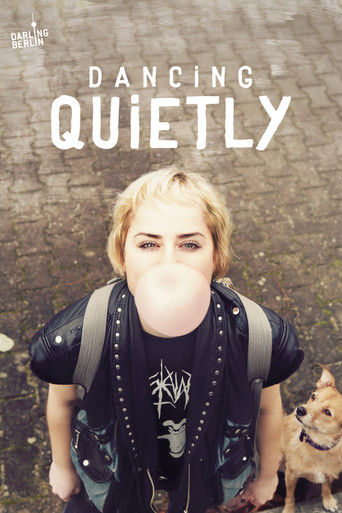
After many dark years of depression Luca seeks to gain her high school diploma. Her little dog Mata helps her to find motivation and keep a positive attitude towards life...
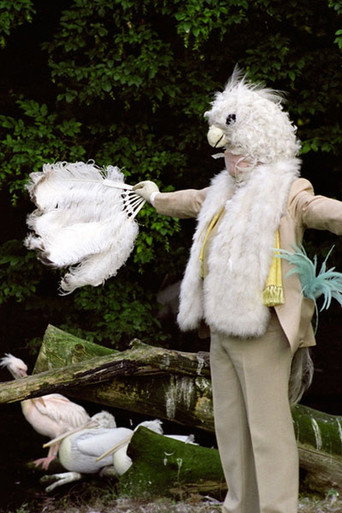
Drag performer Werner Hirsch is seen walking a turtle, channelling the 19th-century dandy, protesting the frenzy of industrialisation. With a nod to underground artist Jack Smith, as well as to queer and feminist campaigns such as Wages for Housework, the film recreates the ‘housewife’ as an ambiguous figure with an open future.
Starting with the feeling of being pushed backwards by recent reactionary backlashes, Moving Backwards explores resistance practices, combining post-modern choreography with guerrilla techniques and elements of queer underground culture. Different performers complicate the notion of backwards movement, prompting an uncanny experience that defies temporal and spatial logic.
Performer Sharon Hayes delivers a speech plagiarising chats by former whistleblower Chelsea Manning and texts by punk poet Kathy Acker. Different temporalities and multiple – trans – identities collapse into a poetic, defiant ‘I’ resisting the normative attitudes towards gender and sexuality in the military complex.
In this rendition of John Cage’s score 4’33” from 1952, the musician Aérea Negrot remains silent in front of several microphones installed on Oranienplatz, the site of a refugee protest camp in 2012. This performative gesture points to a precarious distinction between the violence of being silenced and the powerful agency of refusal.
In a darkened former gymnasium in TENT, dancers inspired by hiphop, dancehall, modern dance and drag performance respond to the new film by Pauline Boudry and Renate Lorenz, which unspools as a reflection on the mirrored black dance floor. The dancers – the same ones who appear in the film – incorporate the images seamlessly into their choreography, allowing the filmic and the physical space to reflect and reinforce one another. Although their dance styles differ amongst themselves, they are able to suddenly connect through their movements and muscle memory. In this way, Boudry and Lorenz lead us to doubt what we are seeing: are the dancers in the film projection moving in slow motion, or have the images been digitally doctored?
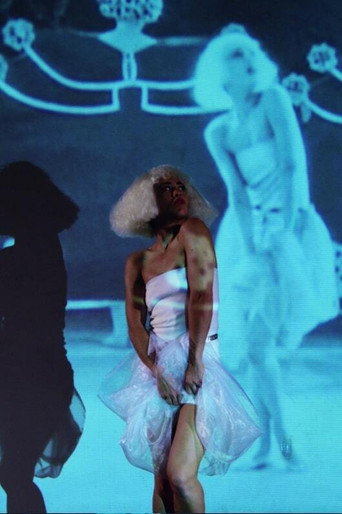
Salomania reconstructs a dance: the ‘dance of the seven veils’ from Alla Nazimova’s 1923 silent film Salomé. Also shown and rehearsed are sections from ‘Valda’s Solo,’ which the choreographer and filmmaker Yvonne Rainer created after having seen Nazimova’s film.
Experimental documentary about a housemaid who was also an artist.
The film Toxic shows two protagonists in an undated time, a punk figure in glitter (Ginger Brooks Takahashi) and a drag queen (Werner Hirsch), both of unclear gender and origin. They linger in an environment of glossy remains, of toxic plants and transformed ethnographic and police photography. While the punk gives a speech on toxicity and a performance referencing early feminist art works, the drag queen reenacts an interview of Jean Genet from the ‘80s and blames the filmmakers for exposing her to the police-like scenario of being filmed. The camera turns and depicts the space-off, the space outside the frame.
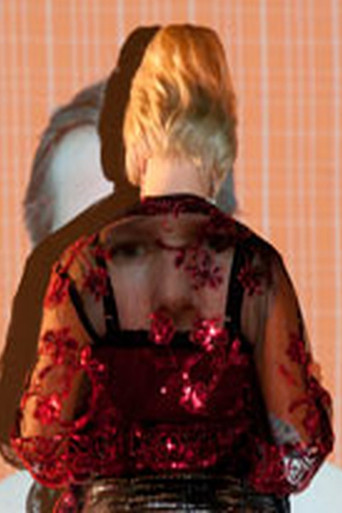
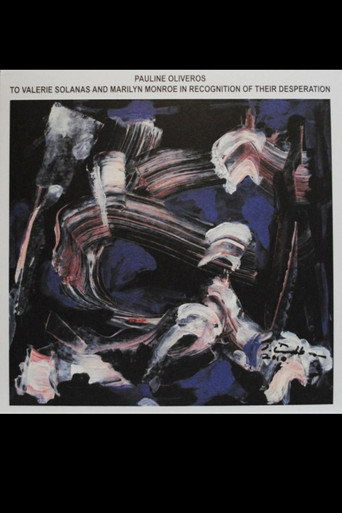
One continuous give-and-take as six performers push towards a paradigm shift in the future. Following a 1970 score written by Pauline Oliveros in response to SCUM Manifesto by Valerie Solanas, they ask ‘Can sounds, rhythms and light produce queer relations? Can they become revolutionary?'