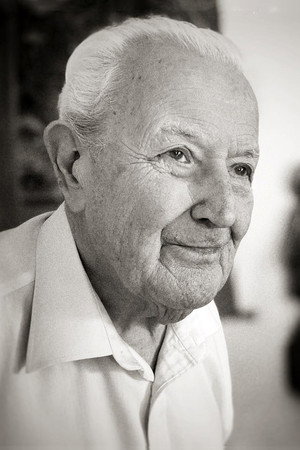
René Vernadet Movies, TV Shows, and Filmography
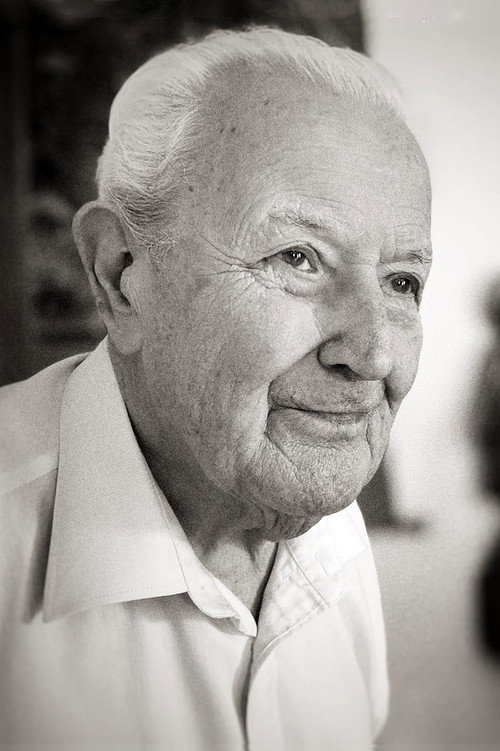
René Vernadet
Crew
Biography
René Vernadet, born in 1927 in Paris, is a French director and camera operator. René will never know his father, a dentist, who died in 1930. His mother, Marguerite, is a film makeup artist and little René, an only son, follows her from set to set. This artistic environment is their universe, they rub shoulders with Christian Jacques, Bourvil, Sacha Guitry, Cocteau… He could have become an actor but, at the time, it was above all the technique that motivated him. He therefore embarked on advanced studies in a film laboratory. Friend of Charles Aznavour and especially of Gilbert Bécaud, his “brother” for whom he would later write the lyrics of one or two songs, as well as for Yves Montand. The encounter between his camera and the practice of climbing in Fontainebleau with the big names of the time such as Lucien Bérardini, Robert Paragot or Edmond Denis would trigger the trigger for his career: he followed them to Chamonix, met the photographer and filmmaker Georges Tairraz, with whom he shot, in 1947, the images of the International Ski Week. And off he went... A series of short films such as "Escale au Saussois", "La République Nous Appelle", "Glaces Eternelles", "Les Belles Vacances", bear his signature always marked by didacticism and humor. After an "interlude" of seventeen documentaries shot during the Algerian War for the General Government, and many trips back and forth between Paris and Chamonix, he settled, in 1958, at the foot of Mont Blanc, with his wife Mireille who already had a great career as a film editor behind her. René Vernadet shot film after film as a cameraman specializing in dizzying scenes, including his two bravura pieces, "Les Étoiles De Midi" by Marcel Ichac in 1959 and "Mort D’Un Guide" by Jacques Ertaud in 1975. The same year, he created the images for "Horizons Gagnés" by the great Gaston Rébuffat, who was impressed by his mastery. This film was a huge success at the Connaissance du Monde conferences, of which Vernadet would become a regular. René Vernadet is also in demand for feature-length fiction films, and not the least, "Le Train" by John Frankenheimer, "Fifi La Plume" by Albert Lamorisse, "Sur un Arbre Perché" by Serge Korber, with Louis de Funès, or even "La Voie Jackson," a long-running TV film by Gérard Herzog shot in Chamonix in 1979... In the 1950s, he had the opportunity to travel around India to make films commissioned by Secours Catholique. Later, his friendship with the Italian philosopher Lanza del Vasto led him to Tibet, which would truly attract him; seventeen films and four books. Very active in the association Les amis du Vieux Chamonix, he spends a crazy amount of time going through dusty documents and old postcards in a cluttered little room, digitizing glass plates and reels of films from another age. Extremely in demand, he is there to host evenings at the cinema or at the prestigious Majestic cinema in Chamonix, capable of brilliantly commenting on silent films live and telling often very funny anecdotes from the filming. But when asked again why he doesn't get dizzy, he simply replies: "I don't know, I don't worry about it". In 2017, René Vernadet has just started his twenty-sixth trip to Tibet. He is 90 years old...
Filmography Movies
Acting
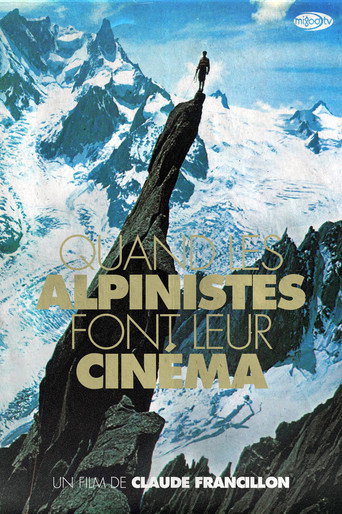
When the Mountaineers Make Their Cinema
Many mountaineers as part of their activity have used cameras and films to allow us to participate through images in their adventures and their emotions. Many of them have become true film professionals: Joseph Vallot, Lionel Terray, Marcel Ichac, Renè Vernadet, Jean Afanasieff, Pierre Royer, Denis Ducroz, Kurt Diemberg and many others are among the conquerors of the image of the mountain. The film depicts the passion of these men on the highest mountains in the world... behind the lens.
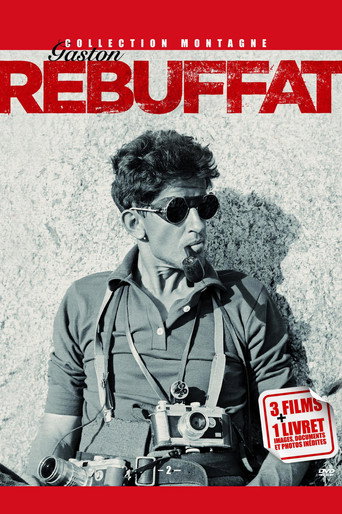
The World of Gaston Rébuffat
The World of Gaston Rébuffat is a documentary on mountaineering which takes place at Gendarme Du Pic Du Roc and Grande Candelle. Directed by Gilles Chappaz in 2009 and produced by Seven Doc, we find Christophe Profit, Françoise Rébuffat, Thierry Renault, Jean-Olivier Majastre, René Vernadet, Sam Beaugey and many others. Friendship of his rope companions, friendship of the mountain, friendship of all of nature, he spoke of the mountain with simplicity and happiness. A precursor, a visionary, Gaston Rébuffat was a resolutely committed person, without ever having spoken of an exploit, let alone a fight (among other achievements, he was the first to climb the six north faces of the Alps in a lifetime as a mountaineer).
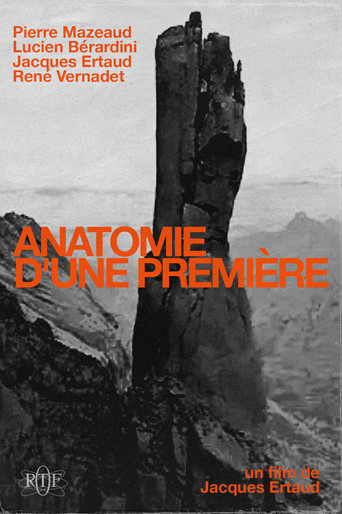
Anatomy of a First
In February 1966, Pierre Mazeaud and Lucien Berardini traveled to the Atakor massif, in the Hoggar mountain range of the Sahara in southern Algeria. There, they attempted a challenging first ascent: the Takouba spur, one of the peaks adjacent to Garet El Djenoun, a legendary mountain in the Hoggar massif, first climbed by Roger Frison-Roche and Raymond Coche in 1935. The documentary, superbly filmed by Jacques Ertaud, won the Grand Prize at the Trento International Mountain Film Festival in 1966.
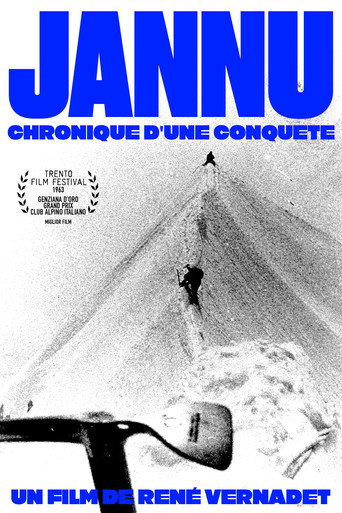
Jannu, Chronicle of a Conquest
Three years after the 1959 expedition, abandoned 350m from the summit, Lionel Terray leads a new assault on Jannu, one of the most demanding peaks in the Himalayas. At the base camp, equipment and food rations are prepared. The conditions are optimal and the ascent can begin. The camera follows the progress of the mountaineers and Sherpas as closely as possible, from one high-altitude camp to another: installing fixed ropes, progressing over crevasses, in the middle of frozen towers, vertically down immense ice falls or along the edge of sharp ridges. From 7000m, oxygen bottles become essential, as the difficulty of the climb prevents acclimatization. The expedition is a total success: the majority of its members reach the 7710m summit.
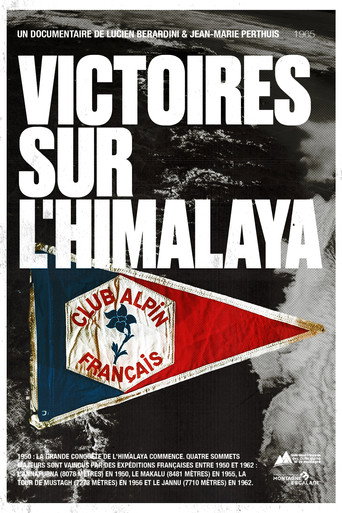
Victories on the Himalayas
Retrospective of four major peaks climbed by French expeditions: Annapurna (8078m) in 1950; Makalu (8481m) in 1955; Mustagh Tower (7273m) in 1956 and Le Jannu (7710m) in 1962. A film by Lucien Berardini and Jean-Marie Perthus with the support of the French Alpine Club and the FFME (French Mountain and Climbing Federation).
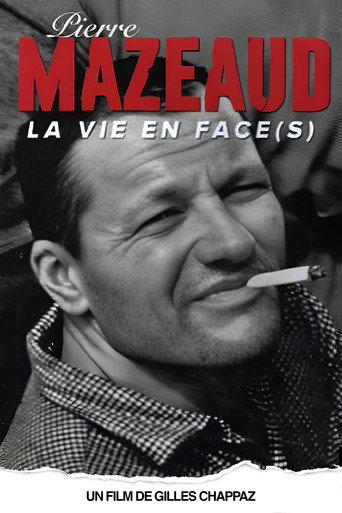
Pierre Mazeaud, la vie en face(s)
Pierre Mazeau has managed to unite three of his passions which seem to have nothing in common, at a very high level: mountaineering, jurisprudence and policy. The Everest mountaineer, rescued from the Freney Pillar, the passionate jurist, the former sports minister, privy counsellor, and president of the French Constitutional Court is a charismatic personality. This sensitive film portrait follows a line, which Pierre Mazeaud himself has quoted: “Alpinism belongs to those who provide themselves with means to reach their goals, to those who are fully committed to a goal, to those, who know the value of solidarity of men, and to those who are aware that true human existence can only be fulfilled by proceeding with a team of roped-partners.”
Production
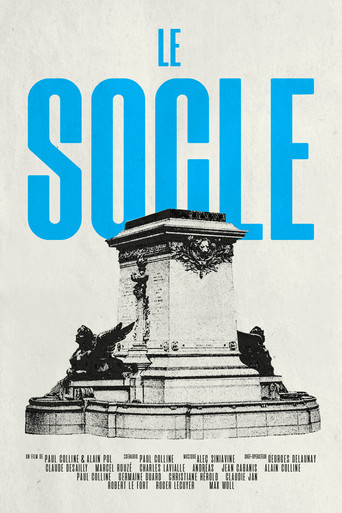
Le Socle
The bases, under the occupation, lost their statues. These now anonymous steles rightly intrigue many visitors. Have you ever wondered who is up there? Ask Paul Colline, the most amusing guide in Paris, he will be able to answer you while sparing the goat, the cabbage and your political opinions.
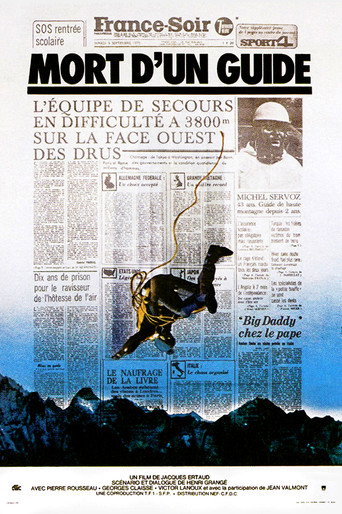
Death of a Guide
Veteran Chamonix mountain guide Michel Servoz and the young aspiring guide Patrick Falavier attempt to climb the west face of the Dru in the Mont-Blanc massif. When they are gone for five days, the captain of the gendarmerie in Morteau is worried, but he cannot undertake research for a rescue without the permission of the family.
Anatomy of a First
In February 1966, Pierre Mazeaud and Lucien Berardini traveled to the Atakor massif, in the Hoggar mountain range of the Sahara in southern Algeria. There, they attempted a challenging first ascent: the Takouba spur, one of the peaks adjacent to Garet El Djenoun, a legendary mountain in the Hoggar massif, first climbed by Roger Frison-Roche and Raymond Coche in 1935. The documentary, superbly filmed by Jacques Ertaud, won the Grand Prize at the Trento International Mountain Film Festival in 1966.
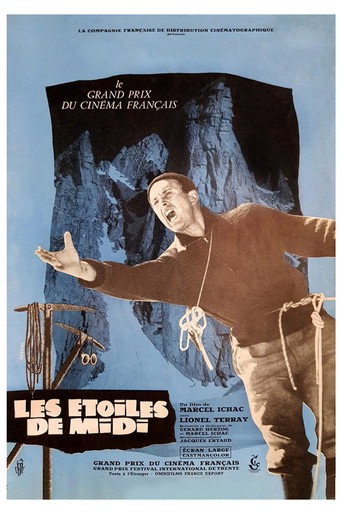
Stars at Noon
Les Etoiles de Midi is an engaging docudrama about some of the more spectacular exploits of French mountain climbers over the last several decades. In one re-enacted story, there is a wartime escape through the mountains, and in another, a daring rescue of a pair of climbers who had been missing. The actors themselves are adept at the sport of climbing, and they give the scenes an immediacy and real daring that brings the stories alive. A combination of their acrobatics and skill and the outstanding episodes in the history of French climbing creates a winning 78 minutes.
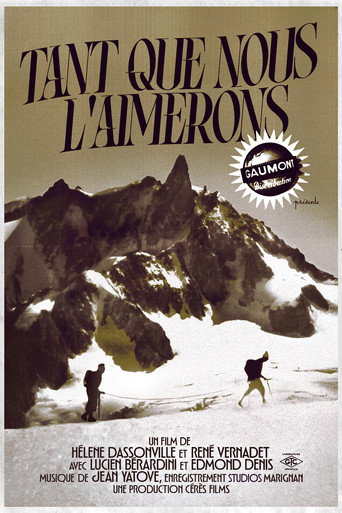
As Long As We Love Her
Lucien Berardini and Edmond Denis are two mountaineers who took part in the French expedition to Aconcagua (Andes Mountains) in 1954. Both suffered severe frostbite to their fingers and toes, and three years later, they set out to climb the Aiguille du Géant, a legendary route in the Mont Blanc massif. The camera closely follows the efforts of the roped party, an example of strength and self-sacrifice, until their victorious arrival at the summit.
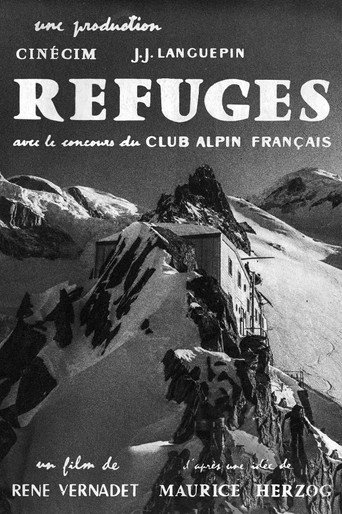
Refuges
Refuges
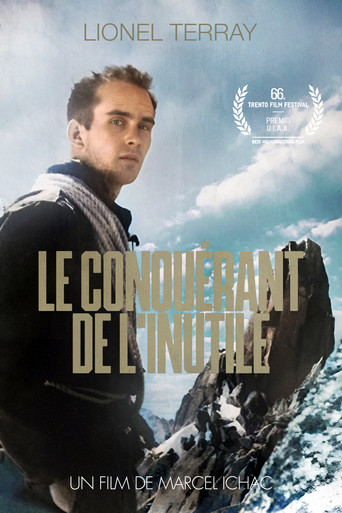
The Conqueror Of The Useless
Biography of ski instructor, mountain guide, mountaineer and filmmaker-lecturer Lionel Terray. Film-portrait of an emblematic figure of French mountaineering in the 1950s and 1960s, reconstructing the life, the great races and the expeditions of the "conqueror" of the most difficult walls and summits of Europe, the Himalayas, the Andes and North America. Marcel Ichac produced in 1966, the day after the Gerbier accident, this illustrated tribute by bringing together personal archive documents, unpublished animated sequences or extracts from expedition images as well as comments taken from the autobiographical texts of Lionel Terray " The Conquerors of the Useless" and "Battle for Jannu". This film, presented at the Cannes Film Festival, has won numerous awards at specialized film festivals, including the Trente Festival and the Banff Festival.
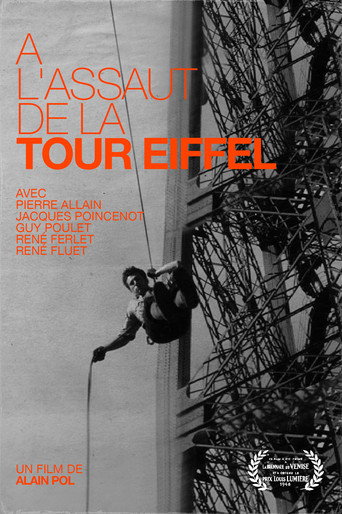
À l'Assaut de la Tour Eiffel
Four experienced mountaineers climb the three floors of the Eiffel Tower through the pillars of the building. A police officer, overwhelmed by the events, does not succeed in arresting the intrepid who reach the summit with agility under the stunned eyes of tourists. They then abseil and happily throw themselves into the Seine to celebrate the feat.
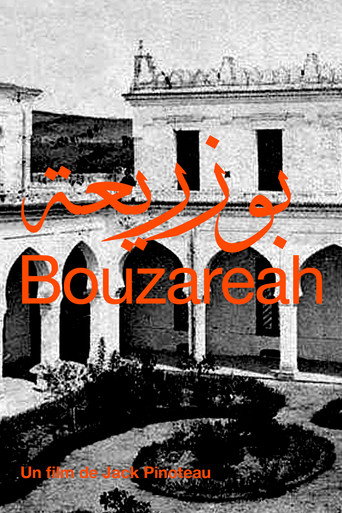
Bouzareah
Arriving aboard the liner “Ville d’Alger”, young French citizens go to Bouzareah to follow a one-year professional training course at the École Normale. After acquiring the basics of the Arabic language and culture, the future teachers are trained to teach the population the basics of modern agriculture, manual work and hygiene. A study trip concludes the training. The teachers are then sent to the regions of their choice, where they will put their knowledge at the service of the inhabitants.
Gallery