Pierre Perret Movies, TV Shows, and Filmography

Pierre Perret
Acting
Biography
Pierre Perret (born 9 July 1934 in Castelsarrasin, Tarn-et-Garonne) is a French singer and composer. Pierre Perret resides in the city of Nangis. He spent a long part of his childhood in the café which his parents owned, where he learned to work with jargon and slang. At the age of 14 he signed up to the conservatoire de musique de Toulouse and to a dramatic arts institute. But he wasn't admitted to the Conservatoire national supérieur de musique et de danse de Paris because he had some problems with military justice during his military service. In the meantime, he set up his first band of four musicians in his own name, with whom he played at events throughout the region. In 1957, he was snapped up by Eddie Barclay who signed him on. It was in the studio of Barclay where he met his future wife, Simone Mazaltarim. In 1958, Perret carried on touring round Parisian cabaret bars and crossed France and Africa as a part of the American group, The Platters. In November that year, a pleurisy forced him to take two years off in a sanatorium. A master of the subtleties of the French language and French slang (he even rewrote some of Jean de La Fontaine's fables), his songs are often cheeky (for example Le zizi (The willy), asking questions in a seemingly naive child's tone, but has written more serious political songs, such as La bête est revenue, La petite kurde, Vert de Colère or Lily. In 1995, he recorded in duet with Sophie Darel the French song Maître Pierre for the album C'était les Années Bleues. He participated in the committee for the simplification of the administrative language (COSLA). Source: Article "Pierre Perret" from Wikipedia in English, licensed under CC-BY-SA 3.0.
Filmography Movies
Acting

Pierre Perret From A to Z
"La Cage aux oiseaux", "Les Jolies Colonies de vacances", "Lily" or the famous "Zizi": for more than 60 years, Pierre Perret has enchanted people with his popular little fables. At 87 years old, he is the author of nearly 500 songs. How does he view them today? To answer this question, Pierre Perret receives the cameras at his home, in his garden, but also in his attic, where the author keeps his most precious treasures: all his writing books. For the first time, he agrees to open them and to retrace the highlights of his career, and for this he has chosen his own alphabet book. A for Love, C for Censorship, G for Grievances: twenty-six letters, twenty-six words to develop from A to Z the great subjects that are dear to his heart.

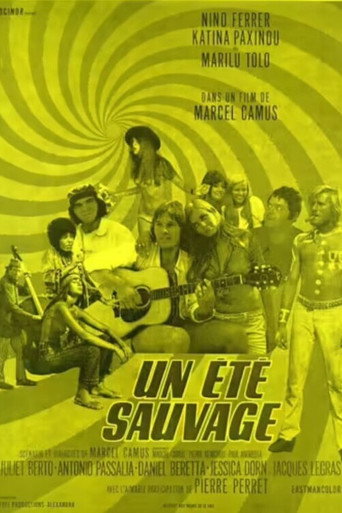
A Savage Summer
In Juan-les-Pins, Serge drops off a hitchhiker, Sylvie, who joins "Théo's gang", a group of students and workers, all young, all broke, improvising their vacations from day to day. Among them, Serge meets Helle, a discreet young girl with whom he quickly falls in love, but whom he can only win over once he's sorted out his many problems with the wrong people.
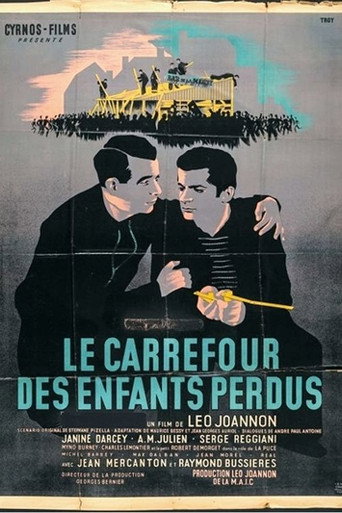
Children of Chaos
An officer, two of his comrades and a social worker want to create the "Carrefour", a place for lost children and teens to give them a chance not to fall by the wayside and spend most of their life in jail.
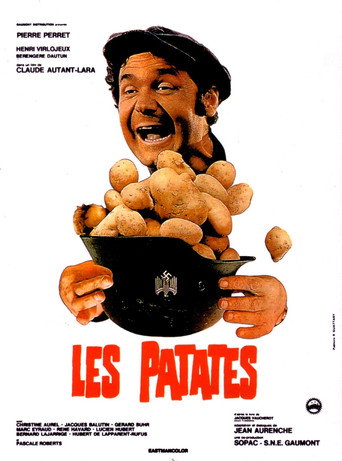
Potatoes
In a village in the Ardennes, during the German occupation, finding rations is becoming almost impossible. Clovis, an ordinary labourer, decides to cross the occupied zone to bring back enough potatoes to feed his family. His plan is a success but Clovis rapidly becomes obsessed with storing the precious tubers.
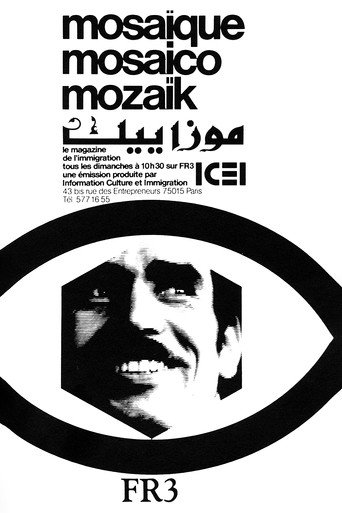
Mosaïque
Broadcast from 1977 to 1987 on FR3, every Sunday morning, for 1h30, Mosaïque is a variety show with a set where music groups from the countries of origin of immigration perform, and which broadcasts reports on these countries and on immigrants who live in France. When it was created, it aimed to promote the cultures of origin of immigrants, but also to make them better known to the rest of the population. However, the program was never financed by public television which considers that it was aimed at a specific audience and was therefore not part of a public service mission. It received financial support from the Ministry of Labor, through its subsidy to the National Office for the Cultural Promotion of Immigrants, ONPCI (later becoming Information Culture and Immigration, ICEI, in 1977, then Agency for the Development of Intercultural Relations , ADRI). , in 1982).
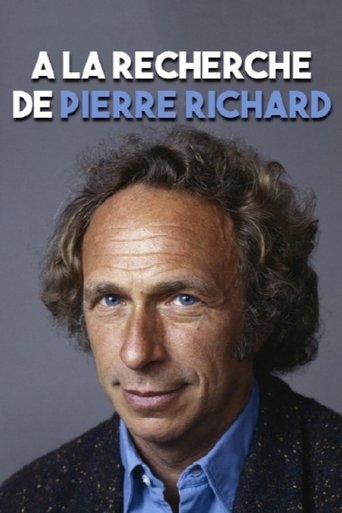
À la recherche de... Pierre Richard
Follow in the footsteps of burlesque actor Pierre Richard, a key figure in French cinema in the 1970s and 1980s.
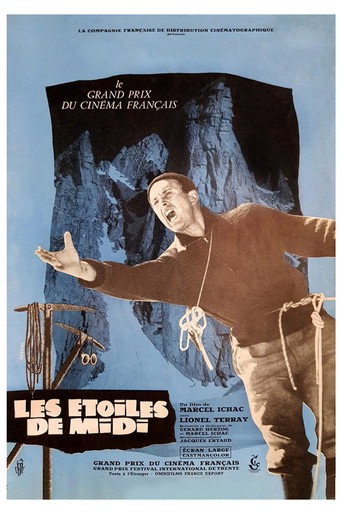
Stars at Noon
Les Etoiles de Midi is an engaging docudrama about some of the more spectacular exploits of French mountain climbers over the last several decades. In one re-enacted story, there is a wartime escape through the mountains, and in another, a daring rescue of a pair of climbers who had been missing. The actors themselves are adept at the sport of climbing, and they give the scenes an immediacy and real daring that brings the stories alive. A combination of their acrobatics and skill and the outstanding episodes in the history of French climbing creates a winning 78 minutes.
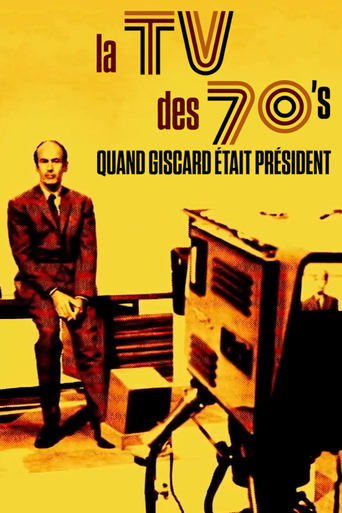
La TV des 70's : Quand Giscard était président
In May 1974, Valéry Giscard d'Estaing became President of the Republic and wanted to bring about a new era of modernity. One of his first decisions was to break up the ORTF with the creation of three new television channels: TF1, Antenne 2 and FR3. Three new public channels but autonomous and competing. It is a race for the audience which is engaged then, and from now on the channels will make the war! This competition will give birth to a real golden age for television programs, with variety shows in the forefront. The stars of the song are going to invade the living rooms of the French for their biggest pleasure. This unedited documentary tells the story of the metamorphosis of this television of the early 1970s, between freedom of tone, scandals, political intrigues and programs that have become mythical.

Pierre Perret - Casino de Paris 2003
Production
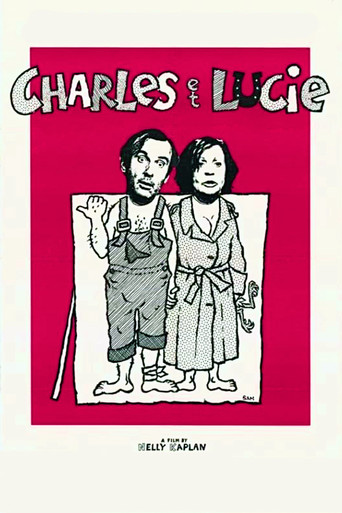
Charles and Lucie
An old and poor couple, Charles and Lucie, scrape by working as a concierge and an untalented antique dealer, respectively. But one day, their dreary daily routine is disrupted by the surprising news that they have inherited a luxurious house in the South of France.
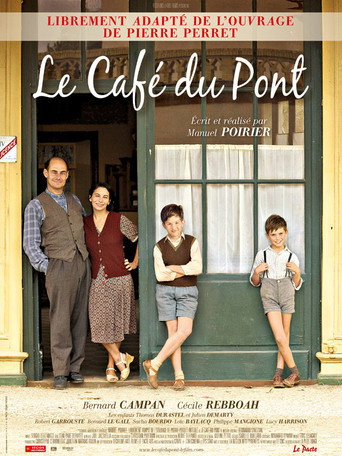
Le Café du pont
During the war, on the banks of the Garonne, there is a café, the Café du Pont, where workers and sailors gather. Ten-year-old Pierrot's parents dedicate all their time and energy to the place. The German Occupation imposes restrictions and fear, but Pierrot knows that his father discreetly carries out brave actions and that his mother, both strong and fragile, knows how to settle any conflict - in her own way.
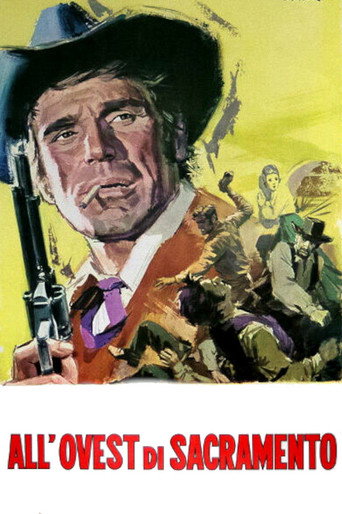
Judge Roy Bean
In a small western town the ineffable judge Roy Bean metes out justice in his own special way. A cargo of gold is ambushed by the outlaw Black Bird who fails in the attempt and then rides into town.
Potatoes
In a village in the Ardennes, during the German occupation, finding rations is becoming almost impossible. Clovis, an ordinary labourer, decides to cross the occupied zone to bring back enough potatoes to feed his family. His plan is a success but Clovis rapidly becomes obsessed with storing the precious tubers.
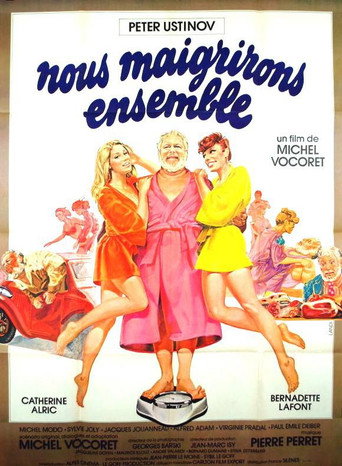
We'll Grow Thin Together
Victor is a screenwriter whose last work about the Marechal Pétain is refused by his producer. To add insult to injury, he tells Victor he is paunchy. The unfortunate man becomes obsessed by his weight. He goes out of his way to lose pounds, abetted by his wife, Corinne, who puts him on a reducing diet. He must also go to a health center where he takes exercise. Nothing really works. And one day, in a brewery, he cannot withstand his diet anymore and he has a gastronomic meal. Desperate, he tries his luck at a weight watchers reunion.
Gallery