Pierre Huyghe Movies, TV Shows, and Filmography
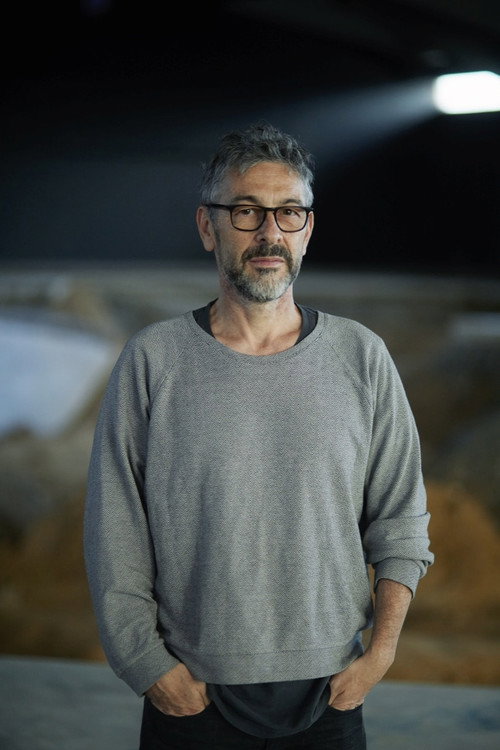
Pierre Huyghe
Directing
Biography
Pierre Huyghe (born 11 September 1962) is a French contemporary artist, who works in a variety of media from films and sculptures to public interventions and living systems. He lives and works in Santiago de Chile.
Filmography Movies
Production
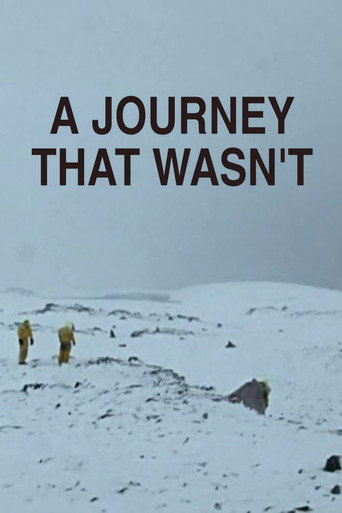
A Journey That Wasn't
An expedition leaves Ushuaia for the Antarctic circle. Pierre Huyghe, along with six other artists, is brought aboard Jean-Louis Etienne's boat in search of an uncharted island inhabited by a strange creature. Imprisoned by ice floats, they come across an albino penguin that they capture with their recording station. Six months later, on the Wollman Ice Rink in New York's Central Park -- another sea of ice -- Joshua Cody conducts his orchestral score inspired by the expedition's topographical records.
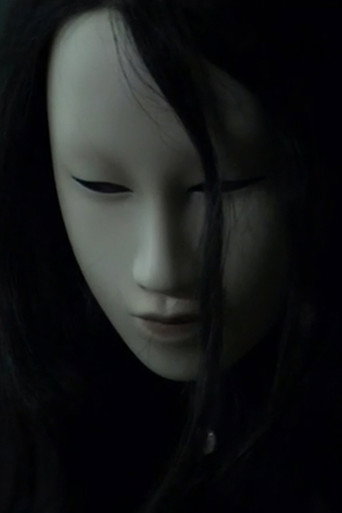
Untitled (Human Mask)
The ‘Human Mask’ film is inspired by a real situation in Japan, in which a monkey – wearing the mask of a young woman – has been trained to work as a waitress. The film opens with footage of the deserted site of Fukushima in 2011, the camera functioning as a drone scaling the wreckage. This is followed by scenes of the monkey alone in her habitat, silhouetted against the empty, dark restaurant. In this dystopian setting, an animal acts out the human condition, trapped, endlessly repeating her unconscious role.
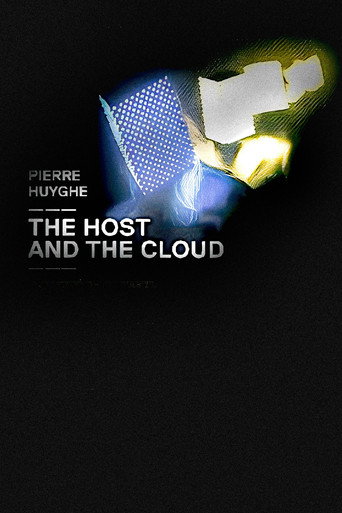
The Host and the Cloud
In a disused ethnographic museum located in a former human and animal zoo, an experiment unfolds over the course of one year.
The Host and the Cloud
In a disused ethnographic museum located in a former human and animal zoo, an experiment unfolds over the course of one year.
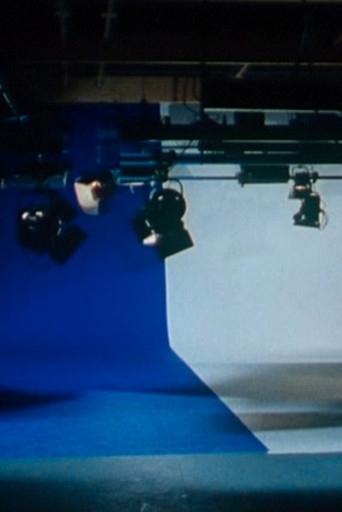
Snow White Lucie
Pierre Huyghe's work questions how diverse languages can apply to the same reality. In his short film Blanche-Neige Lucie (Snow White Lucie), Huyghe tells the story of Lucie Dolene who sang in the French version of Disney's Snow White and the Seven Dwarfs. The film shows an aged Lucie humming the famous song while an interview with her runs as subtitles to the images. This mirroring of dubbing and translation serves as the vehicle for Huyghe's questioning of multiple identities and the ideal of translating a meaning to create a universal image.
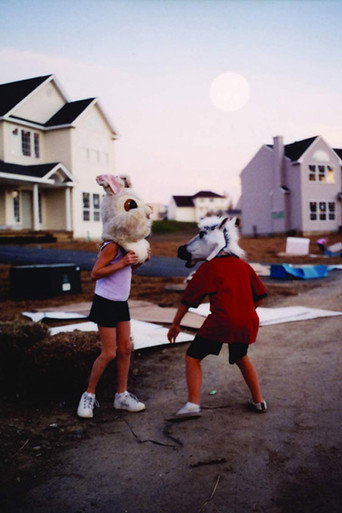
Streamside Day
Streamside Day, explores the formative role of ideological and semiotic systems in establishing social rituals and traditions. Huyghe's exhibition includes five murals, concealed behind five supplementary walls, which are revealed when the walls begin to slowly move through the gallery to configure a pavilion in which a short fiction film is projected. When the film ends, the walls retract to their original positions along the perimeter of the space, restoring the gallery to its pristine condition. After opening with scenes from an Edenic landscape, Huyghe's film traces the formation of a burgeoning community hypothetically located in the Hudson Valley. The first of two sections limns a mythic kernel that is then instantiated in scenes from a typical inaugural celebration devised to forge communal identity.
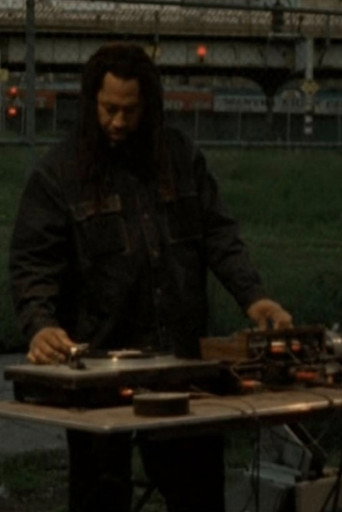
Block Party
The image shows two faces of the story of hip-hop music, which submerged in the seventies in the New York outskirts of The Bronx. Two vinyl records are turning on a turntable. On the one hand the soundtrack is heard of three decades ago, on the other the voices of musicians today. The turntable is mounted at the foot of a block in the Bronx. It is the end of a Block Party, a ghetto party centring on hip-hop. In the same image those artists are brought together who stood at the cradle of this musical genre.
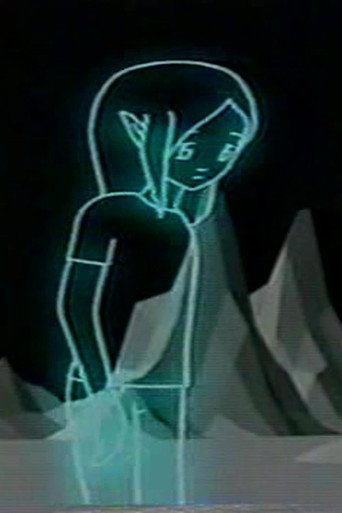
One Million Kingdoms
In Huyghe’s animation, an adolescent girl wanders through a shifting lunar topography and, speaking in a digitally synthesized form of astronaut Neil Armstrong’s voice, delivers a narration blending the actual transmissions from the Apollo 11 mission with excerpts from Jules Verne’s 1864 novel Journey to the Center of the Earth.
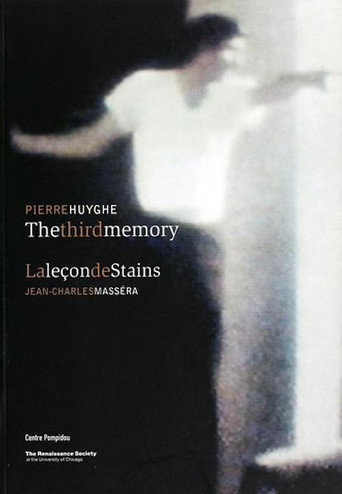
The Third Memory
Using time, memory, and the texture of everyday experience as his mediums, Pierre Huyghe conflates the traditional dichotomy between art and life. Working in an array of cultural formats—from billboards and television broadcasts to community celebrations and museum exhibitions—he reformulates their codes and deploys them as catalysts for creating new experiential possibilities. A mode of perception that lies in the interstices between reality and its representation is the subject of his two-channel video, The Third Memory (2000), which reenacts the 1972 hold-up of a Brooklyn bank immortalized in Sidney Lumet's acclaimed film Dog Day Afternoon (1975). Almost 30 years later, Huyghe provides a platform for the heist's charismatic mastermind, John Wojtowicz, to relate his version of that infamous day in a reconstructed set of the bank.
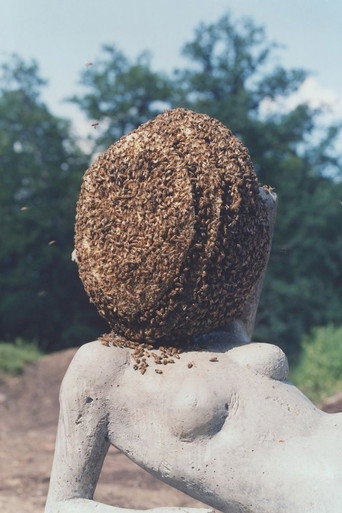
A Way in Untilled
For dOCUMENTA(13) (2012) Pierre Huyghe created Untilled, a compost site within a baroque garden, a non hierarchical association that included a sculpture of a reclining nude with a head obscured by a swarming beehive, aphrodisiac and psychotropic plants, a dog with a pink leg, an uprooted oak tree from Joseph Beuys’ 7,000 Oaks among other elements.
Gallery