Pierre Braunberger Movies, TV Shows, and Filmography
Pierre Braunberger
Production
Biography
Pierre Braunberger (29 July 1905, Paris – 16 November 1990, Aubervilliers) was a French producer, executive producer, and actor. Born into a family of physicians, Braunberger at the age of seven was already determined not have the same life as his father, and not to take up medicine as a career. He saw a screening of Fantômas at the Gaumont Théâtre, the first cinema to open in Paris, and decided to work in the cinema. After the First World War, at the age of 15, he produced and directed his first film: Frankfurt in Germany. He left for successive adventures in Berlin, London at Brocklis establishments, where he worked. In 1923, he left for New York, where he worked for a few weeks at Fox Film Corporation, and became a director of production along with Ferdinand H. Adam where he also worked on films with Frank Merrill. In the course of his films in Los Angeles, he came to know Irving Thalberg who employed him at Metro-Goldwyn-Mayer as one of his assistants. He stayed there for eighteen months, and established contacts with one of the greatest directors of the time. Wanting to direct and produce in France, he returned to Paris and got to know Jean Renoir, with whom he worked on Avec qui il va tourner, The Whirlpool of Fate, Nana and Tire-au-flanc. In 1929, Braunberger created Productions Pierre Braunberger and Néofilms for the production of his first French-speaking film (La route est belle by Robert Florey). In 1930, Braunberger became head of the Pantheon Cinema and continued there for sixty years. He renovated the lobby, created 450 seats, and installed Western Electric projectors and sound equipment. Although subtitles were yet to be invented, he was the first to show foreign films in their original versions. One year later, he met with Roger Richebé to produce under the name of Établissements Braunberger-Richebé. A few films were produced, such as le Blanc et le noir by Robert Florey, Isn't Life a Bitch? by Jean Renoir, and Chocolatière et Fanny by Marc Allégret. In 1933, still only 28, he decided to continue alone, and formed studios de Billancourt, which became Paris-Studio-Cinéma. During World War two he was not able to produce a film because he was Jewish. At the end of the Second World War, Braunberger transformed a local Gestapo office into the Cinema Studio "Studio Lhmond", which he used to discover new talents of the "nouvelle vague", including Jean-Pierre Melville, Jean-Luc Godard and Alain Resnais. In 1966 he was the head of the jury at the 16th Berlin International Film Festival. Braunberger had a close relationship with philosopher Gilles Deleuze. In the late 1970s, Braunberger produced two films for Polish filmmaker Walerian Borowczyk. Braunberger died in 1990. Source: Article "Pierre Braunberger" from Wikipedia in English, licensed under CC-BY-SA 3.0.
Filmography Movies
Acting
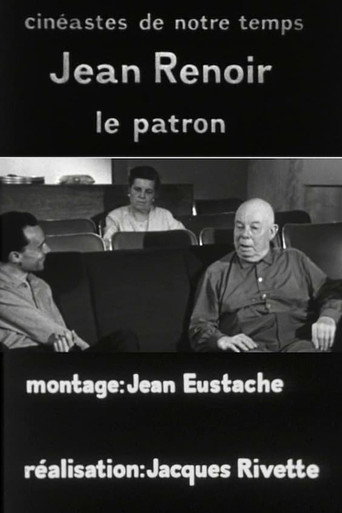
Jean Renoir, le patron, 3e partie: La règle et l'exception
In the third part of a Cinéastes triptych on Jean Renoir, the director sits alone in a cinema analyzing scenes from La Marseillaise and The Rules of the Game, and discussing his editing and storytelling techniques.
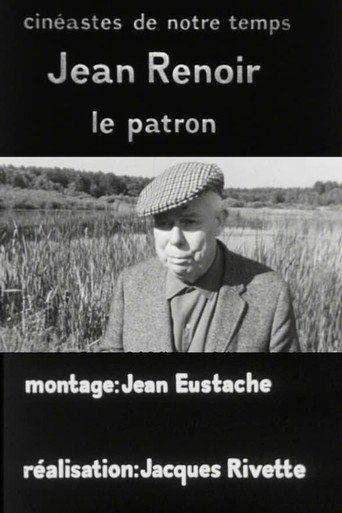
Jean Renoir, le patron, 1re partie: La recherche du relatif
The first of three documentaries by Rivette on Jean Renoir.
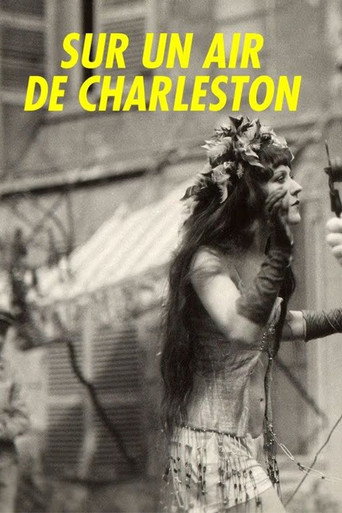
Charleston Parade
Shot in three days, this surreal, erotic silent short shows a native white girl teaching a futuristic African airman the Charleston dance.
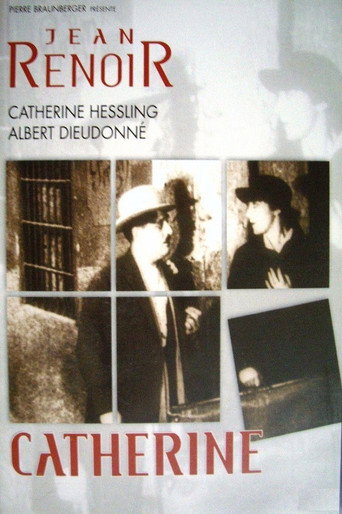
Backbiters
About the conflict between social classes through the life of the unhappy Catherine Ferrand, an orphan girl, who is a victim of the jealousy of women and the greed of men.
Production
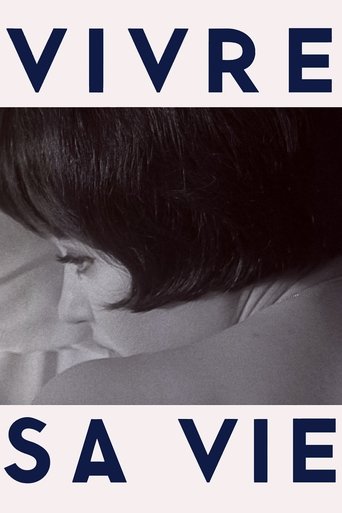
Vivre Sa Vie
Twelve episodic tales in the life of a Parisian woman and her slow descent into prostitution.
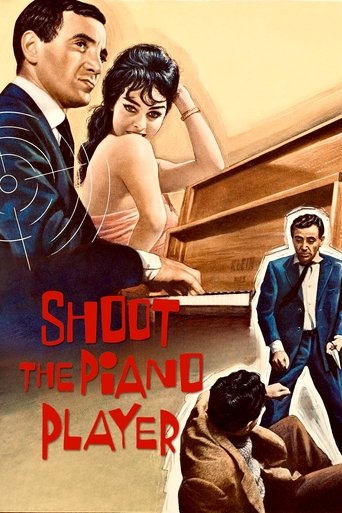
Shoot the Piano Player
Charlie is a former classical pianist who has changed his name and now plays jazz in a grimy Paris bar. When Charlie's brothers, Richard and Chico, surface and ask for Charlie's help while on the run from gangsters they have scammed, he aids their escape. Soon Charlie and Lena, a waitress at the same bar, face trouble when the gangsters arrive, looking for his brothers.
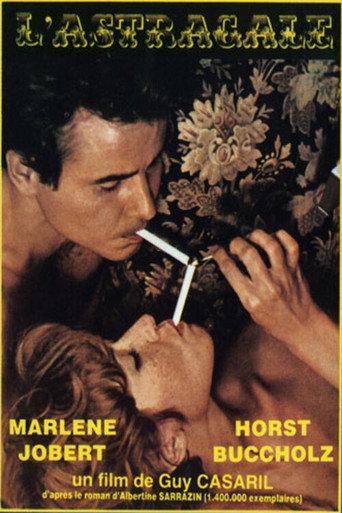
Ankle Bone
While escaping from prison to be with her lesbian friend, a 19-year-old girl breaks her ankle and is picked up by an ex-con, with whom she begins a passionate affair. She finally turns to prostitution and robbery to support herself.
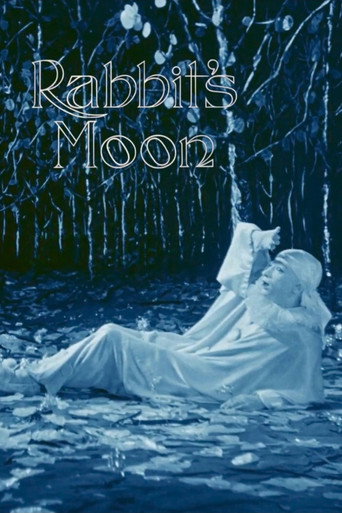
Rabbit's Moon
A Japanese fairy tale meets commedia dell'Arte. All in white, the naïf Pierrot lies in a wood. Doo-wop music plays as he rises, stares about, and reaches for the moon. Although music abounds and the children of the wood are there at play, Pierrot is melancholy and alone. Harlequin appears, brimming with confidence and energy. He conjures the lovely Colombina. Pierrot is dazzled. But can the course of true love run smooth?
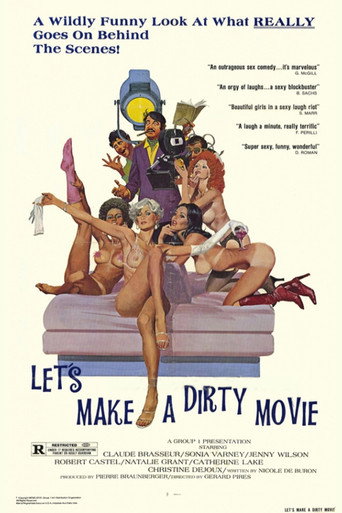
Let's Make a Dirty Movie
A bumbling film crew attempts to make a porno movie.
Paris, A Winter's Day
Fleeting images of Paris in winter, the reflections of some Parisians on their city.
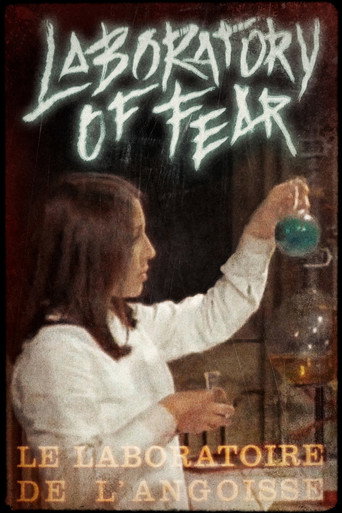
The Laboratory of Fear
All the researchers of the IMPS laboratory are males - with one exception : Mademoiselle Clara, Antoine, the cleaner, desperately yearns for. Night after night, when Clara is alone, going on with her experiments, the young man awkwardly manoeuvres with a view to declaring his flame. But the cold scientist remains unconcerned. In his trouble, Antoine regularly drops and breaks phials and other test tubes full of dangerous chemical products. He doesn't care when his skin gets into contact with acid. His heart burns too much for him to be able to feel the burning of his skin. And if he can't GIVE his hand to Clara will he really mind to... LOSE it ?
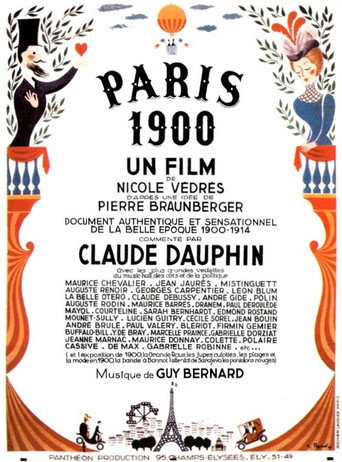
Paris 1900
Nicole Védrès' chronicle of Paris from 1900 to 1914 is brought to life through the use of original material, all authentic, secured from more then 700 films belonging to public and private collections. A few of the celebrities of the time shown are Enrico Caruso, Sarah Bernhardt, and Maurice Chevalier.
Impressions de New York
(auto-translation: LA CINÉMATHÈQUE FRANÇAISE ) Using a subjective camera, set to music by Bela Bartók and text by Arthur Rimbaud, François Reichenbach offers a highly singular vision of the American megalopolis. (MIFF:) These are no ordinary travel notes brought back from America by filmmakers; they are not enthusiastic records of skyscrapers and crowds. but disturbing aspects of a hallucinatory world of concrete and metal, glaring light and haunting shadow. The film is notable for its dramatic use of colour, and music from Bela Bartok's ballet "The Miraculous Mandarin". (a-t:) F.B. confides in his memoir 'Le monde a encore un visage' (1981): "When I went to New York for the first time, I'd brought along a Bell & Howell 16mm camera whose instructions I hadn't read. I didn't know how to use the film, and inadvertently loaded some rolls that had already been printed, which resulted in these strange superimposed images. A well-known process that I had reinvented by accident".
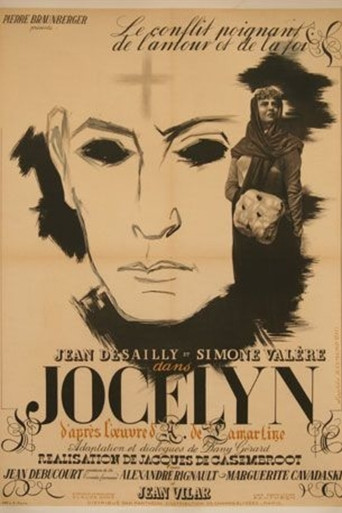
Jocelyn
In 1786, Jocelyn entered the Seminary. He leaves his share of the inheritance to his younger sister Julie. In 1793, on the point of being ordained a priest, the Revolution forced him to take refuge in the Alps. There he meets Laurence, first disguised as a young boy. A great friendship binds them which turns into love when Jocelyn discovers the girl's true identity. Yet faithful to the promise he made to the Superior of his Seminary, Jocelyn will not abandon his faith.