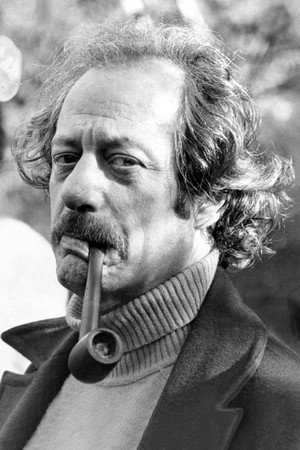
Philippe Arthuys Movies, TV Shows, and Filmography
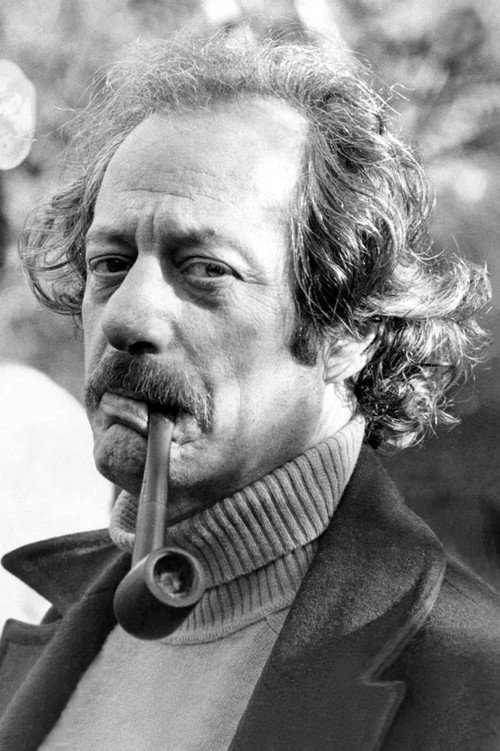
Philippe Arthuys
Sound
Biography
Philippe Arthuys is a French musician and director born in Paris on November 22, 1928 and died on January 6, 2010 in Toulouse. He is the son of the politician and resistance fighter Jacques Arthuys, and father of the actress Sophie Arthuys, the director Bertrand Arthuys and the composer Christophe Arthuys. It was within the GRMC, with Pierre Schaeffer and Pierre Henry, that Philippe Arthuys became familiar with musique concrete. The basic principle of musique concrete consists of working the sound material directly on the recording medium, from diligent listening to the recorded elements, in accordance with the idea, which Schaeffer formulated in 1948, "that there exists another path than notation to access music.” At this period, musique concrete seems essentially intended to renew dramatic music. Arthuys' temperament adapts well to this tendency, he especially seeks the relationship of music with poetry or image, in works illustrating texts by Kipling (The Crab Who Played With The Sea, 1955) or 'Apollinaire (Le Voyeur, for a film by Henri Gruel, 1956). The liberation of spirit and technique thus found influenced the film scores he composed for Jacques Rivette (Paris nous belongs, 1961) and Jean-Luc Godard (Les Carabiniers, 1963). The collaboration between Maurice Béjart and Pierre Henry intensified, and Philippe Arthuys specialized in composing film scores, which exasperated Pierre Schaeffer. Noting that they devoted themselves more to composition than to research, he ended up forcing them to resign from the Group. It will be the end of the avant-garde of musique concrete, and the birth of GRM that we still know today. Philippe Arthuys defends the idea that musical treatment must be understood beyond its function of reinforcing the story. According to him, the musical must remain “outside the film”: “The new procedures claim a higher degree of abstraction, a greater complexity. In reaction, in struggle with the images, its action aiming to exhibit, even to determine the filmic structure, the musical enters into its relationship of heterogeneity with the visual discourse. He then wrote numerous film scores, among others: Les Camisards (1970) and Rude Journee Pour La Reine (1973) by René Allio, Le Vent Des Aurès (1966), Chronique Des Années De Draise (Palme d'or at the Festival from Cannes in 1975), Wind of Sand (1982) and the Last Image (1986) by Mohammed Lakhdar-Hamina. Arthuys will also compose music for theater, circus and dance. In particular, he wrote the music for Voilà L'Homme (1956), a ballet by Maurice Béjart based on an argument by Jacques Prévert. Alongside his career as a composer, he is moving towards directing. He worked as an assistant director on Vanina Vanini by Roberto Rossellini then directed numerous films, notably directing Françoise Prévost in La Cage De Verre (co-director: Jean-Louis Levi-Alvarès, 1965), about the Jewish holocaust; Jean Vilar in Des Christs Par Milliers (1969), on the violence of the world; Jean Négroni in Noces De Sève (1979), anti-nuclear parable.
Filmography Movies
Acting
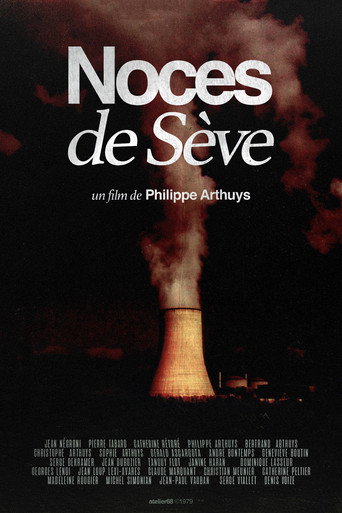
Noces de Sève
An anti-nuclear parable, the film tells the story of villagers who each year traditionally hold "sap weddings", thus paying homage to the forest. But a nuclear power plant must be built there. The film was presented in competition at the Thonon-les-Bains festival in 1978.
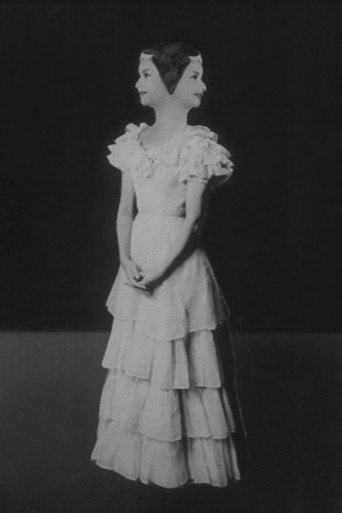
La prima donna
A story of "La Pasta", a renowned prima donna, and her extraordinary rival.
Production
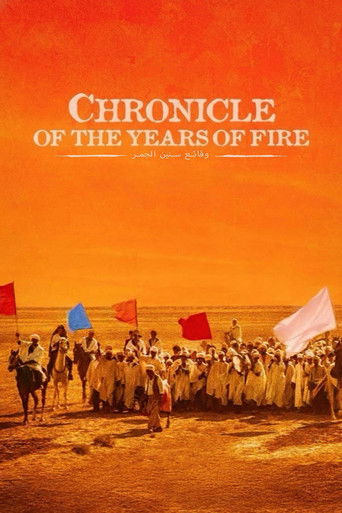
Chronicle of the Years of Fire
A meticulous chronicle of the evolution of the Algerian national movement from 1939 until the outbreak of the revolution on November 1, 1954, the film unequivocally demonstrates that the "Algerian War" is not an accident of history, but a slow process of suffering and warlike revolts, uninterrupted, from the start of colonization in 1830, until this "Red All Saints' Day" of November 1, 1954. At its center, Ahmed gradually awakens to political awareness against colonization, under the gaze of his son, a symbol of the new Algeria, and that of Miloud, half-mad haranguer, half-prophet, incarnation of Popular memory of the revolt, the liberation of Algeria and its people.
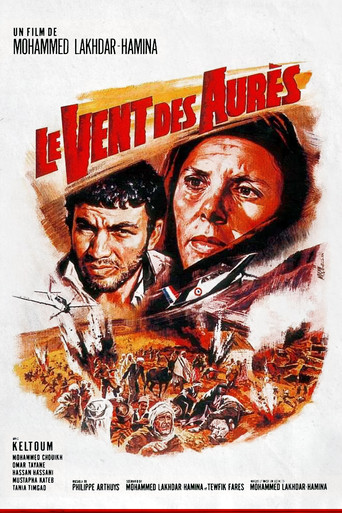
The Winds of the Aures
The transformations of the daily life of the Algerian people during the destructive French occupation, then during the war of liberation. While military repression is in full swing, a peasant woman finds herself alone in her mountain home when her only son is kidnapped by French soldiers shortly after her husband's death during a raid. One day, seeing a dead chicken, which she considers a bad omen, she decides to leave home and embarks on a painful journey through the mountains. Accompanied by a couple of chickens, she moves from one detention camp to another in a desperate search for her missing son. The film is inspired by the events experienced by the director's family.
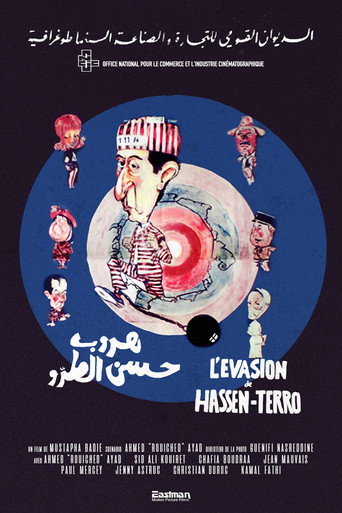
Hassan Terro's Escape
In 1957, the Battle of Algiers intensifies. Hassan, a peaceful resident of the Casbah, is mistakenly identified as a dangerous "terrorist leader," earning him the nickname "Hassan Terro." He is arrested, but the French occupation army secretly organizes his escape in the hope of tracking down the leaders of the resistance. In turn, the Algerian liberation army exploits Hassan's naivety to thwart the French military command and disperse its forces.
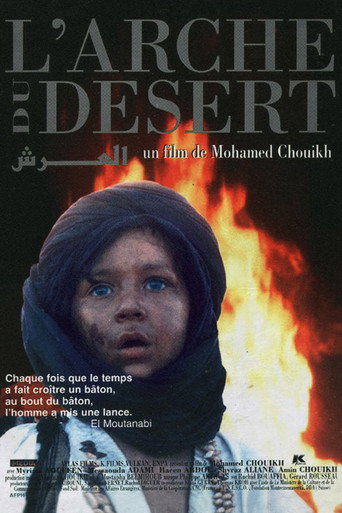
The Desert Ark
The Desert Ark (L'Arche du Desert), a variation on Romeo and Juliet set in the Algerian desert. A young couple must face inevitable conflict when their rival families discover their secret love. Taking refuge in a cave, they listen to the sounds of a senseless campaign of violence and murder, which is the culmination of the extremism that has long divided their two communities. Nominated for the Golden Leopard at the 1997 Locarno Film Festival.
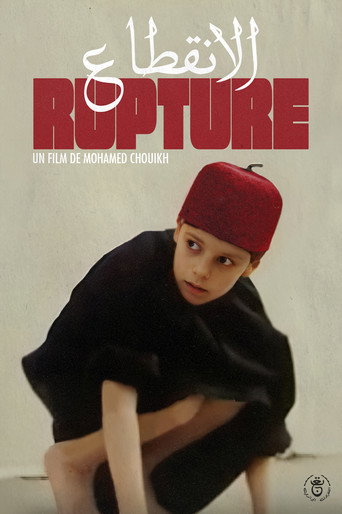
Breakdown
"Rupture is a look at a complex and little-known period in the recent history of Algeria, that of the thirties, a time when a political conscience was beginning to assert itself. I wanted to understand how and by what miracle, despite the small individual and collective revolts that had failed in the past, the unity of the Algerian people had been forged around the reconquest of independence. The main figures who worked, each in their own way, for this idea, are men who have always lived in the shadows and forgotten. And that's how I tried through this film to pay tribute to all those who gave up everything to dedicate themselves to a cause they considered just". Mohamed Chouikh
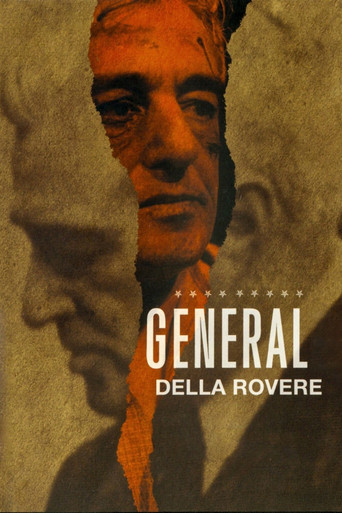
General Della Rovere
The Gestapo forces con man Victorio Bardone to impersonate a dead partisan general in order to extract information from his fellow inmates.
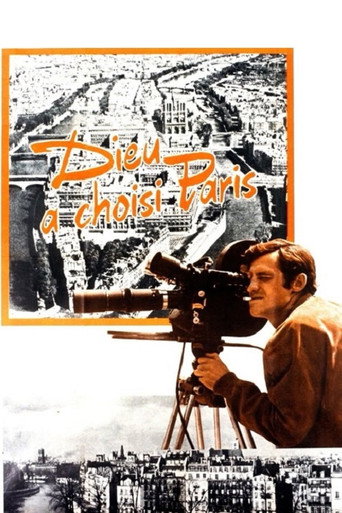
God Chose Paris
An interesting mixture of filmed scenes with Belmondo and archival footage regarding cultural aspects of all kind around Paris, starting at the end of the 19th century and ending in the mid-1960's. Jean-Paul Belmondo leads us through the movie starting as a young photographer around 1900, a reporter in both world-wars and doing fictional interviews with lots of celebrities.
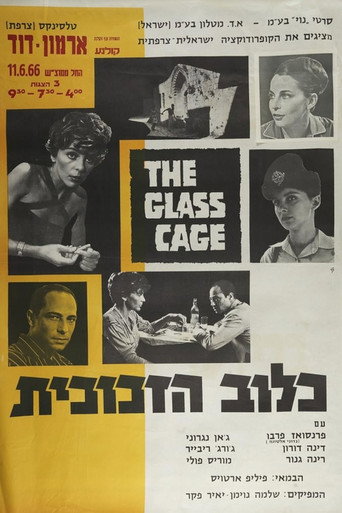
The Glass Cage
A study of conscience set against the trial of Eichmann in Israel.
The Glass Cage
A study of conscience set against the trial of Eichmann in Israel.
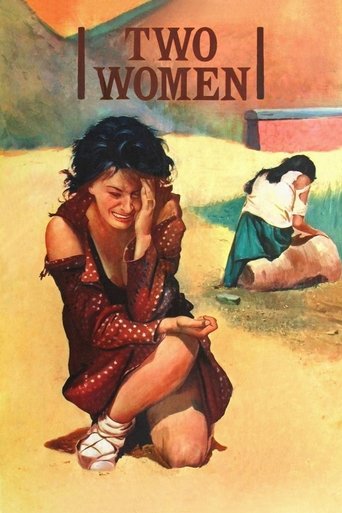
Two Women
A young widow flees from Rome during WWII and takes her lonely twelve-year-old-daughter to her rural hometown but the horrors of war soon catch up with them.
Gallery