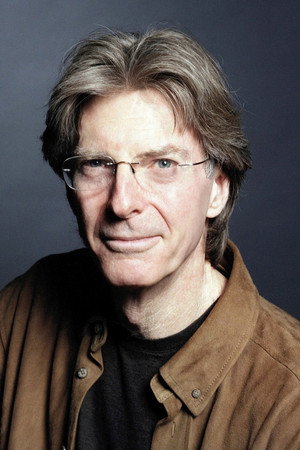
Phil Lesh Movies, TV Shows, and Filmography
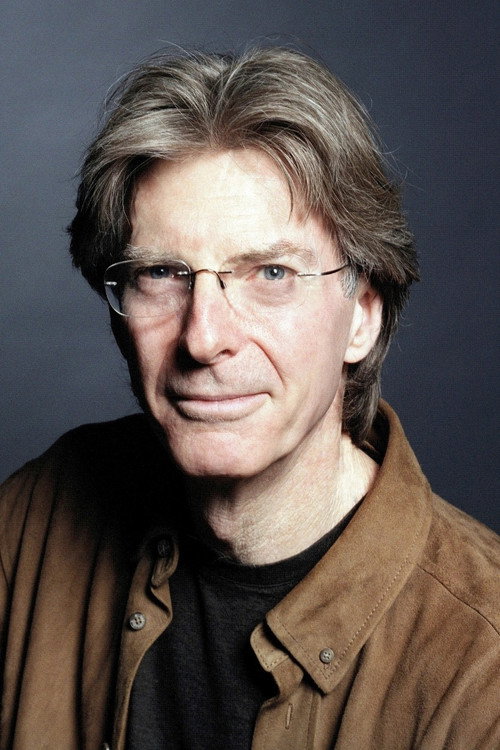
Phil Lesh
Acting
Biography
Philip Chapman Lesh (born March 15, 1940) is an American musician and a founding member of the Grateful Dead, with whom he played bass guitar throughout their 30-year career. After the band's disbanding in 1995, Lesh continued the tradition of Grateful Dead family music with side project Phil Lesh and Friends, which paid homage to the Dead's music by playing their originals, common covers, and the songs of the members of his band. Lesh operated a music venue called Terrapin Crossroads. He scaled back his touring regimen in 2014 but continues to perform with Phil Lesh & Friends at select venues. From 2009 to 2014, he performed in Furthur alongside former Grateful Dead bandmate Bob Weir. Lesh was born in Berkeley, California, United States, and started out as a violin player. While enrolled at Berkeley High School he switched to trumpet and participated in all of the school's music-related extracurricular activities. Studying the instrument under Bob Hansen, conductor of the symphonic Golden Gate Park Band, he developed a keen interest in avant-garde classical music and free jazz. After attending San Francisco State University for a semester, Lesh was unable to secure a favorable position in the school's band or orchestra and determined that he was not ready to pursue a higher education. Upon dropping out, he successfully auditioned for the renowned Sixth Army Band (then stationed at the Presidio of San Francisco) with the assistance of Hansen, but was ultimately determined to be unfit for military service. Shortly thereafter, he enrolled at the College of San Mateo, where he wrote charts for the community college's well-regarded big band and ascended to the first trumpet chair. (A snippet of tape of Lesh on trumpet at CSM can be heard on "Born Cross-Eyed" from the Grateful Dead's 1968 release Anthem of the Sun.) After transferring with sophomore standing to the University of California, Berkeley in 1961, he befriended future Grateful Dead keyboardist Tom Constanten before dropping out again after less than a semester. At the behest of Constanten, he studied under the Italian modernist Luciano Berio in a graduate-level course at Mills College in the spring of 1962; their classmates included Steve Reich and Stanford University cross-registrant John Chowning. While volunteering for KPFA as a recording engineer during this period, he met bluegrass banjo player Jerry Garcia. Despite seemingly opposite musical interests, they soon formed a friendship. Following a brief period as a Post Office Department employee and keno marker in Las Vegas (initially rooming with Constanten, who soon departed to study under Berio and other members of the Darmstadt School in Europe); a second stint with the Post Office in San Francisco; and a collaboration with the likes of Reich, Jon Gibson and Constanten upon the latter's return from Europe under the auspices of the San Francisco Mime Troupe, Lesh was talked into becoming the bassist for Garcia's new rock band (then known as The Warlocks) in the fall of 1964. This was a peculiar turn of events, as Lesh had never before played bass. According to Lesh, the first song he rehearsed with the band was "I Know You Rider". He joined them for their third or fourth gig (memories vary) and stayed until the end. ... Source: Article "Phil Lesh" from Wikipedia in English, licensed under CC-BY-SA 3.0.
Filmography Movies
Acting
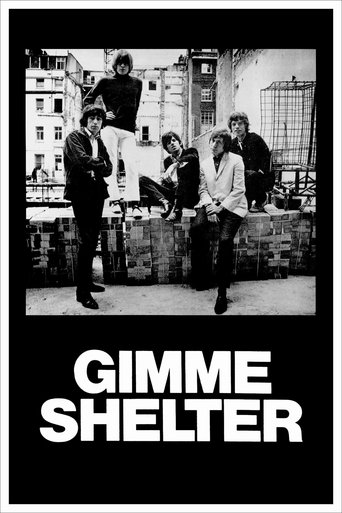
Gimme Shelter
A detailed chronicle of the famous 1969 tour of the United States by the British rock band The Rolling Stones, which culminated with the disastrous and tragic concert held on December 6 at the Altamont Speedway Free Festival, an event of historical significance, as it marked the end of an era: the generation of peace and love suddenly became the generation of disillusionment.
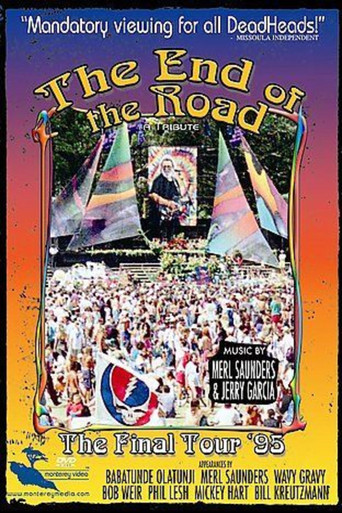
The End of the Road
This documentary explores the Deadhead phenomenon. For thirty years, Jerry Garcia played guitar and sang for the Grateful Dead, and by doing so, inspired a modern cultural phenomenon: the legions of nomadic fans that made a communal way of life out of following Jerry and the Dead, the Deadheads. The End of the Road began shooting three months prior to Garcia's death in 1995, on the road with the wandering family of Deadheads- on what would be the final tour with Jerry and the Grateful Dead. Featuring a soundtrack by Merl Saunders and Jerry Garcia, the film celebrates this social, political and cultural movement in its twilight.
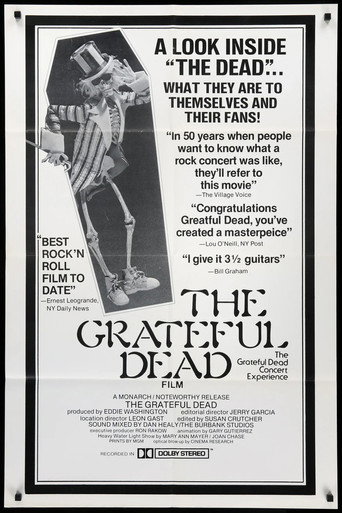
The Grateful Dead Movie
The Grateful Dead performs live at Winterland in San Francisco in October 1974.
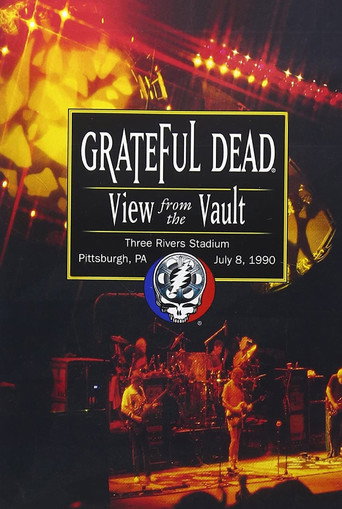
Grateful Dead: View from the Vault
View from the Vault, Volume One, sometimes known simply as View from the Vault, is the first release in a series of DVDs and companion soundtracks by the Grateful Dead known as "View from the Vault". The audio is taken from the soundboard and the video from the video screens at the concerts. The first volume was recorded and filmed at Three Rivers Stadium in Pittsburgh on July 8, 1990 with bonus material recorded two days earlier at Cardinal Stadium, Louisville. The set was certified Gold by the RIAA on February 2, 2001.
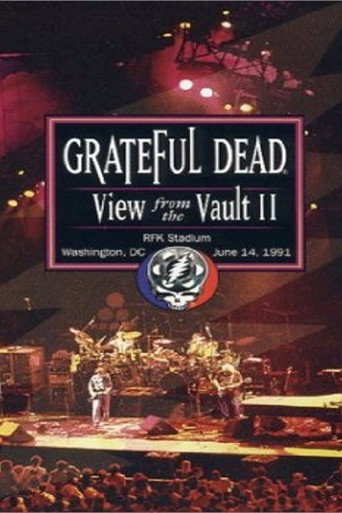
Grateful Dead: View from the Vault II
Volume two in the Grateful Dead's View From the Vault series of mixed media releases comes from a pair of Washington, D.C., R.F.K. Stadium shows from the summers of 1990 and 1991, respectively. The feature presentation is both sets from June 14, 1991, with copious filler or "bonus" material from July 12, 1990. As well, the DVD includes a previously unissued music video for "Liberty" -- one of the final collaborative efforts between lyricist Robert Hunter and guitarist and vocalist Jerry Garcia.
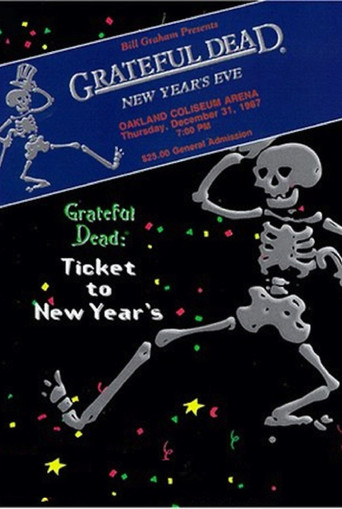
Grateful Dead: Ticket to New Year's Eve Concert
Grateful Dead's New Year's Eve concert 12/31/87 at the Oakland Coliseum Arena.
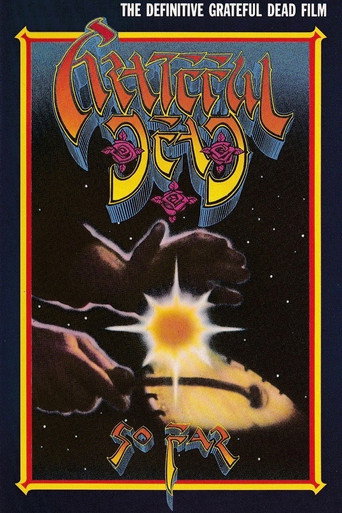
Grateful Dead: So Far
So Far is a music documentary video by the Grateful Dead. Directed by Jerry Garcia and Len Dell'Amico, it is intended to give a subjective view of the Grateful Dead experience. The soundtrack includes Dead song performances, largely from 1985. The visuals combine scenes of the band playing the songs, other Dead related material, computer animation, and found footage that has been altered and edited in various ways. So Far was released on VHS videotape and on laserdisc in 1987, and has a running time of 55 minutes.
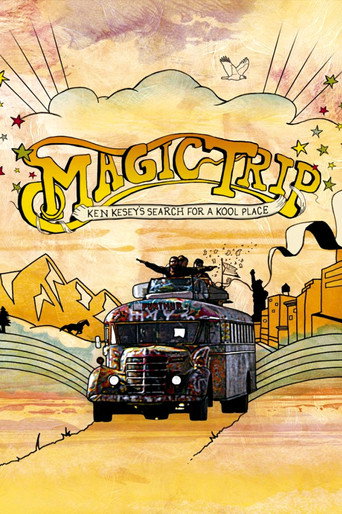
Magic Trip: Ken Kesey's Search for a Kool Place
A freewheeling portrait of Ken Kesey and the Merry Prankster’s fabled road trip across America in the legendary Magic Bus. In 1964, Ken Kesey, the famed author of “One Flew Over the Cuckoo’s Nest,” set off on a legendary, LSD-fuelled cross-country road trip to the New York World’s Fair. He was joined by “The Merry Band of Pranksters,” a renegade group of counterculture truth-seekers, including Neal Cassady, the American icon immortalized in Kerouac’s “On the Road,” and the driver and painter of the psychedelic Magic Bus.
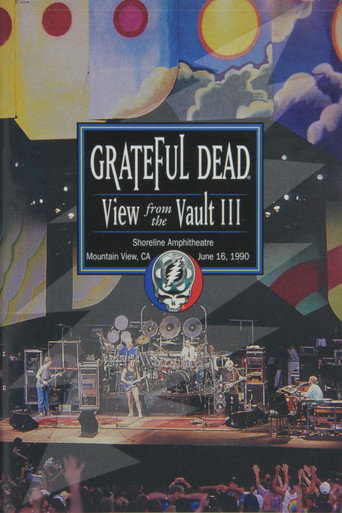
Grateful Dead: View from the Vault III
Grateful Dead - View from the Vault III Shoreline Amphitheater Mountain View CA June 16, 1990 First Set: 1 Let The Good Times Roll 2 Truckin' 3 Touch Of Grey 4 Mama Tried 5 Big River 6 Friend Of The Devil 7 Cassidy 8 Big Boss Man 9 One More Saturday Night Second Set: 10 China Cat Sunflower 11 I Know You Rider 12 We Can Run 13 Estimated Prophet 14 Terrapin Station 15 Jam 16 Space 17 Drums 18 China Doll 19 Sugar Magnolia 20 It's All Over Now, Baby Blue Bonus Footage: Shoreline Amphitheatre - Mountain View, CA - October 3, 1987 21 Hey Pocky Way 22 New Minglewood Blues 23 Candyman 24 When I Paint My Masterpiece 25 West L.A. Fadeaway 26 My Brother Esau
Grateful Dead: Bits And Pieces About...
The film is accompanied by interviews with the band mebers Jerry Garcia, Mickey Hart, and Phil Lesh, who talk about their band's creation, their career and the influence and importance of their music from the era of flower power and beyond.
Production
Untitled Grateful Dead Film
A biopic about the famous rock band. The still-untitled film is expected to chronicle the band’s formation in the Bay Area as the ’60s psychedelic counterculture movement started to take off.
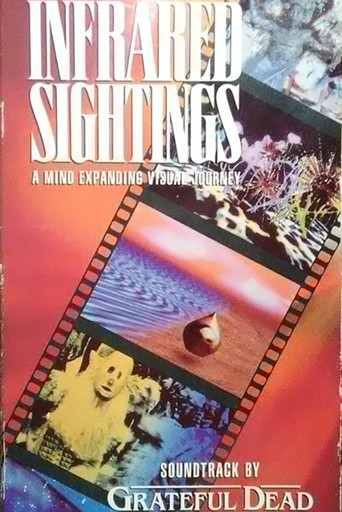
Infrared Sightings
The music of the Grateful Dead processed alongside computer graphics.
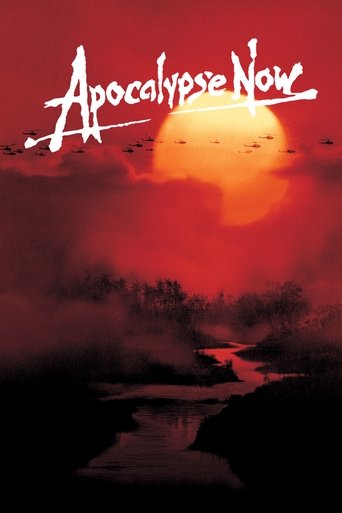
Apocalypse Now
At the height of the Vietnam war, Captain Benjamin Willard is sent on a dangerous mission that, officially, "does not exist, nor will it ever exist." His goal is to locate - and eliminate - a mysterious Green Beret Colonel named Walter Kurtz, who has been leading his personal army on illegal guerrilla missions into enemy territory.
Gallery