Sound
No biography available.
Paul and Paula have had bad experiences with love: Paul is financially well off but has lost all affection for his wife, and Paula leads a troublesome life raising two children on her own. They meet and discover a strong passion for each other. Life seems like a dream when they're together - but their short flights from the burdens of reality are once and again interrupted by Paul's ties to family and career.
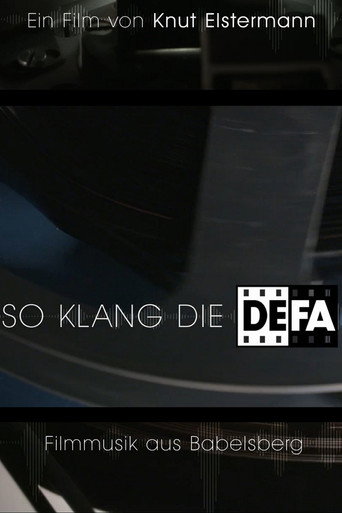
When people think of DEFA, the film heritage of the GDR, they probably don't just think of film images, but also some of the timeless melodies that were created in Babelsberg.
The compilation film looks back on four decades of East German film production to mark the 40th anniversary of DEFA. Beginning with the founding event of DEFA on May 17, 1946, it continues with film clips from many test recordings of the first feature films after licensing. Well-known directors, screenwriters, actors and musicians accompany the historical newsreel and feature film excerpts and thus bear witness to the reconstruction work in the early post-war years. A documentary that reflects the diversity of DEFA productions in the film and newsreel sector.
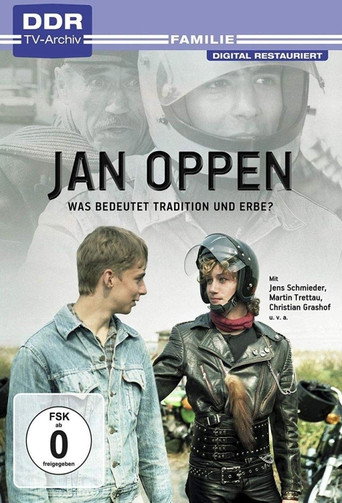
The Oppen family has lived in Berlin, Griesener Straße, for generations. The first names of the family members are also repeated, so the grandson Jan has the same first name as his grandfather. The Oppens' husbands have maintained a tradition up to now: they were or are all carpenters. But the latter does not yet fall on fertile ground with 16-year-old Jan, whose passion is the moped, his "machine". Of course, he is a newcomer among the motorcycle fans around the black Jonny, but he loves to be in their company to experience adventures, and of course he wants to be able to "keep up" with them. Jan has already developed a strategy for how he can do this.
This documentary about the Buchenwald concentration camp features interviews with survivors who describe their memories and experiences. The antifascist resistance movement within the camp played an important role in East German memorialization of this site; the interviews were edited to be consistant with the official version of the camp's history. Commissioned by the National Buchenwald Remembrance and Memorial Center.
A portrait of Helga Hörz, professor of ethics and philosophy at the Humboldt University in Berlin.
A village in the Republic celebrated its traditional clover festival in the summer of 1976. In the form of a political feuilleton, the film conveys to the viewer the new attitude to life of the people in the countryside.
Bruno Kappel is an established attorney in Hamburg who, in earlier times, belonged to an anarchistic student circle. His former girlfriend Karin Kunze is still a member of this scene. Bruno, who still has left-wing beliefs, becomes her attorney. But when Karin gets into a shootout with the police, she has to go into hiding. The prosecuting attorney Baller has also been a former member of the anarchistic scene. He does not want his past to be revealed by Karin′s apprehension and prosecution. Thus, he asks Kappel to find Karin and sneak her out to a foreign country.
A feuilletonistic conversation with the movie audience about the question: How do you feel about going to the movies? In general - and especially in summer? What do people expect from movies these days and what criticism do they have on their minds? The interviewees are vacationers of all ages and tastes. The occasion and background for this not entirely serious survey is the 1965 Summer Film Festival, which is captured in a cheerful reportage style. Interviews with actors on the festive opening evening and climax of the film confirm that there is only a relative cinema fatigue. It depends on the quality of the film on offer.
Each is dependent on the other. He breaks into the passport office to get a passport. He is surprised and ends up back in prison, where he is trained in military drill. After his release, he once again lodges with relatives, his sister and brother-in-law. Wearing a second-hand captain's uniform, he first takes over a guard unit and uses it to occupy Köpenick town hall, where all the employees of the town council submit to the supposed captain. The mayor is promoted to Berlin and Voigt presents himself to the authorities a few days later. At first, everyone present laughs at the prank, but then Voigt is made aware of the legal consequences. He is sent back to prison, but shortly afterwards he is pardoned by the Emperor.
Documentary about Albrecht Dürer to mark the 500th anniversary of his birth. The film presents a panorama of the German Renaissance, in which Dürer's life and work are integrated in the context of the development of science and technology, the apocalypse of the Peasants' War and the dawn of the modern era.